Why Your Personal Email Could Cost You Your Job: The Hidden Risks of Mixing Business and Personal Communications
Why Your Personal Email Could Cost You Your Job: The Hidden Risks of Mixing Business and Personal Communications
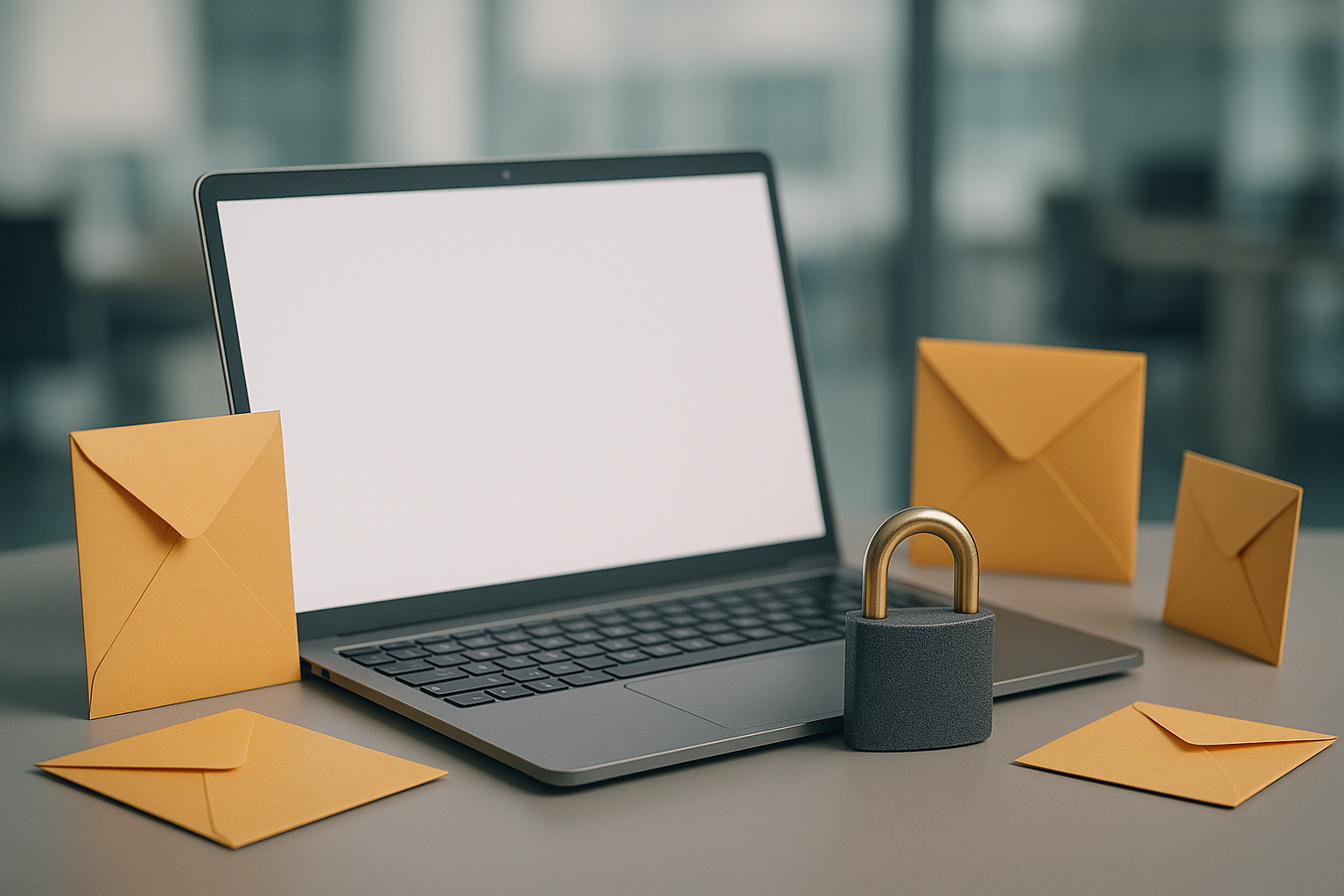
Using your personal email for work might seem convenient, but this common practice creates serious professional and legal risks that most people never consider until it’s too late. Board members, volunteers, and early-career professionals regularly mix personal and business communications without understanding the potential consequences—from legal discovery exposures to security vulnerabilities that put entire organizations at risk.
The distinction between personal and professional email isn’t just about appearances. It’s a fundamental security and liability boundary that protects both individuals and the organizations they serve.
Why Personal Email Creates Legal Exposure
When personal email accounts handle business communications, those messages become subject to legal discovery processes. During litigation, investigations, or regulatory reviews, courts can compel the disclosure of all relevant communications—including everything stored in personal email accounts used for business purposes.
This means personal messages, family photos, private financial records, and unrelated correspondence can all become part of a legal discovery request. A single work-related email thread in a personal account can open the door to subpoenaing the entire inbox. For volunteers serving on community association boards or employees handling sensitive business matters, this creates unnecessary personal exposure.
The legal risk extends beyond just privacy concerns. Personal email accounts used for business complicate record retention requirements. Many organizations must maintain communication records for specific periods to comply with regulations or association bylaws. When business communications scatter across multiple personal accounts, organizations cannot guarantee proper retention, creating compliance gaps and potential liability.
Discovery processes have exposed board members’ personal emails in court cases involving community associations, revealing not just relevant business discussions but also unrelated personal matters. These situations create embarrassment, privacy violations, and additional legal complexity that proper email separation would prevent entirely.
Security Vulnerabilities in Consumer Email Services
Personal email services prioritize convenience and consumer features over enterprise-grade security controls. While major providers like Gmail, Yahoo, and Outlook.com offer reasonable security for personal use, they lack the administrative oversight, access controls, and security policies that business communications require.
Free consumer email services fund their operations through advertising and data analysis. These platforms scan email content to build user profiles and target advertisements. When business communications flow through personal accounts, sensitive organizational information becomes part of this commercial data ecosystem. Proprietary information, financial details, resident data, and strategic discussions all potentially contribute to advertising profiles.
Personal accounts also lack centralized security management. Organizations cannot enforce multifactor authentication, monitor for suspicious access, implement data loss prevention, or maintain audit logs when employees or board members use personal email. If a board member’s personal account gets compromised, the organization has no visibility into the breach and no way to assess what information was exposed.
Consumer email accounts face constant phishing and credential theft attempts. When attackers compromise a personal account used for business, they gain access to organizational communications, contact lists, and potentially sensitive documents. The organization typically learns about the breach only after damage occurs—if they learn about it at all.
The Wire Fraud Connection
Mixing personal and business email significantly increases wire fraud risk. Attackers who compromise personal accounts gain insight into communication patterns, organizational relationships, and business processes that enable sophisticated impersonation attacks.
A Florida community association lost $50,000 to vendor impersonation fraud when attackers monitored email communications and inserted themselves into a payment thread. The fraudulent wire transfer request appeared legitimate because the attackers understood the association’s vendor relationships and payment procedures from observing prior communications.
Personal email accounts often have weaker security controls than business accounts, making them easier targets for compromise. Once inside, attackers can:
- Monitor ongoing business discussions to understand approval processes
- Identify financial decision-makers and their communication styles
- Wait for legitimate payment discussions and inject fraudulent requests
- Create convincing spoofed messages using real context from prior threads
- Access contact information for additional impersonation targets
The casual nature of personal email also reduces vigilance. People expect personal accounts to contain messages from friends, family, and various services. This mental context makes it easier for fraudulent business communications to slip through without triggering the same scrutiny that more formal business channels might receive.
Professional Boundary Violations
Using personal email for business work erodes professional boundaries in ways that create long-term career risks. When work communications flow through personal channels, the practical separation between professional and personal time disappears.
Personal email use establishes an expectation of constant availability. Without clear boundaries between work and personal communication channels, responding to business matters at all hours becomes normalized. For volunteers, this expectation can lead to burnout and difficulty disengaging from organizational responsibilities. For employees, it creates ambiguity about work hours and compensation for off-hours communication.
This boundary erosion also affects professional image. Personal email addresses often use informal usernames, nicknames, or outdated handles created years earlier. Sending official organizational communications from addresses like “beachbum@gmail.com” or “soccermom2010@yahoo.com” undermines professional credibility and organizational legitimacy.
Personal email habits carry over into business contexts. The casual tone, reduced formality, and quick-reply patterns appropriate for personal messages can inappropriately influence business communications. Using personal accounts for work encourages informality that may be inappropriate for official organizational business, particularly in governance, legal, or financial matters.
Organizations and professionals should maintain clear separation between personal and business communications. This separation protects privacy, maintains security controls, ensures proper record keeping, and preserves professional boundaries essential for long-term career success.
Organizational Control and Governance Gaps
When board members, volunteers, or employees conduct business through personal email, organizations lose essential governance controls. Proper organizational oversight requires visibility into business communications, security management, and records retention—none of which are possible with personal accounts.
Community associations, nonprofits, and businesses have fiduciary duties that include maintaining proper records and protecting sensitive information. Board members using personal email create gaps in the official record. Important decisions, policy discussions, and financial matters discussed through personal channels may not be properly documented or accessible when needed.
Organizations cannot implement security policies or respond to security incidents affecting personal accounts. If a board member’s personal account gets compromised, the organization has no ability to:
- Detect the breach through security monitoring
- Assess what organizational information was exposed
- Implement remediation measures or password resets
- Review access logs to understand attacker activities
- Notify affected parties about potential data exposure
Offboarding also becomes problematic with personal email use. When board members complete their terms or employees leave organizations, business communications and organizational records remain in personal accounts beyond organizational control. This creates records management problems and potential data retention violations.
Organizations should provide official communication channels with proper security controls, administrative oversight, and records retention capabilities. This organizational control is essential for governance, compliance, and risk management.
The Path to Proper Email Separation
Establishing clear boundaries between personal and business email doesn’t require complex technical implementations. Organizations and individuals can create proper separation through straightforward steps.
Organizations should provide official email addresses to board members, volunteers, and employees who handle business communications. Many affordable or free options exist for nonprofits and small associations. Basic business email services from providers like Google Workspace or Microsoft 365 offer appropriate security controls starting at just a few dollars per user monthly.
For organizations unable to provide individual email addresses, a shared organizational address with controlled access provides better security than personal accounts. Multiple authorized individuals can access shared accounts while maintaining organizational oversight and records retention.
Individual professionals should establish clear personal policies about business communication channels:
- Use only provided organizational email for business matters
- Avoid replying to business messages from personal accounts
- Forward any business communications accidentally sent to personal accounts through official channels
- Maintain separate devices or browser profiles for business access where possible
Email clients and mobile devices can configure multiple accounts with clear visual distinction. Using separate browser profiles, email client identities, or device work profiles helps maintain mental separation between personal and business contexts.
The transition from personal to business email requires communicating the change to regular contacts. A brief message explaining the transition to official organizational channels helps establish the new pattern:
“I’m transitioning to my official board email for all association business. Please use [official@association.com] for future association matters. This helps me maintain proper boundaries and ensures important communications are properly documented.”
Verification Protocols for Sensitive Matters
Regardless of email channel, organizations should implement verification protocols for sensitive requests, particularly financial matters. Email alone should never be sufficient to authorize wire transfers, account changes, or other high-risk actions.
Effective verification protocols require out-of-band confirmation through a separate communication channel. For payment requests or account changes:
- Call the requester using a known phone number from organizational records, not a number provided in the email
- Verify the request details through in-person conversation when possible
- Implement dual-approval requirements for transactions above specific thresholds
- Establish clear escalation procedures for unusual or urgent requests
These verification steps protect against both compromised accounts and sophisticated impersonation attacks. Even if attackers control an email account and understand organizational processes, they cannot easily replicate phone conversations with known individuals or satisfy dual-approval requirements.
Verification protocols work alongside proper email separation. Using official business email with strong security controls reduces compromise risk, while verification procedures provide defense-in-depth protection for critical actions.
Building Security Awareness Culture
Long-term protection requires building organizational culture that prioritizes security awareness. Email separation is just one element of broader security practices that protect organizations and individuals.
Organizations should provide regular training on:
- Recognizing phishing attempts and suspicious communications
- Verifying requests through alternative channels before taking sensitive actions
- Maintaining strong unique passwords and using password managers
- Enabling multifactor authentication on all business accounts
- Reporting suspicious activities or potential security incidents promptly
Training should be ongoing rather than one-time events. Quarterly reminders, simulated phishing exercises, and regular security updates help maintain awareness as threats evolve. Security awareness becomes most effective when integrated into organizational culture rather than treated as isolated technical requirement.
Board members and volunteers need security awareness training as much as paid staff. Volunteers often have less technology experience and may be unfamiliar with organizational security expectations. Clear, beginner-friendly guidance helps volunteers understand their responsibilities without requiring technical expertise.
Making Security Practical
Security practices succeed when they balance protection with usability. Overly complex security requirements lead to workarounds that undermine protection. Practical security approaches that fit naturally into existing workflows get adopted and maintained.
Email separation should simplify rather than complicate communication. When organizations provide professional email addresses with appropriate tools and clear guidance, the transition becomes straightforward. Modern email services work seamlessly across devices with user-friendly interfaces that require minimal technical knowledge.
Password managers make strong unique passwords practical rather than burdensome. Using password managers eliminates the need to remember complex passwords while enabling much stronger security than reused simple passwords. Most password managers offer intuitive interfaces accessible to non-technical users.
Multifactor authentication adds security without significant inconvenience. Modern MFA implementations using authenticator apps or push notifications provide strong protection through quick, simple approval steps. The minor additional effort during login provides substantial protection against account compromise.
Organizations should prioritize the security practices that provide the greatest protection with reasonable implementation effort. Email separation, strong passwords, password managers, and multifactor authentication form a practical foundation that addresses the most common threats without requiring extensive technical expertise or resources.
Moving Forward
Separating personal and business email protects individual privacy, organizational security, legal compliance, and professional reputation. The practice represents essential professional hygiene rather than optional technical nicety.
Early-career professionals should establish proper email boundaries from the start of their careers. Developing good security habits early prevents the difficult transition from entrenched bad practices later. Understanding the risks and maintaining proper separation demonstrates professional maturity that serves careers well.
Organizations should provide the tools and guidance that enable proper email separation. Clear policies, provided accounts, and regular training help board members, volunteers, and employees maintain appropriate boundaries. These organizational investments prevent much larger costs from security incidents, legal exposure, or compliance violations.
The convenience of using personal email for business work creates risks that far outweigh the minor effort of maintaining separate channels. Professional email separation is fundamental security hygiene that protects individuals, organizations, and careers.
Enjoyed this article?
Subscribe to Professor Simon's weekly newsletter for practical insights, career guidance, and leadership lessons delivered every Friday.
A confirmation email will be sent. If you don't receive it, please check your spam or junk folder.
No spam. Unsubscribe anytime.
Prefer to Listen?
Listen to Professor Simon’s IT & Cybersecurity Podcast for practical conversations about cybersecurity careers, certifications, security leadership, and real-world lessons from the field.
Listen on Spotify