Resume Mistakes That Get You Filtered Out Before a Human Ever Sees It
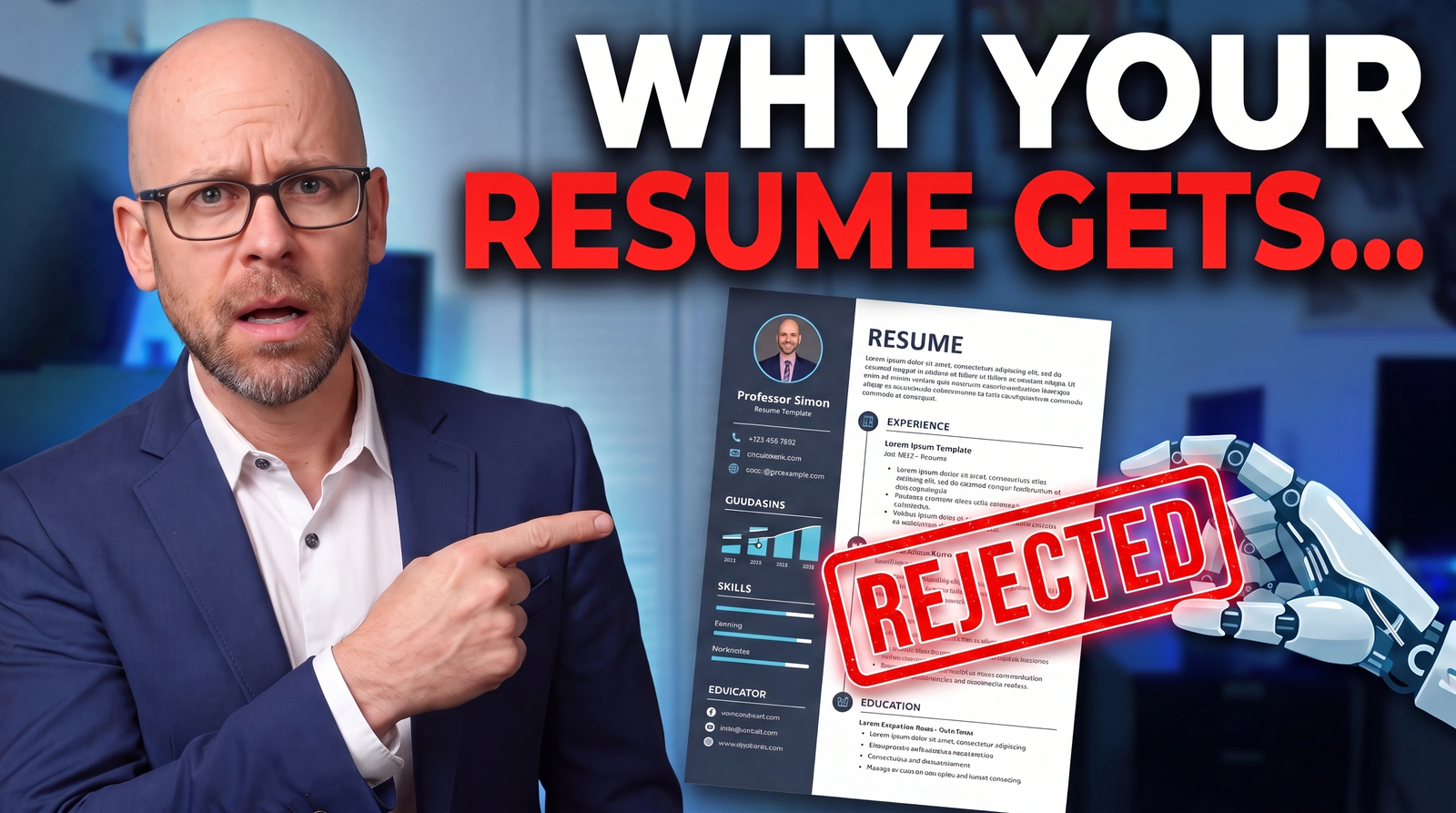
I’ve reviewed a lot of resumes from people trying to break into cybersecurity, and the most frustrating part isn’t when someone lacks experience. It’s when someone has real, relevant experience and their resume never makes it in front of a human being to see it, because it got filtered out by an applicant tracking system before anyone even opened it.
That’s the part nobody explains clearly enough. Your resume isn’t competing against other candidates first. It’s competing against software.
Prefer to read the full breakdown? Keep scrolling. Prefer to watch? Full video above.
What an ATS Actually Does
An applicant tracking system parses your resume into structured data, then scores or filters it against the job posting before a recruiter ever sees it. Most candidates picture a human skimming a stack of resumes. In reality, a huge portion of resumes for competitive roles never get skimmed at all. They get scored, and only the ones that clear a threshold get a human’s attention.
That means formatting and keyword matching aren’t cosmetic details. They’re the actual gate you have to get through first.
The Mistakes I See Constantly
Fancy formatting that breaks parsing. Tables, columns, text boxes, and creative graphic layouts often look impressive to a human and are unreadable to an ATS. If the system can’t correctly extract your job titles and dates because they were in a sidebar column, it doesn’t know they exist. Simple, single-column formatting isn’t boring. It’s functional.
Job titles that don’t match the language of the posting. If a company is hiring for a “SOC Analyst” and your resume says “Security Operations Specialist” for equivalent work, some systems won’t connect the two. This doesn’t mean you should misrepresent your role. It means when the language is genuinely equivalent, use the industry-standard term the posting uses.
Skills sections that list tools without context. A wall of tool names with no explanation of how you used them scores worse than you’d think. Listing “SIEM” as a skill tells the system almost nothing. Describing a specific way you used a SIEM tells both the system and the human reviewer something real.
No quantified impact anywhere. “Monitored security alerts” says almost nothing. “Reviewed an average of 40 daily alerts, escalating confirmed incidents within a defined SLA” tells a much richer story, and gives both the ATS and a human reviewer more relevant keyword density to match against.
Certifications and education buried at the bottom in tiny text. For entry-level candidates, certifications are often the strongest signal you have. Burying them under a long, thin work history undersells the one thing that might actually be pulling you through the filter.
What I’d Push Back On
There’s a popular piece of advice floating around to just stuff your resume with keywords from the job posting, sometimes even in white text invisible to a human reader. Don’t do this. Modern systems are increasingly good at detecting keyword stuffing, and even when they’re not, a resume that reads like a keyword dump falls apart the moment a human actually reads it. The goal isn’t to trick the system. It’s to describe your real experience using the same language the industry and the posting are using.
What I’d Actually Recommend
Keep your formatting simple: standard section headers, no tables or columns, no graphics competing with the text. Match your language to the posting where it’s genuinely accurate to do so. Quantify what you did wherever you can, even in non-security roles, because a hiring manager reading GRC or SOC applications is used to translating adjacent experience. And put your certifications somewhere visible near the top, not as an afterthought at the bottom of page two.
My Take
The candidates who get frustrated with “nobody’s calling me back” are often making one or two of these mistakes without knowing it, not because their experience isn’t good enough. A resume that’s easy for a machine to read correctly, and honest and specific for a human to evaluate afterward, will outperform a beautifully designed resume every time. Optimize for both audiences, not just the one you can see.
Enjoyed this article?
Subscribe to Professor Simon's weekly newsletter for practical insights, career guidance, and leadership lessons delivered every Friday.
A confirmation email will be sent. If you don't receive it, please check your spam or junk folder.
No spam. Unsubscribe anytime.
Prefer to Listen?
Listen to Professor Simon’s IT & Cybersecurity Podcast for practical conversations about cybersecurity careers, certifications, security leadership, and real-world lessons from the field.
Listen on Spotify