Why Your Non-Technical Background Is Your Cybersecurity Advantage

Why Your Non-Technical Background Is Your Cybersecurity Advantage
The cybersecurity industry faces a persistent talent shortage, yet countless qualified candidates dismiss their own potential because their resume doesn’t list computer science degrees or programming languages. This represents both a missed opportunity and a fundamental misunderstanding of what makes someone effective in security roles.
Experience in teaching, healthcare, customer service, finance, military service, or dozens of other fields provides transferable skills that technical training alone cannot replicate. The challenge is not whether non-technical backgrounds matter in cybersecurity—they demonstrably do—but rather how career changers learn to recognize and articulate the value they already bring.
Understanding Transferable Skills in Security Context
Cybersecurity work extends far beyond writing code or configuring firewalls. Most security programs fail not from technical gaps but from communication breakdowns, policy misunderstandings, inadequate user training, or poor stakeholder coordination. These operational realities create opportunities for professionals who can bridge technical and human elements.
Research on mentoring in cybersecurity emphasizes that retention and effectiveness depend heavily on soft skills: communication, critical thinking, collaboration, and problem-solving ability. Technical skills can be taught through structured training. The judgment, empathy, and communication patterns developed through years in another profession cannot be rapidly acquired.
The distinction matters for career changers evaluating their readiness. Someone who spent five years managing customer escalations already understands triage, prioritization under pressure, and de-escalation techniques—all directly applicable to security operations center work. A former teacher understands how to explain complex concepts to varied audiences, assess comprehension, and adjust messaging—core requirements for security awareness programs.
Mapping Your Background to Security Roles
Different cybersecurity specializations value different skill combinations. Understanding this mapping helps career changers identify their strongest entry points rather than pursuing roles misaligned with their strengths.
Governance, Risk, and Compliance Pathways
GRC roles focus on policy development, regulatory adherence, control implementation, and risk assessment. These positions require understanding organizational processes, documentation practices, and how to work within regulated environments.
Professionals from healthcare, education, finance, legal services, or accounting often possess exactly this foundation. They already understand:
- How compliance frameworks structure organizational behavior
- Documentation standards and audit trails
- Risk assessment in regulated contexts
- Policy interpretation and application
- Cross-functional coordination for control implementation
The technical aspects of GRC—understanding technical controls, system configurations, or vulnerability management—can be learned through certifications like Security+, CISSP, or specialized GRC credentials. The institutional knowledge and process discipline developed in regulated industries cannot be quickly taught.
Security Awareness and Training Roles
Organizations increasingly recognize that user behavior represents both their greatest vulnerability and their strongest defense. Security awareness programs require professionals who can design curricula, assess learning outcomes, adapt messaging to diverse audiences, and measure behavior change.
Former teachers, corporate trainers, instructional designers, and human resources professionals bring pedagogical expertise that technical specialists typically lack. They understand:
- How to structure learning for retention
- Assessment design and measurement
- Adapting content for different learning styles
- Engaging resistant or skeptical audiences
- Behavior change techniques
Technical security knowledge enhances awareness work but remains secondary to communication effectiveness. A security awareness specialist who understands phishing, social engineering, password security, and basic security hygiene at an intermediate level but excels at engagement will outperform a deeply technical specialist who cannot connect with non-technical employees.
Security Operations and Incident Response
Security operations centers handle alert triage, incident investigation, escalation, and coordination. These environments demand calm under pressure, clear communication during crisis, systematic problem-solving, and effective handoffs between team members.
Military veterans, emergency services personnel, customer support specialists, and operations managers often thrive in SOC environments. Their backgrounds provide:
- Structured response protocols and discipline
- Prioritization during high-pressure situations
- Clear communication with limited information
- Escalation judgment and timing
- Shift coordination and handoff procedures
SOC analysts need technical skills in log analysis, network basics, malware indicators, and security tools. These skills can be developed through entry-level certifications, home labs, and training programs. The composure, communication clarity, and process discipline that enable effective response are personality and experience traits developed over years.
Vendor and Customer-Facing Security Roles
Many security positions involve stakeholder communication, requirement gathering, solution explanation, or relationship management. Security consultants, customer security specialists, sales engineers, and account managers need technical credibility combined with business communication skills.
Professionals from sales, account management, consulting, or business development understand:
- How to translate technical concepts for business audiences
- Stakeholder management and expectation setting
- Requirements elicitation through questioning
- Negotiation and persuasion without authority
- Relationship building and trust development
These roles require sufficient technical depth to maintain credibility and understand solution capabilities. However, the communication and relationship skills that drive effectiveness typically matter more than deep technical specialization, particularly in vendor-neutral consulting or advisory roles.
Addressing Common Misconceptions About Entry Requirements
Career changers frequently overestimate technical barriers and underestimate the value of existing capabilities. Several persistent myths deserve direct challenge.
The Degree Requirement Myth
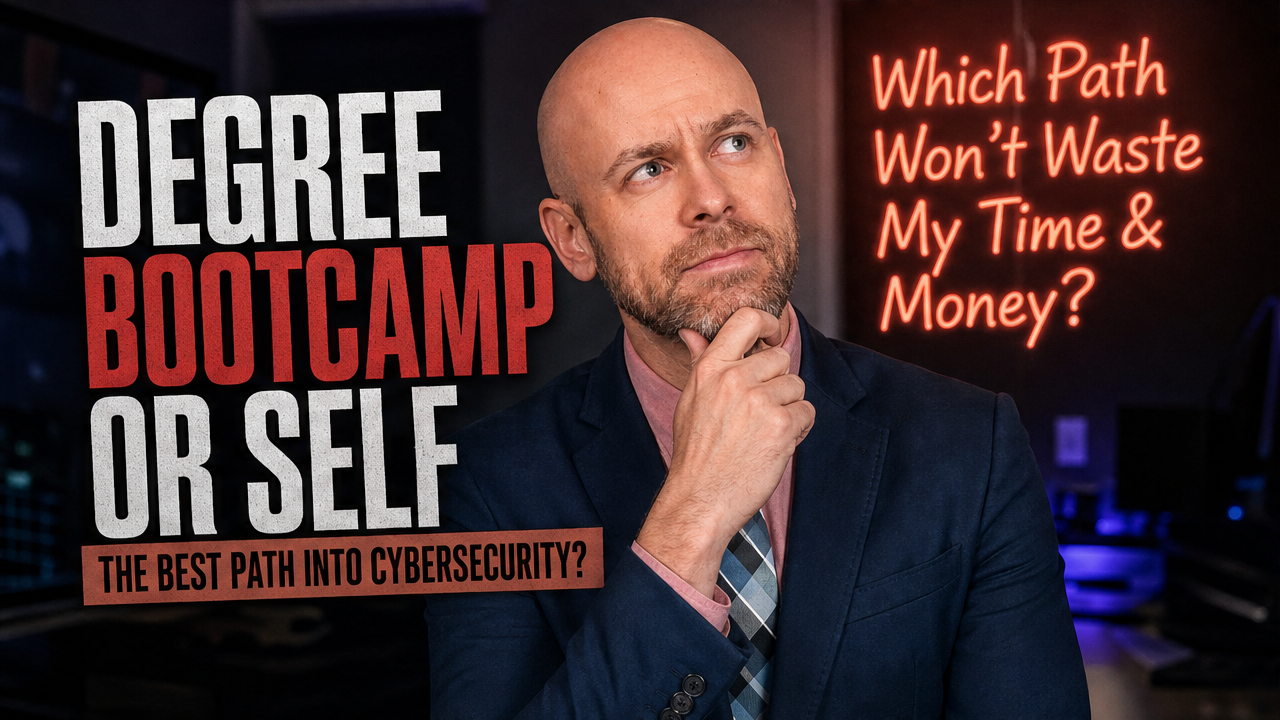
Many cybersecurity professionals entered the field without computer science degrees. Degree requirements listed in job postings often function as screening heuristics rather than absolute qualifications. Employers listing degree requirements frequently hire candidates who demonstrate equivalent knowledge through certifications, projects, practical experience, or domain expertise.
Career changers should focus on demonstrating capability through:
- Industry-recognized certifications aligned with target roles
- Home lab projects documented in portfolios
- Volunteer security work for nonprofits or community organizations
- Capture the flag competitions and practice platforms
- Clear articulation of transferable skills from previous work
A degree may accelerate credibility building but does not represent a mandatory prerequisite, particularly for roles emphasizing communication, process, or policy over deep technical implementation.
The Experience Paradox
Entry-level positions requesting years of experience create apparent catch-22 situations. This paradox resolves through recognizing that experience requirements reflect desired capability levels rather than strict prerequisites.
Hiring managers seek candidates who can contribute quickly with minimal onboarding. Demonstrating readiness through relevant projects, certifications, and transferred skills addresses this concern more effectively than waiting to accumulate years in security-specific roles.
Additionally, internships, volunteer work, home lab projects, and contributions to open source security tools all constitute relevant experience. Career changers should reframe “lack of security experience” as “developing security experience through practical projects” and document this work visibly.
The Technical Depth Assumption
Not all cybersecurity work requires programming ability, system administration expertise, or deep networking knowledge. Many effective security professionals function at intermediate technical depth while excelling at communication, coordination, analysis, or strategic thinking.
Career changers should pursue technical foundations appropriate to target roles rather than attempting to match the depth of specialists. A GRC analyst needs working knowledge of technical controls, not the ability to implement them. A security awareness specialist needs to understand attack techniques conceptually, not to execute them.
This approach allows career changers to reach job-ready capability faster while leveraging existing strengths rather than competing in areas where traditional technical candidates hold advantages.
Leveraging Mentorship for Career Transitions
Mentoring provides structure, guidance, and confidence-building particularly valuable for career changers navigating unfamiliar territory. However, not all mentoring approaches suit beginners equally well.
Why Group Mentoring Benefits Career Changers
Traditional one-on-one mentoring creates pressure that can overwhelm newcomers who lack vocabulary, context, or confidence to ask productive questions. Group mentoring addresses several limitations of individual mentoring for career changers.
Groups normalize the beginner experience. When multiple mentees ask questions, individuals realize their confusion reflects common learning challenges rather than personal inadequacy. This psychological safety encourages question-asking and reduces impostor syndrome.
Groups enable peer learning. Mentees learn from each other’s questions, experiences, and perspectives. Someone further along in their transition can model effective question framing for newer participants. Different backgrounds generate diverse questions that benefit all participants.
Groups improve mentor efficiency and accessibility. A single mentor working with four to six mentees creates more total mentoring relationships than the same mentor could sustain individually. This scalability expands access to guidance for communities with limited mentor availability.
Research on group mentoring programs demonstrates effectiveness across behavioral, emotional, and skill development outcomes. For career changers in cybersecurity, group formats provide exposure to multiple perspectives while reducing individual pressure.
What Makes Mentoring Effective
Structure distinguishes productive mentoring from informal advice. Effective mentoring relationships, whether individual or group, share common characteristics.
Clear goals and expectations establish mutual understanding. Mentees should identify specific objectives: role clarity, technical skill development, job search strategy, or confidence building. Mentors should clarify their availability, communication preferences, and boundaries.
Regular cadence maintains momentum. Group mentoring typically functions with meetings once or twice monthly, supplemented by asynchronous communication channels. Consistency matters more than frequency.
Active rather than passive engagement drives learning. Strong mentors guide mentees toward answers through questioning and resource sharing rather than simply providing solutions. This approach develops critical thinking and investigative habits essential to security work.
Structured programs incorporate mentor training, matching by goals and communication style, periodic check-ins to assess progress, and defined endpoints with transition paths. Organizations implementing cybersecurity mentoring programs improve retention and skill development when they treat mentoring as a deliberate development tool rather than informal networking.
Finding Mentoring Opportunities
Career changers can access mentoring through multiple channels:
- Professional associations like WiCyS, ISC2, or ISACA chapters
- Industry conferences with mentoring programs
- Online communities with structured mentoring initiatives
- Employer-sponsored programs for early-career professionals
- Cybersecurity training programs including mentoring components
- Local meetups and user groups
Mentees should approach potential mentors with specific asks and demonstrated initiative. A request framed as “I’m working through Security+ and building a home lab focused on network traffic analysis; could we schedule monthly calls to discuss what skills to prioritize?” will receive more positive responses than vague requests for general guidance.
Building Your Transition Strategy
Successful career transitions require systematic approaches that build credibility while developing necessary skills.
Assess Your Transferable Skills
Document capabilities from previous roles using security-relevant language:
- Customer de-escalation becomes “incident communication and stakeholder management”
- Teaching curriculum development becomes “security awareness program design”
- Regulatory compliance work becomes “control implementation and audit preparation”
- Sales requirement gathering becomes “security requirement elicitation and solution design”
- Project coordination becomes “cross-functional security initiative management”
This translation exercise serves dual purposes: building confidence in existing value and preparing interview narratives that connect past work to security roles.
Identify Target Role Categories
Research security role families to determine best-fit options. Career changers should evaluate:
- Required vs. preferred qualifications in job postings
- Day-to-day responsibilities and work environment
- Technical depth expectations
- Communication and collaboration intensity
- Certification and credential standards
Narrowing focus to two or three role categories allows concentrated skill development rather than scattered preparation across incompatible specializations.
Develop Role-Specific Foundations
Build technical foundations aligned with target roles:
- GRC: Security+, privacy frameworks, risk assessment methodologies
- Security operations: Network basics, log analysis, incident response processes
- Security awareness: Phishing techniques, behavior change principles, learning measurement
- Technical consulting: Broader security fundamentals, communication frameworks, business case development
Certifications provide structured learning paths and credibility signals. Entry-level certifications like Security+, CySA+, or GSEC establish baseline technical knowledge. Specialized certifications like CRISC, CISA, or privacy credentials support specific paths.
Create Visible Portfolio Evidence
Document learning and capability development through observable work:
- Home lab projects with written explanations
- Security tool tutorials or guides
- Vulnerability research on practice platforms
- Volunteer security assessments for nonprofits
- Conference attendance and learning summaries
- Contributions to security documentation or awareness materials
Portfolios matter particularly for career changers lacking traditional credentials. They demonstrate initiative, learning ability, and practical capability more effectively than resume descriptions alone.
Develop Professional Network
Build relationships with security professionals through genuine engagement rather than transactional networking:
- Participate meaningfully in online communities
- Attend local security meetups and conferences
- Contribute value through sharing resources or insights
- Seek informational interviews focused on learning rather than job seeking
- Join professional associations relevant to target specializations
Networks built through consistent, value-oriented engagement create opportunities that resume submissions to job boards cannot match.
Your Background Is Not an Obstacle
The cybersecurity industry needs diverse perspectives, communication skills, domain knowledge, and problem-solving approaches that purely technical training cannot provide. Career changers bring organizational understanding, stakeholder communication ability, process discipline, and human insight that enhance security programs.
The transition challenge lies not in overcoming irrelevance but in recognizing existing value, developing complementary technical foundations, and articulating capability clearly. With structured skill development, strategic role targeting, and supportive mentoring, professionals from any background can build meaningful cybersecurity careers.
The question is not whether non-technical backgrounds matter in cybersecurity. The question is which security specialization best leverages the strengths already developed through years of professional experience. Answer that question clearly, and the path forward becomes navigable.
Enjoyed this article?
Subscribe to Professor Simon's weekly newsletter for practical insights, career guidance, and leadership lessons delivered every Friday.
A confirmation email will be sent. If you don't receive it, please check your spam or junk folder.
No spam. Unsubscribe anytime.
Prefer to Listen?
Listen to Professor Simon’s IT & Cybersecurity Podcast for practical conversations about cybersecurity careers, certifications, security leadership, and real-world lessons from the field.
Listen on Spotify