Why Your Data Keeps Getting Stolen (And It’s Not Your Fault)
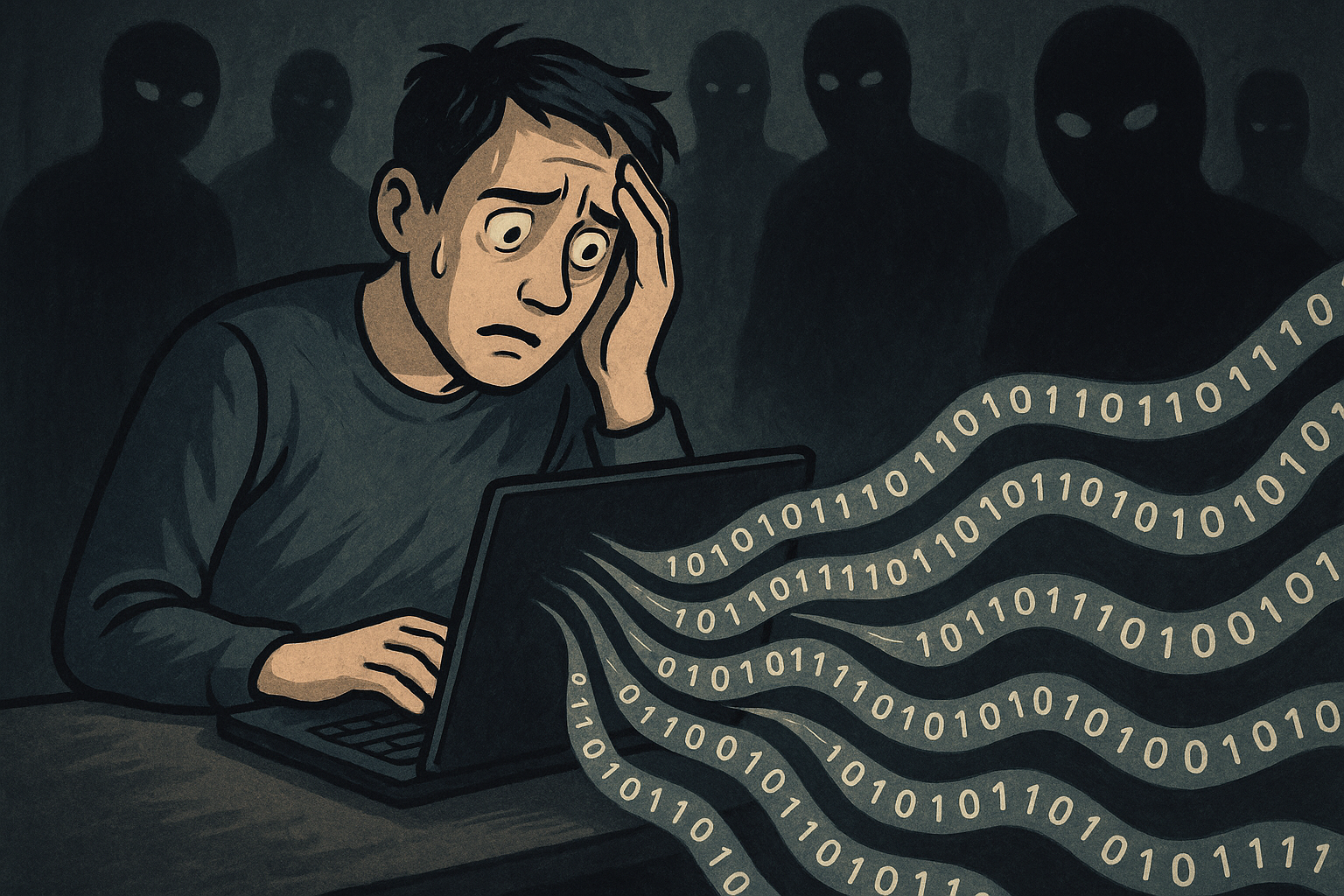
Why Your Data Keeps Getting Stolen (And It’s Not Your Fault)
Check your email. Scroll through social media. Order dinner through an app. Transfer money to a friend. These simple daily actions feel routine, but behind each one runs an invisible technical layer that has become the single most exploited weakness in digital security.
APIs—the application programming interfaces that connect different software systems—now represent the primary attack vector for data breaches affecting millions of consumers. Recent security research reveals that 43% of all known exploited vulnerabilities tracked by federal authorities involve APIs, yet most people have never heard the term. Understanding this hidden layer of digital infrastructure explains why personal information continues to leak even when individuals follow security best practices like using strong passwords and enabling two-factor authentication.
The problem isn’t individual carelessness. It’s systemic vulnerability in how applications share data.
The Invisible Connectors Powering Digital Life
APIs function as digital messengers. When Google Maps appears inside a rideshare app, an API fetches map data. When a travel site compares flight prices across airlines, APIs request that information. When mobile banking apps display account balances, APIs retrieve the data from bank systems.
These connections happen instantly, seamlessly, and completely out of sight. A typical smartphone user interacts with dozens of APIs daily without knowing it. That invisibility creates the problem—security weaknesses in these connectors expose personal data regardless of how carefully someone protects their own devices.
Consider a common scenario. Someone uses a budgeting app that connects to their bank accounts to track spending. The app itself might have excellent security, and the user might have a complex password with biometric login. But the API that fetches transaction data from the bank could have authentication flaws that allow unauthorized access. The user did everything right, yet their financial information becomes vulnerable through a system component they never directly controlled.
This architectural reality explains the persistent drumbeat of data breach headlines. Companies can invest heavily in securing their primary systems while overlooking the APIs that connect those systems to partners, mobile apps, and third-party services.
Why APIs Have Become the Primary Target
Security analysts documented over 67,000 published vulnerabilities in 2025, with 17% directly involving APIs. More concerning, analysis of the most actively exploited weaknesses shows APIs accounting for nearly half of all real-world attacks.
Several factors make APIs attractive targets for attackers. Research into actual breach patterns reveals that 97% of API exploits require only a single request—one command to the system—to succeed. Additionally, 98% are classified as trivial in complexity, meaning automated tools can execute them without sophisticated hacking skills. The barriers to entry are remarkably low.
APIs also typically operate without the same security scrutiny that protects user-facing applications. A login page might have extensive fraud detection and monitoring, while the API that processes authentication requests operates with minimal oversight. Attackers bypass the hardened front door by targeting the less protected service entrance.
The authentication problem dominates breach statistics. Analysis of API security incidents shows that 65% involve broken authentication mechanisms—systems that fail to properly verify who should access specific data. An additional 52% of breaches stem from authentication weaknesses more broadly, making identity verification the single most critical failure point.
These aren’t theoretical vulnerabilities. Real incidents demonstrate the practical consequences. A major technology company recently exposed employee contact information when developers accidentally included access tokens directly in JavaScript code that was publicly visible. Anyone who knew where to look could retrieve those tokens and request sensitive data from the company’s internal APIs. The breach violated multiple privacy regulations and exposed information for thousands of employees who had no ability to prevent the leak themselves.
The Amplification Effect of Automation and AI
Traditional hacking required time, expertise, and targeted effort. Modern API attacks increasingly rely on automated tools that scan for common weaknesses across thousands of systems simultaneously. This industrialization of attacks scales the problem dramatically.
Artificial intelligence accelerates this trend. Security research shows 36% of vulnerabilities in AI systems overlap with API weaknesses, with AI-powered tools capable of discovering and exploiting API flaws at machine speed. The “blast radius” of a single vulnerability expands when automated systems can test variations and combinations far faster than human operators.
This doesn’t mean AI itself is the threat—rather, AI capabilities amplify existing API security gaps. An authentication flaw that might have allowed a single attacker to slowly extract data now enables automated systems to harvest information from millions of accounts within hours of discovery.
The statistics bear this out. SQL injection attacks—a classic vulnerability type where attackers insert malicious database commands through poorly validated inputs—increased 60% year-over-year in API contexts. These aren’t new, sophisticated threats but decades-old attack patterns that automation makes newly profitable at scale.
The Most Common Vulnerabilities in Plain Language
Security professionals track API weaknesses through the OWASP API Security Top 10, a community-maintained list of the most critical risks. Understanding the top three categories explains how most consumer data breaches occur.
Broken Object Level Authorization
This vulnerability, abbreviated BOLA, means an API doesn’t properly check whether a user should access a specific piece of data. Consider a medical records app. The API might verify the user is logged in but fail to verify they should see a particular patient’s records. An attacker could potentially request any patient ID and receive data they shouldn’t access.
Research into reported API vulnerabilities found this issue constituting a primary concern, with 17% of documented cases involving some form of broken authorization. The problem stems from developers assuming that client applications—the apps users interact with—enforce access rules. Attackers bypass those apps entirely and communicate directly with APIs.
Broken Authentication
Authentication determines who someone is before granting access. Broken authentication means flawed identity verification processes. Common patterns include APIs that accept weak tokens, fail to expire login sessions, or don’t require authentication for sensitive operations.
Over half of all API breaches involve authentication failures. The ubiquity stems from complexity—managing identity across distributed systems with multiple integration points creates numerous opportunities for configuration errors. A single misconfigured endpoint in a system with hundreds of APIs can expose sensitive data.
Security Misconfiguration
This broad category includes unnecessary features left enabled, default settings never changed, overly detailed error messages that reveal system information, and missing security patches. One recent audit of public-facing APIs found missing authentication requirements in 17% of cases—meaning sensitive operations had no access controls whatsoever.
These issues persist because API security often falls between organizational silos. Frontend developers assume backend teams handle authentication. Backend teams assume network security addresses access control. Infrastructure teams assume application developers configure settings correctly. The gaps between assumptions become exploitable weaknesses.
Why Individual Protection Has Limits
Personal security measures like password managers, security keys, and careful app permissions matter. They protect against certain threats. But they cannot address vulnerabilities in systems outside user control.
When an API leaks data due to broken authentication, no amount of individual caution prevents the breach. The user trusted a legitimate service. The service failed to properly secure its backend infrastructure. The responsibility and capability to fix the problem lies entirely with the service provider.
This reality frustrates security-conscious consumers who take precautions yet still find their information compromised. The frustration is justified—individual action cannot fully mitigate systemic infrastructure weaknesses.
However, awareness does enable better decision-making about which services to trust, what information to share, and how to respond when breaches occur.
Evaluating Service Security as a Consumer
Most services don’t publish detailed security information, but certain indicators suggest more mature security practices.
Services using established authentication standards like OAuth typically demonstrate better security posture. OAuth, an open standard for authorization, manages access through time-limited tokens rather than long-lived passwords or permanent access keys. While not foolproof, OAuth adoption indicates investment in modern security architecture.
Bug bounty programs—where companies pay security researchers to find and responsibly report vulnerabilities—signal openness to external security validation. Organizations that compensate researchers typically fix issues faster than those relying solely on internal testing.
Clear incident response procedures matter. Companies that publish detailed information about previous security incidents, including timelines and remediation steps, demonstrate transparency that often correlates with stronger overall security culture. Organizations hiding or minimizing breaches often have deeper underlying issues.
Compliance certifications provide another signal. Services handling financial data should comply with PCI DSS standards. Those managing health information should meet HIPAA requirements. European data protection requires GDPR compliance. While certifications don’t guarantee security, they indicate baseline controls and regular audits.
Practical Steps After a Data Breach
When a service announces a breach affecting personal information, specific actions reduce subsequent risk.
Change authentication credentials immediately. Even if the company claims passwords weren’t exposed, change them. Prioritize accounts using the same email address or password across multiple services.
Enable all available security features. Two-factor authentication, login alerts, and security keys provide additional barriers if credentials were compromised.
Monitor financial accounts and credit reports. Many breaches expose information used in identity theft or financial fraud. Early detection limits damage.
Use breach notification services like Have I Been Pwned to track whether email addresses or phone numbers appear in known data leaks. These services aggregate breach data and provide alerts when credentials surface in new incidents.
Consider the type of data exposed when evaluating risk. Leaked email addresses require different responses than exposed financial information or government ID numbers. Tailor monitoring and protective actions to the specific information compromised.
Document breach notices and company communications. In cases involving negligent security practices, this documentation may prove valuable if class action lawsuits or regulatory actions emerge later.
The Business and Regulatory Response
Market and regulatory pressure is beginning to address systemic API security weaknesses. Federal authorities now track actively exploited vulnerabilities, with APIs representing 43% of the most critical threats. This visibility drives compliance requirements and audit standards.
Financial regulators increasingly require API security testing as part of standard examinations. The SEC has signaled intent to scrutinize cybersecurity practices more aggressively, with APIs representing a specific focus area. European regulators under GDPR have levied significant fines for data protection failures involving API vulnerabilities.
These regulatory pressures create business incentives for better security. Companies face not just potential fines but also litigation risk, reputational damage, and customer loss after breaches. Forward-looking organizations now treat API security as a core business risk rather than purely technical concern.
Industry surveys show over 80% of organizations acknowledge API security concerns, yet only 10% have implemented comprehensive API governance programs. This gap represents both the problem and the opportunity—security practices lag behind recognized needs, creating space for improvement.
What This Means for Digital Safety
Understanding that APIs represent the most exploited attack surface reframes reasonable expectations about digital security. Perfect protection is impossible when interacting with complex networked systems. But informed choices and appropriate responses to incidents mitigate risk.
The invisibility of APIs makes them difficult to evaluate directly, but proxy indicators—authentication standards, security programs, transparency, and compliance—provide useful signals about organizational security maturity.
Consumer pressure matters. Services that experience customer loss or public criticism following breaches invest more heavily in security. Clear communication about security expectations and switching away from services with poor track records creates market incentives for improvement.
The technical complexity underlying modern digital services doesn’t absolve individual responsibility for basic security hygiene. Strong passwords, multi-factor authentication, and careful permission management still protect against many threats. But these measures cannot address every vulnerability in systems architected by third parties.
Most data breaches stem from infrastructure weaknesses outside consumer control. That’s not a failure of individual security practices—it’s a feature of distributed system architecture. Recognizing this reality allows for appropriate responses: informed service selection, appropriate caution about data sharing, and effective incident response when breaches inevitably occur.
The problem isn’t personal negligence. It’s systematic infrastructure risk that users experience but cannot directly control. Understanding that distinction helps calibrate both protective actions and expectations about digital privacy in interconnected systems.
Enjoyed this article?
Subscribe to Professor Simon's weekly newsletter for practical insights, career guidance, and leadership lessons delivered every Friday.
A confirmation email will be sent. If you don't receive it, please check your spam or junk folder.
No spam. Unsubscribe anytime.
Prefer to Listen?
Listen to Professor Simon’s IT & Cybersecurity Podcast for practical conversations about cybersecurity careers, certifications, security leadership, and real-world lessons from the field.
Listen on Spotify