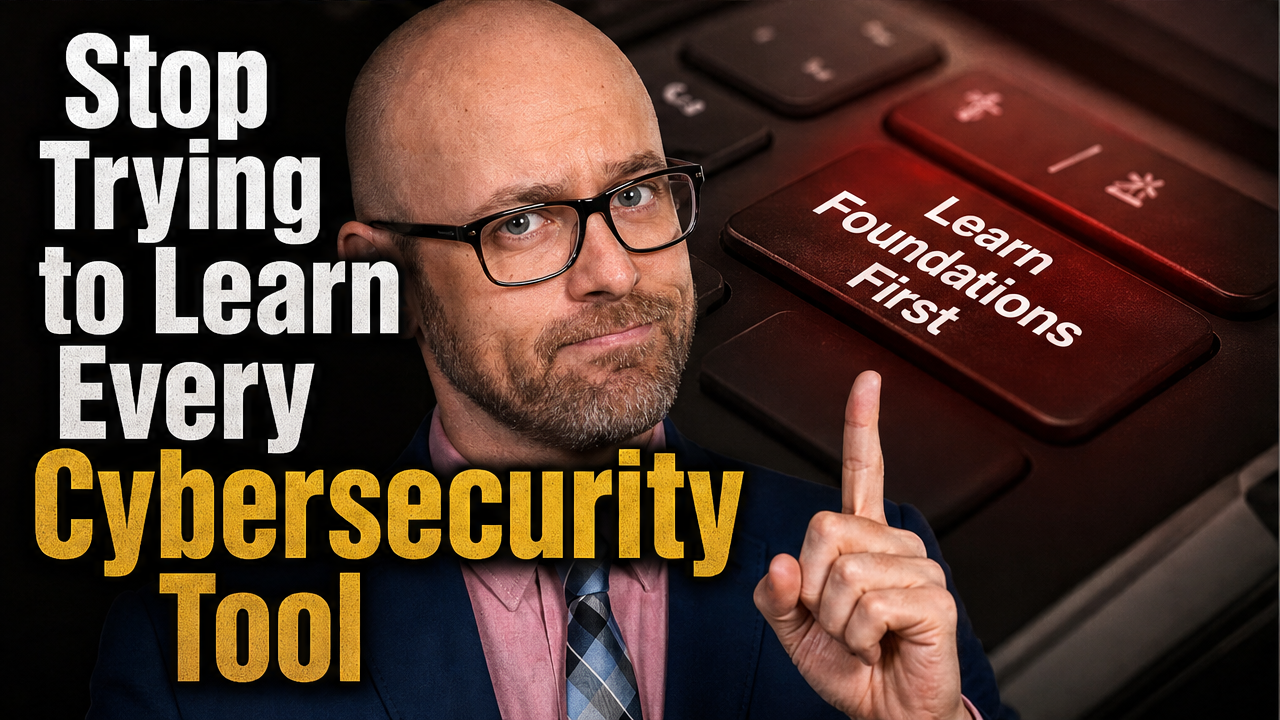
Why You Can’t Skip IT Basics When Starting a Cybersecurity Career

Why You Can’t Skip IT Basics When Starting a Cybersecurity Career
A candidate walks into an interview with a Security+ certification, a clean resume, and confidence. The first technical question arrives: “Can you explain the difference between a server and a workstation in terms of their security requirements?” The silence that follows costs them the job.
This scenario plays out repeatedly across the cybersecurity hiring landscape. Candidates invest time and money in security certifications while skipping the foundational IT knowledge that makes those certifications meaningful. The result is predictable: failed interviews, rejected applications, and frustration that the “right” credentials aren’t opening doors.
The uncomfortable truth is that cybersecurity builds on IT fundamentals. You cannot secure systems you don’t understand. You cannot analyze logs from services you’ve never configured. You cannot assess risk in environments where basic terminology sounds foreign. This isn’t gatekeeping—it’s the practical reality of the work itself.
Understanding the IT Foundation Problem
Cybersecurity roles demand immediate practical application of knowledge. When a Security Operations Center analyst reviews an alert about unusual network traffic, they need to understand TCP/IP, DNS queries, port functions, and normal network behavior before they can determine if the traffic represents a threat. When a GRC professional writes security controls for server hardening, they need to know what services run on servers, how authentication works, and what configurations create risk.
These scenarios don’t allow time for foundational learning. The work assumes you already know how the underlying systems function.
The certification-first approach creates knowledge gaps that become obvious under pressure. A candidate may memorize that port 443 is HTTPS, but if they cannot explain why that matters for network segmentation or how SSL/TLS fits into the protocol stack, their knowledge remains superficial. Employers recognize this gap immediately during technical interviews or practical assessments.
Career changers face this challenge most acutely. Someone transitioning from an unrelated field may assume that studying security concepts directly is the fastest path forward. The logic seems sound—why spend time learning IT basics when the goal is a security role? But this shortcut creates a hollow skill set that collapses when applied to real systems.
Core IT Concepts That Matter in Security Work
Certain IT fundamentals appear in virtually every cybersecurity context, regardless of specialization. These aren’t optional background knowledge—they’re the working vocabulary of the field.
Networking forms the foundation of most security work. Understanding how data moves between systems, what protocols enable that movement, and where visibility or control points exist determines your ability to detect threats, investigate incidents, and implement controls. This goes beyond memorizing the OSI model. It means knowing how DNS resolution works, why ARP matters, what happens during a three-way TCP handshake, and how routing decisions get made.
Operating systems represent the second critical foundation. Both Windows and Linux environments appear in enterprise networks, and security professionals need to navigate both confidently. This means understanding file systems, user permissions, process management, registry functions in Windows, and how services start and stop. When investigating an incident, you need to know where logs live, how to read them, and what normal system behavior looks like versus anomalies.
Command-line proficiency bridges theoretical knowledge and practical application. Security tools often run from the command line, and system investigation requires comfortable navigation of terminal environments. Basic scripting ability amplifies your effectiveness, allowing you to automate repetitive tasks and process data at scale. You don’t need to be a developer, but you should be able to read bash or PowerShell scripts and modify them for specific needs.
Database fundamentals matter more than many beginners realize. Understanding how data gets structured, queried, and protected directly impacts your ability to assess data security controls, investigate breaches, and implement protection strategies. Basic SQL knowledge helps you understand application security and data exfiltration techniques.
How IT Knowledge Translates to Security Scenarios
These fundamentals become immediately relevant in daily security work. Consider alert triage in a Security Operations Center. An alert fires indicating potential lateral movement between systems. To investigate effectively, you need to understand what normal authentication looks like in both Windows and Linux, how legitimate administrative access differs from unauthorized movement, what logs capture this activity, and which network protocols might be involved.
The investigation requires correlating logs from multiple sources—Windows Event Logs, firewall logs, and potentially endpoint detection tools. Without understanding how each system generates logs, what fields matter, and what timestamps mean, the investigation stalls. The security tools provide data, but interpreting that data requires IT fundamentals.
GRC roles demonstrate the same dependency. Writing a technical security policy for server hardening requires understanding what hardening means in practical terms—which services to disable, how to configure authentication, what patches address which vulnerabilities, and how to balance security with operational requirements. A policy written without this foundation becomes either too vague to implement or technically incorrect.
Penetration testing and vulnerability assessment work makes the connection even more explicit. To identify how an attacker might compromise a system, you need to understand how that system functions normally, what services it runs, how authentication works, where configuration files live, and what weaknesses typically appear in that environment. The attacker mindset requires deep system knowledge.
The Free Learning Path to IT Foundations
Building this foundation doesn’t require expensive training or formal degrees. Multiple high-quality free resources address each core area effectively.
Professor Messer’s CompTIA A+ and Network+ video courses provide structured coverage of hardware, operating systems, and networking fundamentals. These courses align with certification objectives but serve as excellent general IT education regardless of whether you pursue the certifications.
Practical Linux and Windows learning happens through direct hands-on work. Setting up a home lab using VirtualBox or VMware Workstation Player allows you to install operating systems, practice configuration, and break things safely. Free resources like “Linux Journey” provide guided learning paths for command-line skills.
Networking concepts become concrete through packet capture and analysis. Wireshark, the industry-standard protocol analyzer, is free and includes extensive documentation. Working through basic packet captures helps you see how protocols actually work rather than just reading about them.
Creating Your Learning Progression
Effective IT foundation building follows a logical sequence rather than trying to learn everything simultaneously.
Start with operating system basics. Pick either Windows or Linux based on what you encounter most in target job descriptions, then learn the other second. Focus on navigation, file management, user administration, and basic troubleshooting. Spend time actually using the system, not just watching videos about it.
Move to networking fundamentals once you’re comfortable with operating systems. Learn the TCP/IP model, common protocols, how DNS works, and basic network troubleshooting. Set up a simple home network or use virtual machines to practice network configuration.
Add command-line skills progressively. Start with basic navigation and file operations, then add user management and process control. Gradually incorporate text processing, searching, and basic scripting as you become more comfortable.
Build hands-on proof of work throughout this process. Document your learning in a simple portfolio—a GitHub repository with notes, lab writeups, and completed exercises demonstrates your knowledge more effectively than claiming you “studied” these topics.
Integrating Security Concepts with IT Fundamentals
Security concepts make more sense when layered on top of IT understanding. Once you know how authentication works in Windows, learning about privilege escalation attacks becomes concrete rather than abstract. When you understand network protocols, learning about man-in-the-middle attacks or packet sniffing connects to real technical mechanisms.
This integration works best through security-focused practice with the systems you’ve learned. Set up deliberately vulnerable environments like HackTheBox, TryHackMe, or local vulnerable VMs, then work through beginner-level challenges. These platforms provide structured learning that combines IT fundamentals with security concepts.
Pay attention to the “why” behind security controls as you learn. When you see a recommendation to disable unnecessary services, understand which services commonly run, what they do, and what attack surface they create. When you encounter advice about network segmentation, know how routing works and what segmentation actually prevents.
Read security documentation and blog posts with your IT knowledge actively engaged. When you encounter terms or concepts you don’t fully understand, stop and learn them properly. This approach turns every piece of security content into an opportunity to deepen both security and IT understanding.
Addressing Common Objections and Concerns
The time investment in IT fundamentals frustrates people eager to start security work immediately. This concern is understandable but misguided. Attempting to learn security without IT fundamentals takes longer overall because you’ll constantly backtrack to understand concepts you should already know. You’ll struggle in interviews, fail practical assessments, and potentially accept roles where your lack of foundation becomes obvious and limiting.
Some candidates worry that IT fundamentals look “too basic” on a resume compared to security certifications. In reality, employers prefer candidates with strong fundamentals over those with certifications but no underlying knowledge. The ability to explain IT concepts clearly and demonstrate hands-on experience with systems signals readiness far more effectively than credential names alone.
Others question whether IT fundamentals matter for non-technical security roles like GRC, compliance, or security awareness. Even in these roles, the ability to read technical documentation, understand what controls actually do, and communicate with technical teams requires IT literacy. A GRC professional who understands what a firewall actually does will write better policies and assess controls more effectively than one who treats technical controls as black boxes.
Career changers sometimes feel discouraged by the breadth of IT knowledge required. The key is recognizing you don’t need expert-level knowledge in every area. You need working familiarity—enough to understand what’s happening, troubleshoot basic issues, and know when to dive deeper. This level of knowledge is achievable through focused learning over several months, not years.
Making Foundation Learning Interview-Ready
Employers test IT fundamentals directly during interviews, even for security-focused roles. Expect questions about how protocols work, what happens during system boot processes, how to troubleshoot common issues, and how to navigate systems using command-line tools.
Prepare by practicing verbal explanations of concepts. Being able to talk through how DNS resolution works or what happens when you type a URL into a browser demonstrates understanding far better than memorized definitions. Practice explaining technical concepts to non-technical people as well—this skill proves valuable in almost every security role.
Build a portfolio that shows hands-on work. Include documentation of labs you’ve completed, systems you’ve configured, and problems you’ve solved. Write up simple projects like “Set up a Linux server and configured SSH access” or “Analyzed network traffic to identify different protocols.” These writeups prove you’ve done the work, not just read about it.
Connect IT knowledge to security concepts in your interview responses. When asked about a security topic, reference the underlying IT fundamentals that make it relevant. For example, when discussing password security, mention how authentication mechanisms work in Windows versus Linux, or how password hashes are stored and verified. This approach demonstrates depth of understanding.
The Long-Term Career Value of IT Foundations
Strong IT fundamentals compound in value throughout a security career. As you advance into more senior roles, your ability to understand complex environments, assess new technologies, and communicate with diverse technical teams all depend on foundational knowledge.
Specialists with strong IT backgrounds advance faster because they can see connections others miss. Understanding how systems work together enables better threat modeling, more effective security architecture, and clearer risk assessment. You’ll spot issues earlier, investigate more efficiently, and propose solutions that actually work in real environments.
IT fundamentals also make it easier to stay current in a rapidly changing field. When new technologies emerge, they typically build on existing concepts. Someone with strong networking fundamentals can learn about software-defined networking or container networking more easily. Someone comfortable with operating systems can pick up new platforms and tools quickly.
The ability to dive deep when necessary becomes a significant advantage. Rather than relying on surface-level understanding or vendor documentation, you can investigate how technologies actually work, test behaviors, and validate security claims. This level of rigor distinguishes strong security professionals from those who simply repeat common advice.
Moving Forward with Confidence
Starting a cybersecurity career with proper IT fundamentals eliminates the gaps that derail so many candidates. The learning path is clear, the resources are available, and the investment pays immediate dividends in interview performance, job readiness, and long-term career trajectory.
Dedicate 30 to 60 minutes daily to structured learning. Focus on one area at a time rather than trying to learn everything simultaneously. Build hands-on proof of work as you learn, documenting your progress in a simple portfolio. Practice explaining concepts aloud, both to yourself and to others when possible.
Accept that this foundation building takes time—typically several months of consistent effort for someone starting with limited IT background. This timeline frustrates some people, but it represents time invested rather than time wasted. Every hour spent building IT fundamentals makes subsequent security learning faster and more effective.
The cybersecurity field offers genuine opportunity for motivated learners willing to build proper foundations. Those foundations start with IT basics—not because of arbitrary gatekeeping, but because the work itself demands this knowledge from day one. Candidates who accept this reality, invest the time, and build verifiable skills position themselves for sustainable career success rather than frustrating false starts.
Enjoyed this article?
Subscribe to Professor Simon's weekly newsletter for practical insights, career guidance, and leadership lessons delivered every Friday.
A confirmation email will be sent. If you don't receive it, please check your spam or junk folder.
No spam. Unsubscribe anytime.
Prefer to Listen?
Listen to Professor Simon’s IT & Cybersecurity Podcast for practical conversations about cybersecurity careers, certifications, security leadership, and real-world lessons from the field.
Listen on Spotify