Why Small Businesses Are Ransomware Criminals’ First Choice
Why Small Businesses Are Ransomware Criminals’ First Choice
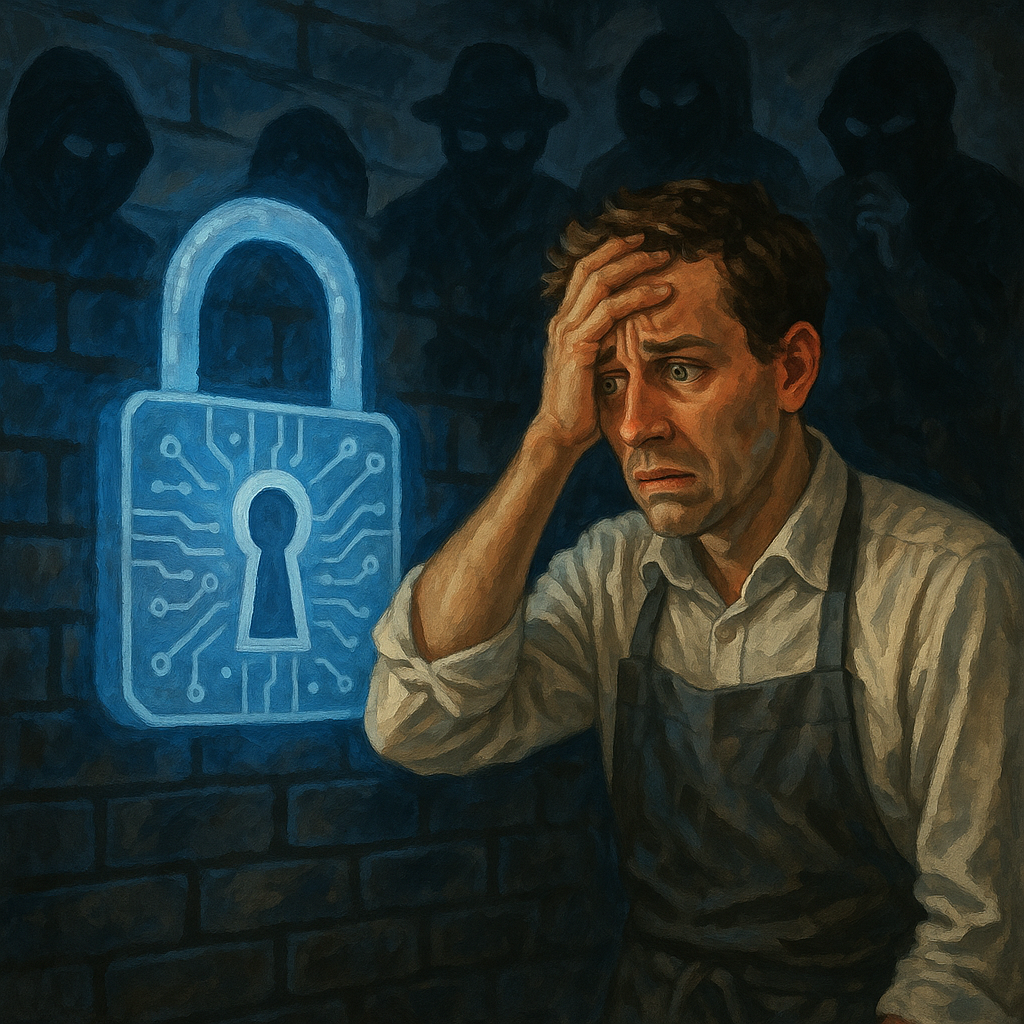
The most dangerous assumption in cybersecurity is the belief that attackers target only large corporations. Small and medium businesses (SMBs) operate under this false sense of security, convinced their size makes them irrelevant to cybercriminals. The data tells a different story. In 2025, 88% of breaches at small businesses involved ransomware, compared to just 39% at large organizations. This isn’t coincidence—it’s strategic targeting.
Criminals don’t avoid small businesses. They hunt them specifically because they combine valuable data with weak defenses. Understanding why SMBs have become the primary target rather than collateral damage changes how businesses approach security and how professionals view their role in protecting company assets.
The Low-Hanging Fruit Reality
Attackers follow a cost-benefit calculation. Breaking into a Fortune 500 company requires significant resources, technical skill, and time. These organizations employ security teams, use advanced detection systems, and maintain incident response protocols that make breaches difficult and expensive.
Small businesses present the opposite scenario. With limited security budgets and often no dedicated IT staff, they offer easier access to valuable data. The Hiscox Cyber Readiness Report found that 59% of SMEs globally reported experiencing a cyberattack in the past 12 months. This isn’t random bad luck—it’s predictable exploitation of known vulnerabilities.
The economics favor attackers. Small businesses are 40% less likely to have encrypted data but 10% more likely to be extorted successfully. They pay faster, ask fewer questions, and often lack the forensic capabilities to track how the breach occurred. For criminals running ransomware operations as businesses, SMBs represent high-volume, low-resistance targets.
Why Size Doesn’t Protect You
The “too small to target” myth stems from a fundamental misunderstanding of modern cybercrime. Ransomware attacks aren’t carried out by individual hackers manually selecting victims. They’re automated campaigns that scan thousands of networks simultaneously, exploiting any weakness discovered.
Attackers use automated tools that don’t distinguish between a 10-person accounting firm and a 10,000-person corporation. These tools probe for:
- Unpatched software vulnerabilities
- Weak remote access configurations
- Exposed administrative interfaces
- Poor email security allowing phishing
When the scan identifies a vulnerability, the attack proceeds automatically. The size of the organization is irrelevant to the malware. What matters is the presence of exploitable weaknesses.
Small businesses often delay security updates, use consumer-grade rather than business-grade tools, and lack the monitoring systems that detect intrusions early. These gaps make them easier targets than enterprises with dedicated security operations centers.
The Supply Chain Connection
Even if a small business believes its data lacks value, attackers view it differently. SMBs frequently serve as entry points for supply chain attacks targeting larger organizations.
A small accounting firm manages financial data for dozens of larger clients. A regional IT services provider has administrative access to corporate networks. A specialized manufacturing supplier connects directly to Fortune 500 production systems. Attackers breach the smaller organization first, then use those trusted connections to reach the actual target.
This strategy bypasses enterprise security controls entirely. When a supplier’s credentials access the network, security systems see legitimate traffic. By the time the breach is detected, attackers have moved laterally through systems, often remaining undetected for weeks.
Research from Halcyon’s “Small and Medium Businesses Under Siege” report confirms that SMBs are deliberately used as supply chain attack vectors. This makes protecting small businesses not just an individual concern but a systemic security issue affecting entire industries.
What Makes SMBs Vulnerable
Several factors combine to create the vulnerability gap between small businesses and enterprises.
Limited Security Investment
Small businesses typically allocate less than 5% of their IT budget to security. Enterprise organizations spend 10-15%. This difference translates directly into protection gaps:
- Basic antivirus instead of endpoint detection and response
- No email security beyond standard spam filters
- Absence of network monitoring and intrusion detection
- Limited or no security training for staff
The perception that security is a cost rather than a risk management necessity delays investment until after a breach occurs.
Lack of Dedicated Security Expertise
Most small businesses don’t employ security specialists. IT responsibilities fall to staff members managing multiple roles, often without formal security training. Critical tasks like patch management, access control reviews, and security monitoring happen inconsistently or not at all.
The median time to remediate known vulnerabilities is 32 days. Attackers exploit many vulnerabilities at “day zero”—before patches are even available. Without dedicated personnel monitoring threat intelligence and prioritizing patches, SMBs remain vulnerable to known exploits long after fixes exist.
Complex Technology Environments
Ironically, small businesses often run technology environments as complex as much larger organizations. Cloud services, mobile devices, remote access systems, and third-party applications create numerous potential entry points. Each connection represents a potential vulnerability.
Managing this complexity requires expertise small businesses rarely possess in-house. Misconfigurations—incorrect settings that weaken security—become common. An improperly configured cloud storage bucket, weak remote desktop protocol settings, or default administrative passwords can provide attackers complete access.
Human Factor Vulnerabilities
Technical controls only work when people use them correctly. Small businesses face unique human factor challenges.
Phishing attacks remain the most effective entry point. Small businesses receive 1 in every 323 emails as a targeted malicious email—the highest rate of any organization size. With fewer employees, attackers can research individuals more thoroughly, crafting convincing messages that appear legitimate.
Limited security training means employees can’t identify sophisticated phishing attempts. The rise of AI-generated phishing has created a 4.5x increase in effectiveness. These messages contain no obvious grammatical errors or suspicious formatting that previously flagged scams. They reference specific company details and use appropriate business language.
The Real Cost of Being Wrong
Dismissing ransomware risk as someone else’s problem carries measurable consequences.
Direct Financial Impact
The average cost of a ransomware breach for small businesses ranges from $120,000 to $1.24 million. This includes ransom payments (if made), recovery costs, lost revenue during downtime, and remediation expenses.
Recovery alone—excluding any ransom payment—averages $1.53 million. For businesses operating on thin margins, this expense represents an existential threat. Many small businesses that experience ransomware attacks close within six months.
Operational Disruption
Ransomware doesn’t just lock files—it halts business operations completely. When HR systems are encrypted, payroll can’t be processed. When customer databases are locked, sales teams can’t access contact information or order histories. When accounting systems go down, invoices can’t be sent and payments can’t be processed.
The ripple effects extend beyond the immediate attack. Supply chain partners lose confidence. Customers question whether their data remains secure. Employees face uncertainty about job security. The operational impact often exceeds the technical damage.
Repeat Targeting
Paying a ransom doesn’t solve the problem. 69% of businesses that paid a ransom were attacked again. Attackers maintain access to compromised networks, knowing that organizations willing to pay once will likely pay again. They may also sell access to other criminal groups, multiplying the threats a breached business faces.
This recidivism rate makes the initial vulnerability exponentially more expensive over time.
Moving Beyond the Myth
Recognizing that small businesses are primary targets requires a fundamental shift in how security is approached.
Security as Business Continuity
Rather than viewing security as an IT concern, small businesses need to recognize it as essential to business continuity. The question isn’t whether to invest in security but whether the business can survive without it.
This reframing changes budget discussions. Security measures aren’t expenses competing with other investments—they’re insurance protecting all other business assets. A company can’t serve customers, pay employees, or generate revenue if its systems are locked by ransomware.
Layered Defense Approach
No single tool prevents all attacks. Effective security requires layered controls that make breaches progressively more difficult:
- Email filtering that blocks phishing attempts before they reach inboxes
- Endpoint protection that detects malware if a malicious link is clicked
- Network segmentation that limits lateral movement if one system is compromised
- Backup systems that enable recovery without paying ransoms
- Access controls that restrict what compromised credentials can access
Each layer adds friction to the attack process, increasing the likelihood that the attack is detected and stopped before causing damage.
Employee Security Awareness
Technical controls fail when humans make mistakes. Regular security awareness training turns employees from vulnerabilities into a defensive layer.
Effective training focuses on practical skills:
- Identifying phishing emails and suspicious links
- Using password managers correctly
- Recognizing social engineering attempts
- Following proper procedures when something seems wrong
- Understanding why security policies exist
Training shouldn’t be annual compliance checkbox exercise but ongoing reinforcement through simulated phishing tests, brief regular updates, and clear communication about current threats.
Professional Response Planning
Having a response plan before an incident occurs dramatically reduces damage. 98% of businesses claim to have ransomware response playbooks, but more than half lack essential features like pre-defined chains of command or communication templates.
Effective plans specify:
- Who has authority to make decisions during an incident
- How to isolate infected systems quickly
- When and how to contact law enforcement and legal counsel
- How to communicate with customers, partners, and employees
- What data backups exist and how to restore them
- Whether cyber insurance coverage applies
Testing these plans through tabletop exercises reveals gaps before real incidents expose them.
The Career Implications
For professionals entering or advancing in business roles, understanding SMB vulnerability matters beyond academic interest.
Every Department Owns Security
Security incidents affect every department simultaneously. HR can’t process payroll. Sales can’t access customer data. Finance can’t send invoices. Marketing can’t update websites. Security isn’t just IT’s responsibility—it’s everyone’s job to prevent incidents that stop all work.
Professionals who understand security risks and contribute to prevention become more valuable to employers. They avoid mistakes that endanger the business and demonstrate the judgment needed for increased responsibility.
Security Awareness as Competitive Advantage
Job candidates who understand basic security principles differentiate themselves in competitive markets. Employers increasingly value security-conscious employees who won’t create liabilities through careless behavior.
This skill set applies across industries and roles. Any position handling customer data, financial information, or business communications requires security awareness. Building these competencies early creates opportunities throughout a career.
Remote Work Considerations
Remote work arrangements have expanded attack surfaces significantly. Home networks lack enterprise security controls. Personal devices may have outdated software or inadequate protection. Public Wi-Fi connections expose sensitive data to interception.
Remote employees who secure their home offices, use VPNs correctly, and follow access protocols protect both their company and their job security. One major breach traced to a remote employee’s compromised home network can end a career and a business simultaneously.
Practical First Steps
Recognizing vulnerability is the first step. Taking action separates intention from results.
For Small Business Owners
Start with high-impact, low-cost measures:
- Enable multi-factor authentication on all accounts that support it
- Implement automated backup systems with offline or immutable copies
- Deploy business-grade email security that blocks phishing attempts
- Establish a patch management schedule for all systems and software
- Create and test an incident response plan
These steps don’t require massive budgets but significantly reduce attack success rates.
For Employees
Individual actions contribute to organizational security:
- Use password managers instead of reusing weak passwords
- Verify requests for sensitive information or money transfers through independent channels
- Report suspicious emails to IT rather than just deleting them
- Keep work and personal accounts separate on devices
- Follow company security policies even when they seem inconvenient
One vigilant employee can prevent a breach that affects everyone.
For Career Changers and Students
Build security awareness as a professional competency:
- Take free online courses in cybersecurity fundamentals
- Follow security news to understand current threats
- Practice identifying phishing attempts in your own email
- Learn how to secure home networks and personal devices
- Understand compliance requirements in your target industry
These skills make you immediately more valuable to potential employers and demonstrate professional maturity.
The Bottom Line
Small businesses aren’t safe from cyberattacks because of their size. They’re primary targets specifically because of vulnerabilities that size creates. Criminals prefer SMBs because they offer easier access, faster payments, and less sophisticated detection capabilities than larger organizations.
The myth of safety through insignificance has been thoroughly disproven by data showing that 88% of SMB breaches involve ransomware and that attacks have increased 34% year over year. These aren’t abstract statistics—they represent real businesses that closed, real employees who lost jobs, and real careers derailed by preventable incidents.
Understanding this reality changes how businesses invest in security, how employees approach their daily work, and how professionals build career-relevant skills. The question isn’t whether small businesses will be targeted but whether they’ll be prepared when attacks occur.
Security isn’t optional for small businesses. It’s the foundation that makes everything else possible.
Enjoyed this article?
Subscribe to Professor Simon's weekly newsletter for practical insights, career guidance, and leadership lessons delivered every Friday.
A confirmation email will be sent. If you don't receive it, please check your spam or junk folder.
No spam. Unsubscribe anytime.
Prefer to Listen?
Listen to Professor Simon’s IT & Cybersecurity Podcast for practical conversations about cybersecurity careers, certifications, security leadership, and real-world lessons from the field.
Listen on Spotify