Why Most People Fail Their First Cybersecurity Certification Attempt and How to Beat the Odds
Why Most People Fail Their First Cybersecurity Certification Attempt and How to Beat the Odds
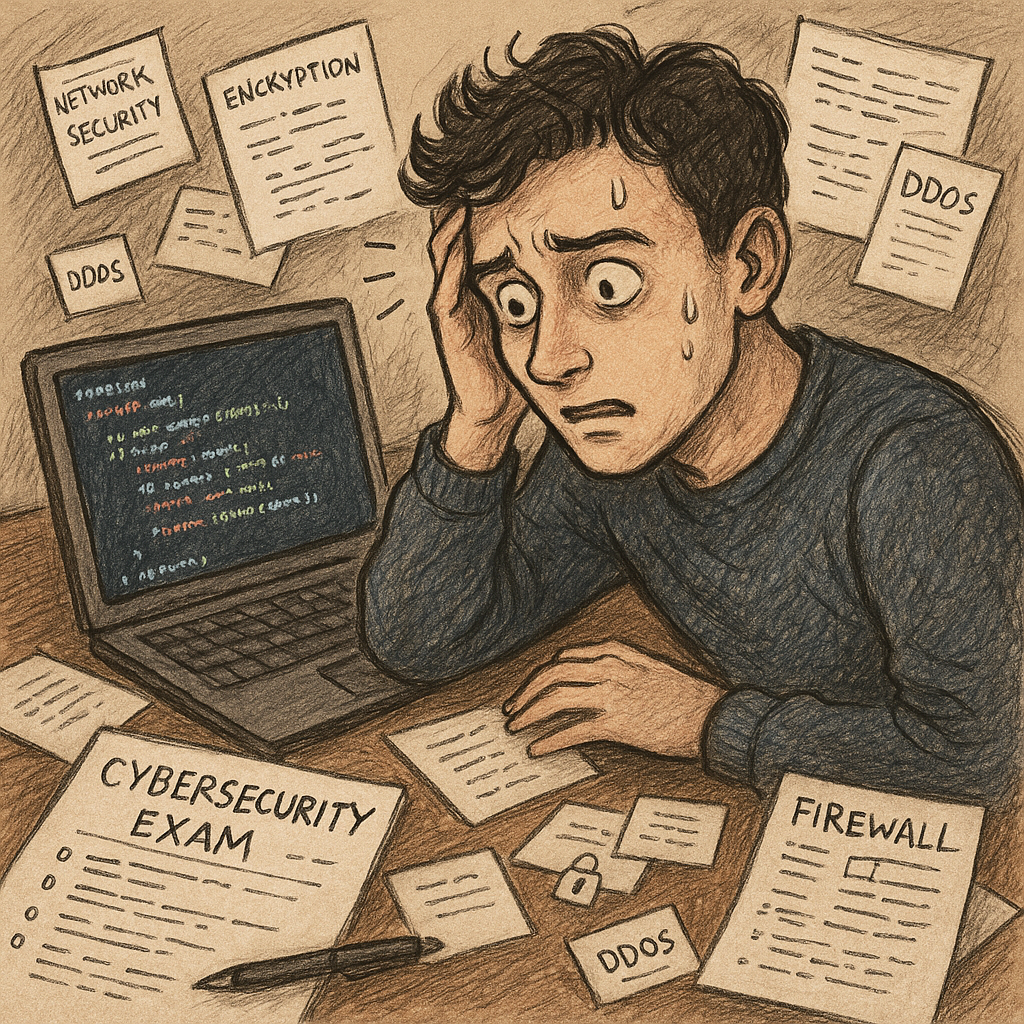
Failure is a normal part of the certification journey. An instructor with years of experience admitted openly that he failed his first major certification attempt. This fact matters because it contradicts the myth that successful cybersecurity professionals pass everything on the first try. The reality is different: many candidates fail, learn from the experience, and come back stronger. Understanding why failure happens and how to prepare differently turns a setback into a strategic advantage.
The stakes feel high. Certification exams cost hundreds or thousands of dollars, require weeks or months of study time, and carry the psychological weight of proving competence in a competitive field. When candidates walk out of a testing center knowing they failed, the immediate reaction is often doubt about whether they belong in cybersecurity at all. That reaction is understandable but incorrect. Failure reveals weak areas, exposes poor study strategies, and provides diagnostic information that makes the next attempt far more effective.
This guide explains the most common reasons candidates fail cybersecurity certifications, what those failures reveal about preparation gaps, and how to design a study approach that dramatically improves pass rates. It covers mindset shifts, study systems, cost considerations, and practical techniques backed by practitioner experience and real-world data.
Understanding Why Failure Rates Are High
Cybersecurity certifications are designed to be difficult. They test not just memorized facts but the ability to apply concepts in realistic scenarios, interpret complex questions, and make decisions under time pressure. Vendor-reported pass rates for popular certifications like CompTIA Security+ hover around 70-75 percent for general test-takers, rising to 85-93 percent for candidates who use structured training and high-quality practice exams. These figures suggest that preparation quality matters far more than raw intelligence.
The gap between passing and failing often comes down to a few specific behaviors. Candidates who rely on a single resource, skip practice exams, or avoid weak areas tend to fail. Those who use multiple resources, take timed mock exams regularly, and deliberately focus on weak domains tend to pass. The difference is not natural ability. It is preparation strategy.
Many candidates underestimate the time required to understand concepts deeply enough to handle scenario-based questions. Memorizing definitions works for basic recall questions, but advanced certifications demand understanding how concepts connect, when to apply different techniques, and how to interpret ambiguous or misleading question language. This requires active practice, not passive reading.
The Most Common Reasons Candidates Fail
Relying on a Single Study Resource
Using one book, one video course, or one boot camp limits exposure to different question styles and explanations. Cybersecurity concepts can be explained from multiple angles, and different resources emphasize different aspects. A candidate who studies only one source may miss critical nuances that appear in the actual exam.
Effective preparation combines multiple resources: a structured course for foundational knowledge, practice exams to learn question style, labs or simulations for hands-on reinforcement, and supplemental reading to fill gaps. Each resource type serves a different purpose in building comprehensive understanding.
Skipping Practice Exams Until the End
Practice exams are not just a final check. They are a core part of the learning process. Taking timed practice exams early reveals which topics need more attention, trains time management, and teaches how to interpret question language. Candidates who wait until the end to take practice exams lose the opportunity to use them as diagnostic tools.
Daily or weekly practice questions build familiarity with question patterns and reduce anxiety. Over time, candidates learn to spot distractor answers, recognize scenario clues, and manage the pacing required to finish within the time limit. This skill is separate from technical knowledge and must be developed through repetition.
Ignoring Weak Areas and Focusing on Strengths
After a failed attempt, score reports typically show performance by domain or topic area. Many candidates focus their retake preparation on areas where they already scored well, thinking that maximizing strong areas will compensate for weak ones. This approach rarely works. Certification exams distribute questions across all domains, and consistent weakness in even one area can prevent passing.
The better strategy is to identify the lowest-scoring domains and dedicate focused study time to them. This might mean spending less time reviewing familiar topics and more time on uncomfortable or confusing material. It is not enjoyable, but it is effective.
Treating the Exam as Pure Knowledge Recall
Advanced certifications test judgment and reasoning, not just memory. Questions often present scenarios where multiple answers could seem correct, and the candidate must choose the best option based on priorities like least risk, most efficiency, or closest alignment with industry standards. This requires understanding the mindset the exam expects, not just knowing technical facts.
For example, a CISSP question might ask what a manager should do first when a security incident is detected. The technically correct answer might involve detailed investigation, but the best answer from a risk management perspective could be containment or communication. Candidates who approach the exam as a technical quiz often miss these distinctions.
Underestimating the Mental and Emotional Pressure
Exam anxiety is real and measurable. Time pressure, high stakes, and the fear of wasting money and time create stress that degrades cognitive performance. Candidates who have not simulated exam conditions during practice often struggle with pacing, second-guessing, and decision paralysis during the real test.
Practicing under timed conditions, taking breaks to manage stress, and building confidence through repeated mock exams all reduce anxiety. On exam day, mental preparation is as important as technical readiness.
What to Do After a Failed Attempt
Treat Failure as Diagnostic Information
A failed exam provides data. The score report shows which domains were weak and which were strong. This is valuable feedback that most learners never receive in self-study. Instead of treating failure as a personal deficiency, candidates should treat it as a personalized gap analysis.
The next step is to redesign the study plan around the weak areas. If network security scored poorly, allocate more time to subnetting, protocols, and common vulnerabilities. If cryptography was weak, focus on encryption algorithms, key management, and practical use cases. This targeted approach is far more efficient than starting from scratch.
Change the Study Strategy
Repeating the same study method and expecting different results rarely works. If the first attempt relied on video courses and note-taking, the second attempt might add daily practice questions, hands-on labs, and teaching concepts to someone else. Different study techniques engage the brain differently and reinforce learning from multiple angles.
One effective technique is spaced repetition: reviewing material at increasing intervals to strengthen long-term retention. Another is active recall: testing yourself without looking at notes, which forces deeper retrieval and understanding. Both methods are supported by cognitive science and widely used by successful test-takers.
Schedule the Retake with a Deadline
Open-ended study plans lead to procrastination. Setting a firm retake date creates urgency and structure. Most certifications allow retakes after a waiting period, often 14 days for popular exams like CompTIA Security+. Candidates should use this time to adjust their approach, focus on weak areas, and take additional practice exams.
The deadline also provides accountability. Without it, candidates may delay indefinitely, lose momentum, and forget material already learned. A scheduled retake keeps the process moving forward.
How to Build a Preparation Strategy That Works
Use Multiple Study Resources
Combine different types of materials to cover the same content from multiple perspectives:
- A structured course or textbook for foundational knowledge
- Practice exams from reputable providers for question style and pacing
- Hands-on labs or simulations for practical reinforcement
- Community forums or study groups for discussion and clarification
No single resource covers everything perfectly. Using multiple sources fills gaps and reinforces understanding through repetition with variation.
Take Practice Exams Early and Often
Begin taking practice exams within the first few weeks of study, not just at the end. Early practice exams reveal knowledge gaps before they become ingrained. They also teach how to read questions, manage time, and recognize patterns in answer choices.
After each practice exam, review not just the wrong answers but also the correct ones. Understanding why an answer is correct reinforces reasoning and helps recognize similar patterns on the real exam.
Focus on Understanding, Not Memorization
Memorized facts fade quickly under stress. Understanding concepts allows candidates to reason through unfamiliar questions. Instead of memorizing definitions, focus on how concepts work, when to apply them, and how they connect to real-world scenarios.
For example, instead of memorizing the OSI model layers, understand how data flows through a network, where encryption occurs, and which attacks target which layers. This deeper understanding makes scenario-based questions easier to answer.
Simulate Real Exam Conditions
Practice exams should mimic the actual testing environment as closely as possible:
- Take them timed and in one sitting
- Eliminate distractions and interruptions
- Use the same tools or interfaces allowed on the real exam
- Avoid looking up answers until the full practice exam is complete
This builds the stamina, time management, and stress tolerance needed for the real test. Candidates who only study in short, casual sessions often struggle with the intensity of a multi-hour exam.
Review and Adjust Weekly
Set aside time each week to review progress, identify weak areas, and adjust the study plan. This keeps preparation on track and prevents wasted effort on already-mastered topics. A simple weekly review might include:
- Which practice exam domains scored lowest this week?
- Which concepts still feel unclear or confusing?
- What study techniques worked best this week?
- What needs to change for next week?
This iterative approach ensures continuous improvement rather than static repetition.
Is the Cost of Certification Worth It
Certification exams are expensive. CompTIA Security+ costs around $400. Advanced certifications like OSCP cost $1,700 or more, including lab time and exam attempts. Add in study materials, practice exams, and lost income from study time, and the total investment can exceed $2,000 to $3,000.
The return depends on career impact. Certifications often serve as gatekeepers for job applications, especially in government, defense, and regulated industries where specific credentials are required. A Security+ certification can qualify a candidate for entry-level security analyst roles that might otherwise be inaccessible. An OSCP can differentiate a penetration tester in a competitive market.
However, certifications alone do not guarantee employment. Employers value certifications as proof of baseline knowledge and commitment, but they also want experience, problem-solving skills, and cultural fit. The certification opens the door, but the candidate still has to walk through it.
For career changers and recent graduates, the cost is often justified by the career acceleration and credibility the certification provides. For mid-career professionals, the calculation depends on whether the certification aligns with career goals and employer expectations.
Hands-On Versus Multiple-Choice Certifications
Not all certifications are created equal. Multiple-choice exams like CompTIA Security+ test knowledge recall and scenario-based reasoning but do not require candidates to perform tasks. Hands-on exams like OSCP require candidates to compromise systems, document findings, and demonstrate practical skills in a timed environment.
Employers increasingly value hands-on certifications because they provide stronger evidence of practical ability. A candidate with an OSCP has proven they can conduct a penetration test under pressure, not just answer questions about one. This distinction matters more in technical roles where execution is critical.
However, multiple-choice certifications still have value. They are more accessible, less expensive, and cover broader foundational knowledge. For beginners, a Security+ or similar certification provides a structured introduction to cybersecurity concepts. For advanced practitioners, hands-on certifications demonstrate specialized expertise.
The best approach is often a progression: start with foundational multiple-choice certifications to build knowledge, then pursue hands-on certifications to prove practical skill in specific areas.
Managing Test Anxiety and Mental Preparation
Technical preparation is necessary but not sufficient. Mental preparation determines how well a candidate performs under pressure. Test anxiety degrades memory recall, slows decision-making, and increases the likelihood of careless mistakes.
Effective anxiety management techniques include:
- Simulating exam pressure during practice to build familiarity
- Using breathing exercises or brief mental breaks during the exam
- Reframing anxiety as normal and manageable rather than catastrophic
- Preparing thoroughly enough to build genuine confidence
- Accepting that perfection is not required, only passing
Confidence comes from preparation. Candidates who have taken multiple timed practice exams, reviewed weak areas repeatedly, and scored consistently above passing thresholds on mock exams walk into the real test with earned confidence. That confidence reduces anxiety and improves performance.
Realistic Timelines and Expectations
Most candidates underestimate the time required to prepare for a cybersecurity certification. A structured 90-day study plan is common for intermediate certifications like Security+, assuming daily study time of one to two hours. Advanced certifications like OSCP often require three to six months of intensive study and lab practice.
Working professionals and students must balance study time with other responsibilities. A realistic plan accounts for work, family, and rest. Burnout is counterproductive. Consistent daily progress is more effective than sporadic marathon study sessions.
Setting incremental milestones helps maintain motivation. Weekly goals like completing a chapter, taking a practice exam, or mastering a specific domain break the journey into manageable steps and provide regular progress feedback.
Final Thoughts
Failing a cybersecurity certification on the first attempt is common and often expected. The failure provides diagnostic information, reveals study weaknesses, and forces candidates to improve their approach. Those who analyze the failure, adjust their strategy, and try again typically pass on the second or third attempt.
Success requires more than technical knowledge. It requires using multiple resources, practicing under timed conditions, focusing on weak areas, and managing stress. It also requires realistic expectations about cost, time commitment, and the role certifications play in career advancement.
The certification itself is not the end goal. It is a tool for demonstrating knowledge, opening career doors, and building professional credibility. Candidates who approach it with discipline, persistence, and a willingness to learn from failure position themselves for long-term success in cybersecurity.
Enjoyed this article?
Subscribe to Professor Simon's weekly newsletter for practical insights, career guidance, and leadership lessons delivered every Friday.
A confirmation email will be sent. If you don't receive it, please check your spam or junk folder.
No spam. Unsubscribe anytime.
Prefer to Listen?
Listen to Professor Simon’s IT & Cybersecurity Podcast for practical conversations about cybersecurity careers, certifications, security leadership, and real-world lessons from the field.
Listen on Spotify