Why Cybersecurity Professionals Focus on the Wrong Things (And What to Do Instead)

Why Cybersecurity Professionals Focus on the Wrong Things (And What to Do Instead)
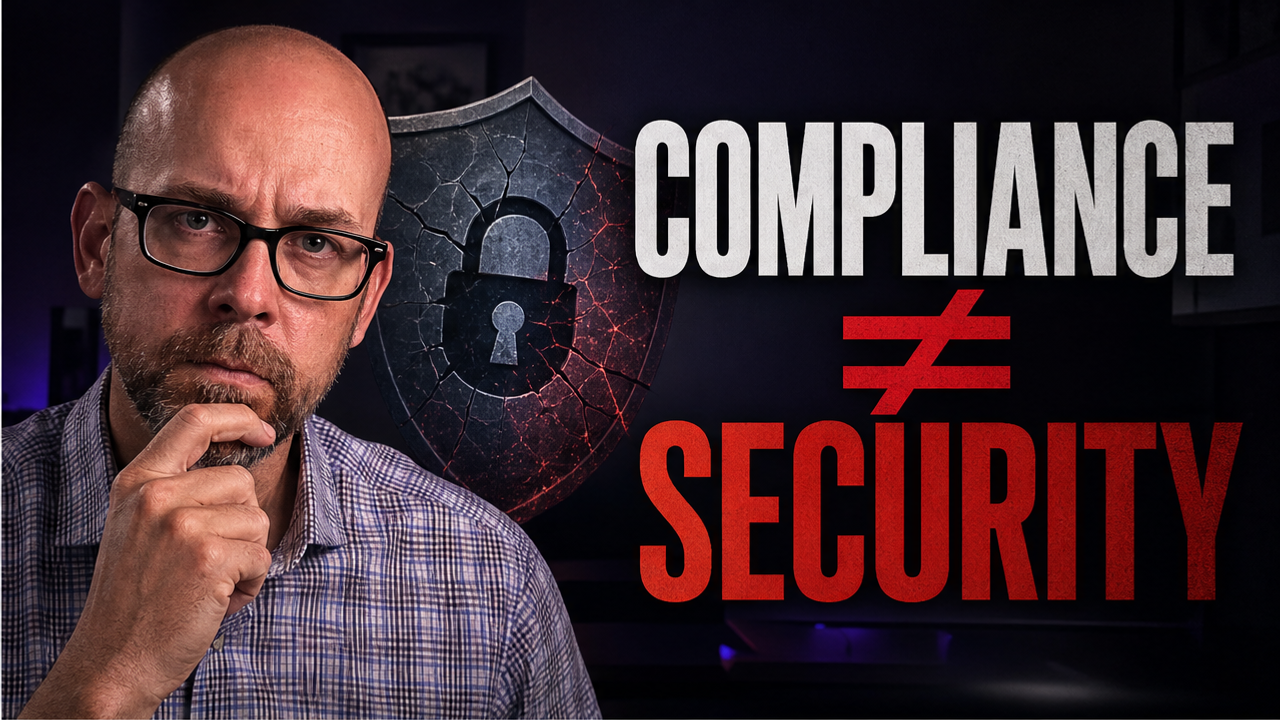
Security budgets continue to grow, organizations deploy more tools than ever, and yet breaches keep happening. The problem often isn’t a lack of resources or technology—it’s misplaced priorities. Many cybersecurity professionals, especially those new to the field, spend time and effort securing things that barely matter while leaving critical assets exposed.
This pattern shows up across industries. Teams implement sophisticated endpoint detection systems while leaving administrative credentials unchanged for months. Organizations enforce strict password rotation policies while ignoring unpatched internet-facing servers. The disconnect happens because security work often focuses on what’s visible, measurable, or easy to check off rather than what actually protects the business.
Understanding where to focus security efforts separates effective practitioners from those who just follow procedures. The difference comes down to asking better questions and thinking about security through the lens of business impact rather than technical completeness.
The Cost of Wrong Priorities
Security theater creates the appearance of protection without delivering real risk reduction. It happens when organizations implement controls that look impressive on paper but fail to address actual threats. The result wastes limited resources and creates a false sense of security that can be more dangerous than no security at all.
Consider a financial services company that invests heavily in biometric access controls for their office building while running outdated software on customer-facing applications. The physical security measures satisfy compliance requirements and impress visitors, but the real attack surface—the public-facing systems containing sensitive customer data—remains vulnerable. When a breach occurs through an unpatched web application, the biometric readers provide zero protection.
This pattern repeats because visible security measures receive attention while technical vulnerabilities remain abstract until someone exploits them. Badge readers and security cameras make stakeholders feel safer. Patch management and secure configuration don’t generate the same confidence, even though they matter far more for preventing actual breaches.
What Security Actually Protects
Effective security starts with understanding what matters to the organization. Before implementing any control, practitioners should be able to answer four fundamental questions that most security professionals never explicitly ask.
The Critical Questions Framework
What requires protection? Every organization has assets that, if compromised, would significantly damage operations, finances, reputation, or legal standing. These aren’t necessarily the most expensive systems or the newest technology. They’re the resources that support core business functions or contain sensitive information.
For an e-commerce company, the customer database and payment processing systems represent obvious critical assets. But the inventory management system might be equally important if its failure would prevent order fulfillment. The customer support ticket system might contain authentication credentials, personal information, and security questions that make it a valuable target.
Making this inventory specific matters. “Customer data” is too vague. “The MySQL database cluster at datacenter-east containing personally identifiable information for 2.3 million active customers” provides the clarity needed to make protection decisions.
What damage would occur if protection failed? Understanding consequences shapes appropriate responses. Not every asset deserves the same level of protection, and threats don’t all warrant equal concern.
The consequences vary significantly across scenarios. Confidentiality breaches might trigger regulatory fines, competitive disadvantage, or reputation damage. Integrity compromises could lead to incorrect business decisions, financial losses from corrupted transaction data, or safety issues if control systems are manipulated. Availability problems might cause direct revenue loss, customer attrition, or operational paralysis.
A healthcare provider losing patient records faces regulatory penalties, lawsuit exposure, and severe reputation damage. The same organization experiencing a ransomware attack that prevents access to medical records during patient care faces immediate safety risks alongside financial impact. The confidentiality breach is serious, but the availability problem is life-threatening.
What methods could cause that damage? Understanding attack vectors prevents wasted effort on unlikely scenarios while addressing realistic threats. Security professionals who skip this question often implement controls designed for threats that don’t match their environment.
External attackers might exploit internet-facing vulnerabilities, use social engineering against employees, or compromise third-party vendors with network access. Malicious insiders already have legitimate access and knowledge of security controls. Accidental damage from authorized users—the misconfigured firewall rule, the unintended data deletion—causes breaches without any malicious intent.
Many organizations obsess over sophisticated nation-state attack scenarios while ignoring basic security hygiene that would prevent the opportunistic attacks they’re far more likely to face. A state government agency worried about advanced persistent threats might overlook that most of their actual incidents come from phishing emails and unpatched systems.
What controls address those methods? Only after answering the first three questions does it make sense to select specific security measures. Controls should directly reduce the likelihood or impact of realistic threats against critical assets.
This sequence prevents the common pattern of deploying popular security tools without understanding what problems they solve. An organization doesn’t need a security information and event management system because everyone else has one. They need it if collecting and correlating logs from distributed systems would help detect specific attack patterns that threaten their critical assets.
Different Industries, Different Priorities
The CIA triad—confidentiality, integrity, and availability—represents the three core security goals, but organizations don’t value them equally. Understanding these differences helps practitioners make better decisions about where to focus.
E-commerce platforms prioritize availability because downtime directly prevents sales. Every minute the website is unreachable represents lost revenue. These organizations often accept slightly higher security risks if they improve uptime. They might run redundant systems that increase attack surface but ensure service continuity.
Intelligence agencies prioritize confidentiality above all else. Their core mission involves protecting classified information. These organizations will sacrifice availability—taking systems offline if compromise is suspected—to prevent unauthorized disclosure. They implement security controls that make systems difficult to use because the inconvenience is acceptable given the sensitivity of the data.
Financial institutions balance all three but often emphasize integrity because incorrect financial data undermines their fundamental purpose. A bank can’t function if account balances aren’t accurate. They implement extensive controls around transaction processing, change management, and data validation even when these controls reduce convenience or slow operations.
Medical facilities must prioritize availability of patient care systems while also protecting patient privacy. A hospital can’t deny emergency room staff access to medical records during a security incident, but they face severe penalties for privacy breaches. This creates complex trade-offs between security and operational requirements.
Recognizing these differences matters for job seekers deciding where to work and for practitioners designing security programs. The same control might be essential in one environment and irrelevant in another.
From Reactive to Proactive Security
Traditional security operates reactively, responding to incidents after they occur. Modern practitioners increasingly adopt proactive approaches that identify and address vulnerabilities before exploitation.
Gap analysis provides a structured method for proactive security improvement. The process compares the current security state against a desired target state, then identifies specific gaps that need remediation.
The process starts with defining the target state based on industry frameworks, regulatory requirements, and organizational risk tolerance. For many organizations, frameworks like NIST Cybersecurity Framework or CIS Critical Security Controls provide reasonable starting points. These frameworks describe security capabilities that organizations should have based on widespread practitioner experience.
The current state assessment documents existing controls, their implementation quality, and their effectiveness. This step requires honest evaluation. Many organizations discover they have controls that exist on paper but don’t function as intended. The password policy might require complex passwords, but if users write them on sticky notes, the control isn’t providing its intended protection.
Gap identification produces a prioritized list of missing or inadequate controls. Not all gaps deserve equal attention. Practitioners should prioritize based on the potential impact if the gap is exploited and the likelihood of exploitation given the organization’s threat environment.
Remediation planning translates identified gaps into specific projects with timelines, resource requirements, and success criteria. This stage transforms abstract security improvements into actionable work that can be scheduled, budgeted, and measured.
This proactive approach shifts security work from firefighting to strategic improvement. Instead of constantly responding to incidents, teams systematically reduce vulnerabilities before they’re exploited.
Zero Trust and the End of Assumed Safety
For years, security models assumed that users and systems inside the network perimeter could be trusted while external entities required strict controls. This assumption created significant vulnerabilities as attackers learned to breach the perimeter and then move freely through internal systems.
The Target breach of 2013 demonstrates why perimeter-only security fails. Attackers initially compromised a third-party HVAC vendor with network access to Target’s systems. That vendor connection provided a foothold inside the trusted network. From there, attackers moved laterally to point-of-sale systems and ultimately stole payment card data for 40 million customers.
The breach succeeded because Target’s security model treated anything inside the network as trusted. Once attackers bypassed perimeter controls through the vendor connection, they encountered minimal internal security preventing lateral movement. The same architectural weakness appears in countless other breaches.
Zero trust architecture addresses this problem by eliminating the concept of trusted internal networks. Instead, every access request requires authentication and authorization regardless of where it originates. A user connecting from inside the corporate office receives the same security scrutiny as someone connecting from a coffee shop.
Implementing zero trust involves several key principles:
- Verify explicitly using all available data points including user identity, location, device health, service or workload, data classification, and anomalies
- Use least privilege access, limiting users to only the specific resources they need for their current task
- Assume breach by minimizing blast radius, segmenting access, verifying encryption, and using analytics to detect threats
This approach significantly increases security by preventing attackers who gain initial access from freely exploring the network. Even if one system is compromised, proper segmentation and access controls limit how far the attacker can go.
Security as Business Enablement
A common misconception, especially among those new to cybersecurity, is that security only costs money without providing direct value. This thinking creates friction between security teams and business leadership, making it difficult to secure necessary resources.
Security doesn’t generate revenue the way sales or product development does, but it protects the organization’s ability to operate and generate revenue. Reframing security in these terms helps communicate its value to non-technical stakeholders.
Effective security enables business activities that would otherwise be too risky. E-commerce companies can accept credit card payments because security controls reduce fraud risk to acceptable levels. Healthcare providers can offer telemedicine services because security and privacy protections make it legally compliant. Financial institutions can offer mobile banking because security controls protect customer accounts.
When security teams prevent the organization from doing something, the conversation should focus on risk trade-offs rather than absolute prohibition. Instead of “we can’t do that because it’s not secure,” the message becomes “here’s the risk this creates, here are options to mitigate that risk, and here’s what it would cost.” This approach treats security professionals as advisors rather than gatekeepers.
Quantifying security value helps business leaders understand the return on security investments. While preventing a breach that didn’t happen is hard to measure, industry data provides context. The average cost of a data breach continues to rise, recently exceeding $4 million according to IBM’s annual studies. Regulatory fines can reach tens of millions for serious violations. Operational disruption from ransomware can cost organizations millions per day.
Security investments that prevent these outcomes deliver measurable value. A $500,000 security program that prevents a $5 million breach provides a clear positive return. Framing security spending this way helps secure buy-in from business leadership.
Avoiding Security Theater
Security theater refers to measures that provide the feeling of security without actually improving protection. These controls satisfy compliance checklists, impress stakeholders, or follow security best practices without addressing the organization’s actual threats.
Password policies provide a common example of security theater. Many organizations require users to change passwords every 60 or 90 days, believing regular changes improve security. Research shows this practice often backfires. Users respond by making minimal changes—replacing “Password123” with “Password124″—or writing passwords down because they can’t remember frequently changing credentials.
The policy looks rigorous and satisfies many compliance frameworks, but it reduces actual security by encouraging weak, predictable passwords and insecure storage practices. A better approach focuses on password strength requirements, multi-factor authentication, and monitoring for compromised credentials rather than arbitrary rotation schedules.
Spotting security theater requires asking whether a control actually addresses a realistic threat against a valuable asset. If the answer is unclear, the control might be theater.
Some warning signs include controls that:
- Satisfy compliance requirements but don’t reduce actual risk
- Protect low-value assets while leaving critical systems under-protected
- Create significant user friction without corresponding security benefits
- Look impressive to non-technical stakeholders but have limited technical effectiveness
- Follow outdated best practices that research has since questioned
Effective controls directly reduce the likelihood or impact of realistic threats. They might not be visible or impressive, but they address actual vulnerabilities that attackers could exploit.
Building the Right Security Mindset
Security practitioners who advance beyond entry-level roles develop a mindset centered on business risk rather than technical completeness. This shift requires changing how you approach security decisions.
Start by understanding the business. Learn what the organization does, how it makes money, what regulations apply, and what would cause serious operational problems. Security decisions should protect these business fundamentals rather than pursuing theoretical security perfection.
Think like an attacker occasionally. Understanding how systems could be compromised helps prioritize protective controls. If your database credentials haven’t changed in two years and dozens of former employees had access, that’s a more urgent risk than not having the latest intrusion detection system.
Accept that perfect security is impossible and unnecessary. Every security control has costs in money, time, convenience, or system performance. The goal is appropriate security for the asset’s value and the realistic threat level, not maximum security regardless of cost.
Communicate security in business terms. Technical details matter for implementation, but stakeholder conversations should focus on risk, business impact, and return on investment. Replace “we need to implement defense-in-depth” with “we need multiple security layers so that if one control fails, others still protect critical customer data.”
Question conventional wisdom. Many security practices persist because “that’s how it’s always been done” rather than because they’re effective. Be willing to examine whether controls deliver actual value. Some traditional practices like frequent password changes have been revised based on research showing they’re counterproductive.
Prioritize relentlessly. Security teams always have more work than resources. Learning to identify and focus on the highest-impact activities separates effective practitioners from those who stay perpetually busy without moving the needle on actual risk.
Getting Started with Better Security Thinking
Those entering cybersecurity can start applying these concepts immediately, even before formal training or certification.
When learning security concepts, always connect them to business scenarios. Don’t just memorize that encryption protects confidentiality. Understand when confidentiality matters enough to accept encryption’s performance overhead and when it doesn’t.
Practice asking the four critical questions about any security scenario you encounter. What needs protection? What happens if protection fails? How could damage occur? What controls address those methods? This framework works whether you’re analyzing a case study, designing security for a home network, or preparing for an interview.
Study real breaches to understand how attacks actually unfold. Case studies show that attackers typically exploit basic weaknesses—unpatched systems, weak passwords, social engineering—rather than sophisticated zero-day exploits. Understanding real attack patterns prevents wasting effort on Hollywood-style scenarios.
Learn to evaluate security controls critically. When someone proposes a new security measure, ask what specific threat it addresses and how it reduces risk. This analytical approach prevents blindly implementing tools because they’re popular or checking boxes without improving security.
Focus on fundamentals before specialization. Asset management, access control, vulnerability management, and incident response skills apply everywhere. Deep expertise in specialized areas like malware analysis or penetration testing builds on top of these fundamentals.
Moving Forward
Security professionals who consistently ask better questions, focus on business-aligned priorities, and think beyond checkbox compliance become valuable assets to their organizations. They prevent the costly mistakes that come from protecting the wrong things while leaving critical assets exposed.
This approach requires moving past the comfortable certainty of following procedures without question. It means accepting that security involves judgment, trade-offs, and business considerations alongside technical controls. The practitioners who embrace this complexity advance beyond entry-level roles to positions where they shape security strategy rather than just implementing someone else’s decisions.
Those entering the field have an advantage because they can develop this mindset from the start rather than unlearning checkbox security thinking later. Start by understanding what actually matters to the organizations you want to protect. Everything else follows from that foundation.
Enjoyed this article?
Subscribe to Professor Simon's weekly newsletter for practical insights, career guidance, and leadership lessons delivered every Friday.
A confirmation email will be sent. If you don't receive it, please check your spam or junk folder.
No spam. Unsubscribe anytime.
Prefer to Listen?
Listen to Professor Simon’s IT & Cybersecurity Podcast for practical conversations about cybersecurity careers, certifications, security leadership, and real-world lessons from the field.
Listen on Spotify