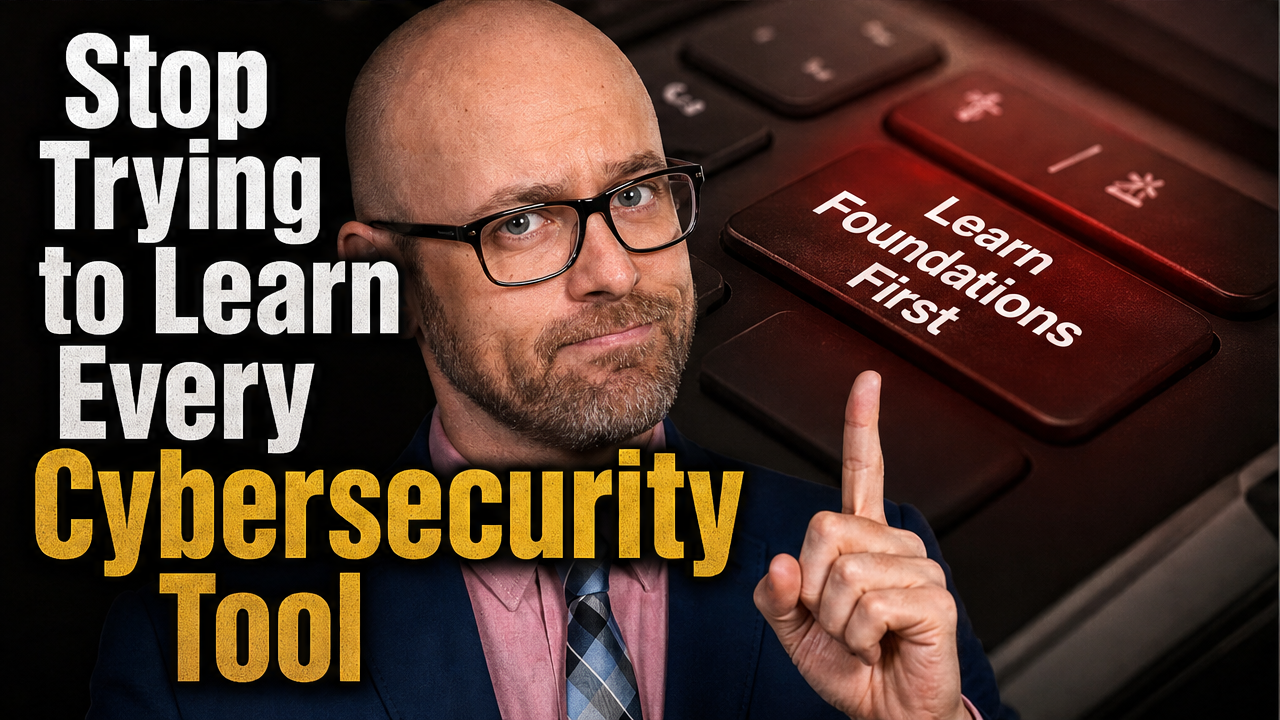
Why Curiosity Beats Technical Skills in Cybersecurity Careers

Why Curiosity Beats Technical Skills in Cybersecurity Careers
The cybersecurity field changes faster than almost any other technical discipline. Tools that dominated the market three years ago have been replaced. Attack vectors that seemed theoretical are now daily realities. Certifications that once guaranteed interviews are now baseline expectations.
This relentless pace creates a paradox for beginners. The question “What should I learn?” becomes increasingly difficult to answer when the answer changes every few years. Students accumulate certifications. Career changers master specific tools. Yet many still struggle to break into the field or advance beyond entry-level roles.
The difference between those who thrive and those who stagnate rarely comes down to technical knowledge. It comes down to curiosity—the ability to learn continuously, adapt quickly, and find answers independently. This matters more than any certification, more than deep expertise in a single tool, and more than a technical degree.
Understanding the Curiosity Advantage
Curiosity in cybersecurity is not about casual interest. It is the persistent drive to understand why systems behave as they do, how attacks work beneath the surface, and what happens when assumptions fail. This mindset separates professionals who follow procedures from those who improve them.
The technical landscape of cybersecurity evolves at a rate that makes deep specialization risky for beginners. A tool mastered today may be deprecated tomorrow. A framework considered essential may be replaced by something fundamentally different. The industry operates on a three-to-five-year obsolescence cycle for many tools and techniques.
Organizations recognize this reality. Hiring managers at security operations centers, penetration testing firms, and enterprise security teams consistently prioritize learning agility over static knowledge. They need team members who can investigate unfamiliar threats, research new attack patterns, and document findings clearly—all without constant supervision.
Research from multiple cybersecurity employers indicates that approximately 70% of hiring decisions for junior roles weigh “ability to learn independently” more heavily than certification counts. The remaining 30% still value certifications, but primarily as evidence of baseline knowledge rather than job readiness.
Why Traditional Learning Paths Fall Short
Many beginners approach cybersecurity with a collector mentality. They accumulate certifications: CompTIA Security+, CEH, CISSP. They complete online courses. They memorize definitions and frameworks. Yet they struggle when faced with novel scenarios that do not match their training materials.
This happens because traditional learning emphasizes knowledge acquisition over knowledge application. Students learn what a SQL injection is but not how to discover one in an unfamiliar application. They memorize OWASP Top 10 categories but cannot recognize business logic flaws that fall outside predefined lists.
The gap becomes obvious during technical interviews. Candidates recite memorized answers to standard questions but freeze when asked to explain their thought process for investigating an unknown vulnerability. They can describe tools but cannot explain when to use them or why one approach might work better than another for a specific target.
Certifications serve important purposes. They provide structured learning paths for foundational knowledge. They signal commitment to the field. They meet regulatory requirements for certain positions. However, they cannot teach the investigative instinct that curiosity develops—the impulse to dig deeper when something seems off, to question assumptions, and to explore edge cases.
Building a Curiosity-Driven Learning Approach
Developing curiosity as a professional skill requires intentional practice. It is not enough to be generally interested in security. The field demands specific habits that transform passive interest into active investigation.
Daily Curiosity Practices
Start with the fifteen-minute deep dive. Each day, identify one concept, tool, or technique encountered during work or study. Spend exactly fifteen minutes researching it beyond surface-level understanding. Read documentation. Find practical examples. Identify edge cases or limitations.
This practice builds investigative stamina. Beginners often stop researching once they find an answer that seems adequate. Professionals continue until they understand not just what works, but why it works and when it might fail.
Implement the “ask one why question” method. When encountering any security concept, tool recommendation, or best practice, ask why it exists. Why does Linux dominate server environments in security contexts? Why do penetration testers prioritize certain vulnerability types? Why do security operations centers structure alerts in specific ways?
These questions force deeper engagement with material. They reveal assumptions, expose gaps in understanding, and create connections between isolated pieces of knowledge.
The Documentation Habit
Documentation transforms curiosity from internal learning into demonstrable skill. Every experiment, lab exercise, or concept investigation should produce written output that explains the process and findings.
Effective security documentation follows a consistent structure:
- State the problem or question being investigated
- Describe the hypothesis or expected outcome
- Detail the experimental process or research methodology
- Present results with evidence
- Explain implications or lessons learned
This approach serves multiple purposes. It creates a learning portfolio that demonstrates investigative ability to potential employers. It forces clearer thinking by requiring explicit articulation of reasoning. It builds communication skills essential for technical roles.
Many successful career changers credit documentation as the primary factor in their hiring. They created public repositories of lab write-ups, vulnerability analyses, and learning journals. These portfolios provided tangible evidence of self-teaching ability and technical curiosity—evidence that interviews alone cannot capture.
Practical Applications for Different Roles
Curiosity manifests differently across security disciplines, but the underlying principle remains constant: investigate beyond the obvious and document the process.
Security Operations and Defensive Roles
Security operations centers generate thousands of alerts daily. Most are false positives or low-priority events. Curious analysts do not simply acknowledge and close alerts. They investigate patterns, research unusual behaviors, and document findings that improve detection rules.
When an alert fires for suspicious PowerShell activity, the curious analyst asks why that specific command triggered detection. They research the command’s legitimate uses. They explore variations that might evade detection. They document their findings to improve team knowledge and detection capabilities.
This investigative approach identifies threats that automated tools miss. It develops intuition for distinguishing genuinely malicious activity from benign edge cases. It builds the analytical skills that lead to threat hunting roles and senior positions.
Offensive Security and Penetration Testing
Penetration testers face unique systems during every engagement. Automated tools identify common vulnerabilities, but sophisticated findings require manual investigation. Curious testers explore application logic, test unusual input combinations, and investigate how different components interact.
Consider testing a web application with standard authentication. Most testers verify SQL injection vulnerabilities and cross-site scripting. Curious testers explore business logic: Can users access other accounts by manipulating sequential identifiers? Do administrative functions have additional hidden parameters? What happens when legitimate workflows are performed in unexpected orders?
These investigations uncover insecure direct object references, authorization bypasses, and business logic flaws—vulnerability classes that automated scanners typically miss. They require understanding not just how systems work, but how they might fail under unusual conditions.
Starting From Zero: The Complete Beginner Path
Career changers without technical backgrounds face unique challenges. They lack the foundational knowledge that IT professionals take for granted. They do not know where to start or what progression makes sense.
Curiosity provides the roadmap. Rather than attempting to master everything simultaneously, beginners should focus on breadth-first exploration with curiosity-driven depth when something becomes particularly interesting.
Foundational Knowledge Areas
Linux mastery comes first regardless of chosen specialization. Most server targets run Linux. Most security tools are designed for Linux environments. Comfort with command-line interfaces, file systems, and basic administration is non-negotiable.
Start with basic installation and configuration. Set up a virtual machine running Ubuntu or Kali Linux. Learn to navigate directories, manage files, and understand permissions. When encountering unfamiliar commands or concepts, investigate thoroughly. Why do certain directories require elevated privileges? How do symbolic links work? What happens when file permissions are configured incorrectly?
Networking fundamentals follow closely. Security professionals must understand how data moves between systems. Study the OSI model not as an abstract concept but as a practical framework for troubleshooting and attack analysis. Set up simple networks in virtual environments. Capture traffic with Wireshark. Investigate protocols until their behavior becomes intuitive.
Web security provides accessible entry points for offensive and defensive specializations. Modern applications are complex, but their core vulnerabilities are well-documented and exploitable in controlled lab environments. Platforms like PortSwigger Web Security Academy and TryHackMe offer progressive, hands-on challenges that build practical skills.
Building Your Learning Laboratory
Home labs provide safe environments for experimentation without organizational infrastructure or expensive equipment. A modern laptop with virtualization software (VirtualBox or VMware Workstation Player) and free security distributions (Kali Linux, Parrot OS) creates a complete learning environment.
Start with deliberately vulnerable applications:
- DVWA (Damn Vulnerable Web Application)
- Metasploitable 2
- WebGoat
- OWASP Juice Shop
These platforms contain intentional vulnerabilities for learning purposes. Work through them methodically. When exploitation succeeds, investigate why it worked. When it fails, research what prevented it. Document each experiment with screenshots, explanations, and lessons learned.
Advanced learners graduate to platforms that simulate real-world environments. Hack The Box and TryHackMe offer progressively challenging systems that require combining multiple techniques. These platforms also provide community write-ups after completion, allowing comparison of different approaches and methods.
Demonstrating Curiosity to Employers
Technical skills matter, but demonstrating curiosity matters more for entry-level positions. Hiring managers assume technical knowledge will develop with experience. They want evidence of self-teaching ability and investigative persistence.
Creating a Learning Portfolio
Public repositories serve as evidence of continuous learning. GitHub, personal blogs, or dedicated security write-up platforms host documentation of lab exercises, vulnerability research, and tool experimentation.
Quality matters more than quantity. Three detailed write-ups demonstrating investigative process, clear thinking, and thorough documentation outweigh dozens of brief tool demonstrations. Each entry should show:
- The challenge or problem being investigated
- Research methodology and tools used
- Obstacles encountered and how they were overcome
- Technical findings with supporting evidence
- Reflection on lessons learned and knowledge gaps identified
This documentation style demonstrates the complete investigative cycle that professional security work requires. It shows not just success, but the ability to work through failure and uncertainty—the reality of most security investigations.
Preparing for Curiosity-Based Interviews
Technical interviews for security positions increasingly focus on thought process rather than memorized answers. Interviewers ask open-ended questions designed to evaluate investigative approach and learning ability.
Common curiosity-assessment questions include:
- Describe a time you learned a new technology or tool independently
- How do you approach investigating a problem you have never encountered before?
- Walk through your process for researching an unfamiliar attack technique
- What security topic are you currently learning about and why?
Strong answers emphasize process over outcomes. They detail specific steps: where research began, how sources were evaluated, what obstacles arose, and how understanding deepened through experimentation. They acknowledge knowledge gaps honestly while demonstrating clear strategies for addressing them.
Weak answers focus on final results without explaining the journey. They suggest learning happened automatically or easily. They claim comprehensive knowledge without acknowledging the field’s complexity or ongoing evolution.
Avoiding Common Curiosity Pitfalls
Curiosity without discipline can become counterproductive. Beginners sometimes confuse scattered interest with focused learning. They jump between topics without building depth. They collect surface-level knowledge about dozens of tools without mastering fundamentals.
Balanced Breadth and Depth
The field rewards generalists with strong foundations more than specialists with narrow expertise. Junior roles require broad security awareness across multiple domains: application security, network security, system hardening, and incident response fundamentals.
This does not mean superficial familiarity with everything. It means building solid foundational knowledge across core areas while developing deeper expertise in one or two specializations based on genuine interest. Curiosity guides this process naturally—areas that consistently capture attention deserve deeper investigation.
Warning signs of unfocused learning include:
- Constantly starting new courses without completing previous ones
- Collecting certifications without practical application of learned concepts
- Following every new tool or technique announcement without evaluating relevance
- Inability to explain previously studied topics in detail
Effective learners maintain curiosity journals that track ongoing investigations, knowledge gaps identified, and planned deep dives for future exploration. This creates intentionality while preserving flexibility to follow genuinely interesting tangents.
Using AI Tools Appropriately
Artificial intelligence tools like ChatGPT and Claude provide unprecedented access to technical explanations and code examples. They can accelerate learning when used correctly—as clarification engines rather than solution generators.
Curious learners use AI to understand concepts more deeply, not to bypass understanding entirely. When encountering an unfamiliar term or technique, they research through documentation and practical examples first. AI tools help clarify confusing explanations or provide alternative perspectives after initial investigation.
This approach preserves the investigative struggle that builds genuine understanding. Immediate AI-generated answers shortcut the mental effort that transforms information into lasting knowledge. They prevent the pattern recognition and intuition development that comes from wrestling with problems independently.
Use AI tools to:
- Explain complex concepts in multiple ways until understanding clicks
- Generate practice scenarios for testing knowledge
- Debug code or configuration errors after attempting manual troubleshooting
- Translate technical jargon into accessible language
Avoid using AI to:
- Generate complete solutions without understanding components
- Replace manual research and documentation reading
- Answer interview questions or certification exam practice
- Substitute for hands-on experimentation
Moving Forward with Curiosity
Cybersecurity careers built on curiosity withstand industry changes that obsolete specific tools and techniques. The field will continue evolving. New threats emerge constantly. Technologies shift. Methodologies advance. Professionals who maintain investigative curiosity and document their learning adapt naturally.
This approach requires patience. Curiosity-driven learning produces slower initial progress than certification cramming or tool memorization. It demands more mental effort. It accepts confusion and failure as necessary parts of growth. However, it builds sustainable careers rather than fragile specializations dependent on specific technologies.
Start small. Choose one area of security that genuinely interests you. Investigate it thoroughly. Document what you learn. Share your findings. Ask questions when stuck. Dig deeper when something seems unclear. Build the habit of persistent investigation.
The jobs that exist five years from now may require tools that do not exist today. They will absolutely require professionals who can learn independently, investigate thoroughly, and communicate clearly. Curiosity develops all three capabilities simultaneously. It remains the only truly future-proof skill in an unpredictably evolving field.
Enjoyed this article?
Subscribe to Professor Simon's weekly newsletter for practical insights, career guidance, and leadership lessons delivered every Friday.
A confirmation email will be sent. If you don't receive it, please check your spam or junk folder.
No spam. Unsubscribe anytime.
Prefer to Listen?
Listen to Professor Simon’s IT & Cybersecurity Podcast for practical conversations about cybersecurity careers, certifications, security leadership, and real-world lessons from the field.
Listen on Spotify