What the Capital One Data Breach Teaches Us About Career Responsibility in Cybersecurity

What the Capital One Data Breach Teaches Us About Career Responsibility in Cybersecurity
The 2019 Capital One data breach exposed the personal information of over 100 million customers and cost the company $190 million in settlements. The breach affected one of America’s largest financial institutions and revealed fundamental security oversights that anyone entering cybersecurity should understand. The incident wasn’t the result of a sophisticated nation-state attack or advanced persistent threat—it stemmed from basic cloud security misconfigurations and organizational failures that created the perfect conditions for disaster.
For professionals building careers in cybersecurity or IT, this breach offers critical lessons about handling security responsibilities when organizational priorities compete with proper safeguards. The technical failures that enabled the breach were symptoms of deeper organizational challenges: rapid growth that outpaced security maturity, unclear accountability for cloud configurations, and cultural factors that prevented early detection of vulnerabilities. Understanding what went wrong at Capital One provides a roadmap for making better decisions throughout your career.
Understanding What Actually Happened
The breach occurred through a relatively straightforward attack chain that exploited two fundamental security weaknesses. A former AWS employee, Paige Thompson, discovered a misconfigured web application firewall (WAF) that allowed her to perform a Server-Side Request Forgery (SSRF) attack. This technique tricked Capital One’s cloud servers into revealing their own credentials by accessing the AWS metadata service—a legitimate feature that servers use to obtain configuration information.
The second critical failure involved excessive permissions granted to those server credentials. Once Thompson obtained the credentials through the SSRF vulnerability, she found they had far more access than necessary. Instead of being limited to specific functions, these credentials allowed broad access to Capital One’s S3 storage buckets containing customer data. She exfiltrated approximately 30 gigabytes of sensitive information over several weeks without detection.
The breach went unnoticed until Thompson posted about her activities on GitHub and Slack, eventually leading to her arrest. Capital One’s monitoring systems failed to flag unusual outbound data transfers or suspicious use of the compromised credentials. The company discovered the breach not through its security controls but through an external tip.
The Shared Responsibility Model Breakdown
Capital One operated its infrastructure on Amazon Web Services, which employs a shared responsibility model for security. AWS secures the underlying cloud infrastructure—physical data centers, hardware, and hypervisors. Customers like Capital One bear full responsibility for securing their applications, data, and configurations within that infrastructure.
This division of responsibility creates confusion, particularly for organizations transitioning from traditional data centers to cloud environments. Studies indicate that 82% of cloud security incidents stem from misunderstandings about this model. Capital One’s technical team understood cloud architecture—the company was known for cloud-savvy operations—but gaps remained between that knowledge and actual implementation.
The misconfigured WAF represented a customer-side configuration error entirely within Capital One’s control. AWS provided the tools to restrict access to the metadata service and configure proper firewall rules. Capital One’s security team failed to implement these protections correctly or verify their effectiveness through testing.
Business students and non-technical managers should recognize that selecting a reputable cloud provider doesn’t eliminate security responsibilities. The provider secures their infrastructure, but your organization must configure applications, manage access permissions, and monitor for threats. Contracts with major cloud vendors don’t include guarantees about your configuration choices.
The Principle of Least Privilege
The most expensive mistake in the Capital One breach involved granting excessive permissions to server credentials. The principle of least privilege states that every user, program, or process should have only the minimum access rights needed to perform its function. Capital One’s servers needed some access to AWS services to operate, but they received far broader permissions than necessary.
When Thompson obtained those credentials through the SSRF attack, she inherited all the excessive permissions granted to the servers. If Capital One had followed least privilege principles strictly, those credentials would have been limited to specific, essential functions. The breach might still have occurred, but the attacker’s ability to access sensitive data would have been severely constrained.
Implementing least privilege requires ongoing effort and discipline. It’s easier during initial setup to grant broad permissions and restrict them later—except teams rarely return to tighten permissions once systems are working. Pressure to deploy quickly often wins out over security configuration.
For early-career professionals, least privilege thinking extends beyond technical permissions. Consider what information team members actually need to perform their roles. Default-open approaches where everyone accesses everything create unnecessary risk. Each additional person with access represents another potential point of failure.
Practical application involves asking specific questions before granting access: What specific tasks require this permission? Can we accomplish the same goals with more restricted access? How will we audit whether these permissions remain appropriate over time? These questions feel tedious when facing deployment deadlines, but they prevent the accumulation of permission debt that creates vulnerabilities.
The Growth and Security Tension
Capital One’s IT organization grew 360% over seven years leading up to the breach. The company expanded rapidly to support business growth and cloud migration initiatives. This expansion created conditions where security practices couldn’t keep pace with operational demands.
Rapid growth introduces multiple security challenges. New team members require training on security standards and configurations. System complexity increases as new services and integrations get deployed. Existing staff face pressure to deliver features quickly, leaving less time for security reviews. Documentation falls behind actual implementation, creating knowledge gaps about how systems actually work.
The breach revealed that Capital One’s monitoring systems didn’t adequately track administrative account activity or outbound data transfers. These gaps likely emerged as the organization scaled faster than security capabilities matured. Teams focused on building new functionality rather than instrumenting comprehensive monitoring.
Career professionals should recognize warning signs that growth is outpacing security maturity. When deployment timelines consistently exclude time for security reviews, when monitoring systems can’t keep up with new infrastructure, or when team members lack clear ownership of security configurations—these indicate accumulating security debt.
Advocating for security resources during growth phases requires demonstrating business impact. Frame security needs in terms of risk to customer trust, regulatory compliance, and potential financial exposure. The Capital One settlement cost $190 million—far exceeding any reasonable security investment that might have prevented the breach.
Speaking Up About Security Concerns
Multiple points in Capital One’s timeline offered opportunities to identify and address the vulnerabilities that enabled the breach. Someone likely noticed overly permissive IAM roles during deployment. Engineers probably understood that the WAF configuration wasn’t optimal. Monitoring gaps were visible to operations teams.
Yet these concerns either weren’t raised or didn’t receive sufficient priority to drive remediation. Organizational culture and communication patterns determine whether security issues get addressed before becoming incidents. Creating space for team members to raise concerns requires both individual courage and organizational receptiveness.
Early-career professionals often hesitate to question security practices, especially when senior staff or leadership appear unconcerned. The fear of appearing difficult, slowing down projects, or demonstrating ignorance can prevent raising legitimate concerns. This hesitation becomes dangerous when security vulnerabilities accumulate silently.
Effective approaches to raising security concerns focus on specific risks rather than vague warnings. Instead of saying “our cloud security seems weak,” identify particular configurations that violate best practices: “Our server IAM roles include permissions beyond what’s documented in our architecture. This creates unnecessary exposure if those credentials are compromised.” Specificity makes the concern actionable.
Documentation strengthens your position. When you identify a potential security issue, document the specific configuration, relevant best practices or frameworks, and potential impact. This creates a record that protects both you and the organization. If leadership chooses to accept the risk, that becomes a documented decision rather than an overlooked concern.
Understanding when to escalate matters. If your immediate supervisor doesn’t address a significant security concern, determine appropriate escalation paths. Many organizations have security teams, risk management functions, or compliance officers who should review serious issues. Using these channels demonstrates professionalism rather than insubordination.
Cloud Configuration Fundamentals
The technical vulnerabilities in the Capital One breach stemmed from fundamental cloud configuration errors that remain common. Understanding these basics helps professionals at any level recognize similar risks in their own environments.
SSRF vulnerabilities occur when applications accept user input and use it to make server-side requests without proper validation. In Capital One’s case, the misconfigured WAF allowed attackers to manipulate requests so servers accessed the AWS metadata service. This service provides credentials to legitimate applications but becomes a security risk when accessible through SSRF attacks.
Modern cloud platforms now offer protections specifically designed to prevent this attack vector. AWS introduced IMDSv2 (Instance Metadata Service Version 2), which requires special headers for metadata requests. This makes SSRF attacks significantly harder. Organizations migrating existing applications to cloud platforms need to actively enable these protections—they’re not always default settings.
IAM (Identity and Access Management) configurations determine what actions credentials can perform. Properly configured IAM follows these principles:
- Grant permissions to specific resources rather than entire services
- Use time-limited credentials that expire automatically
- Require additional authentication for sensitive operations
- Enable detailed logging of all actions performed with credentials
- Review and audit permissions regularly
Capital One’s IAM configuration violated several of these principles. The server credentials had access to numerous S3 buckets rather than specific resources they needed. No additional authentication gates protected access to sensitive customer data. Logging existed but alerts weren’t configured to flag unusual access patterns.
For professionals managing cloud infrastructure, automated tools can help maintain secure configurations. AWS Config, Azure Policy, and similar services continuously monitor for configuration drift and deviations from security baselines. These tools identify issues like overly permissive IAM roles before they’re exploited.
The Complexity Challenge
Capital One’s technology environment at the time of the breach included approximately 300 different programming languages and platforms. This extreme complexity made comprehensive security monitoring nearly impossible. Even well-resourced security teams struggle to maintain visibility across such diverse technology stacks.
Complexity creates security challenges in multiple ways. Different technologies require different security tools and expertise. More components mean more potential vulnerabilities and larger attack surfaces. Integration points between systems often receive less security scrutiny than individual components. Documentation and knowledge become fragmented across specialized teams.
Organizations accumulate complexity through various mechanisms. Different teams choose different tools for similar purposes. Legacy systems continue operating alongside modern replacements. Acquisitions bring entirely new technology stacks. Each addition seems reasonable individually, but the cumulative effect undermines security.
Evaluating whether complexity is necessary requires examining both technical and organizational factors. Some complexity reflects genuine business needs—different use cases genuinely require different tools. Other complexity stems from poor coordination, lack of architectural governance, or teams optimizing locally rather than considering broader impacts.
Career professionals can apply several strategies to manage security in complex environments:
- Push for standardization where business needs allow
- Invest heavily in observability and monitoring platforms that provide unified visibility
- Document integration points and security boundaries clearly
- Conduct regular architecture reviews focused on reducing unnecessary complexity
- Calculate the security cost of adding new technologies to the environment
When complexity is unavoidable, security approaches must adapt. Defense in depth becomes critical—no single security control will cover all technologies. Behavior-based monitoring can detect anomalies even when the underlying technology is diverse. Strong access controls and network segmentation limit how far attackers can move through complex environments.
Insider Threats and Access Controls
Paige Thompson’s background as a former AWS employee complicated the Capital One breach narrative. She had insider knowledge of AWS architecture and cloud security from her previous role. This raises important questions about insider threats and how organizations manage access for employees with privileged knowledge.
True insider threats come in several forms. Malicious insiders intentionally abuse legitimate access to steal data or cause harm. Negligent insiders accidentally create vulnerabilities through carelessness or lack of awareness. Compromised insiders have their credentials stolen and used by external attackers. Former employees may retain knowledge or access beyond their departure.
Thompson’s attack didn’t rely on insider access to AWS systems—she exploited Capital One’s public-facing vulnerabilities. However, her insider knowledge likely helped identify those vulnerabilities more quickly than an external attacker without cloud expertise might have.
Organizations manage insider threats through multiple controls:
- Thorough background checks before granting access to sensitive systems
- Behavioral monitoring that identifies unusual access patterns
- Regular access reviews ensuring permissions match current roles
- Prompt access revocation when employees change roles or leave
- Technical controls limiting what even privileged users can do
- Cultural emphasis on security awareness and reporting suspicious behavior
Zero-trust architecture addresses insider threats by eliminating implicit trust based on network location or employment status. Every access request gets verified, regardless of source. Users and systems receive only the minimum necessary permissions, verified continuously rather than granted permanently.
Capital One’s monitoring systems should have detected Thompson’s activities regardless of her technical knowledge. Large data exfiltration from multiple S3 buckets over several weeks represented anomalous behavior that automated systems can identify. The failure to detect this activity reflected gaps in monitoring and alerting rather than the sophistication of the attack.
Detection and Response Gaps
Capital One discovered the breach only after Thompson posted about her activities online and someone reported her to the company. The security monitoring systems that should have detected unusual activity failed at multiple points. This detection failure often causes more damage than the initial vulnerability exploitation.
Effective detection requires monitoring at multiple layers. Network monitoring tracks data flows and identifies unusual patterns. Application logging records user actions and system behaviors. Cloud service logs capture API calls and configuration changes. User behavior analytics establish baselines and flag deviations. These layers provide overlapping coverage so failures in one area don’t create blind spots.
Capital One’s specific detection gaps included:
- Insufficient monitoring of outbound data transfers from S3 buckets
- Inadequate alerting on unusual credential usage patterns
- Limited visibility into administrative actions across cloud environments
- Missing behavioral baselines that would have highlighted anomalous access
These gaps are common. Organizations invest heavily in prevention—firewalls, access controls, vulnerability scanning—while underinvesting in detection and response. Prevention eventually fails. Attackers find ways around security controls. Misconfigurations happen. Detection determines how long attackers operate inside your environment before you notice.
Building detection capabilities requires several components. Log aggregation centralizes security-relevant data from distributed systems. SIEM (Security Information and Event Management) platforms analyze logs to identify suspicious patterns. Automated alerting notifies security teams about high-priority events. Playbooks document response procedures for different scenarios.
For early-career security professionals, developing detection and response skills builds marketable capabilities. Organizations need people who can tune alerting systems to reduce false positives, investigate suspicious events to determine whether they’re genuine threats, and coordinate response activities when incidents occur. These skills remain relevant across different technologies and environments.
Regulatory and Compliance Implications
The Capital One breach triggered multiple regulatory investigations and resulted in settlements with various government agencies. The OCC (Office of the Comptroller of the Currency) assessed $80 million in penalties. CFPB (Consumer Financial Protection Bureau) penalties added to the total. Securities and Exchange Commission investigated disclosure practices. State attorneys general pursued consumer protection claims.
These regulatory consequences reflected several factors beyond the breach itself. Capital One is a regulated financial institution subject to heightened scrutiny. The breach affected sensitive financial and personal information protected under various laws. The company’s failure to implement basic security controls demonstrated inadequate risk management. Public statements about security capabilities prior to the breach created potential disclosure issues.
Regulatory frameworks increasingly hold organizations accountable for basic security hygiene. GDPR in Europe, CCPA in California, and similar laws worldwide establish minimum security standards and require breach notifications. Financial institutions face additional regulations like GLBA (Gramm-Leach-Bliley Act) and PCI DSS for payment card data.
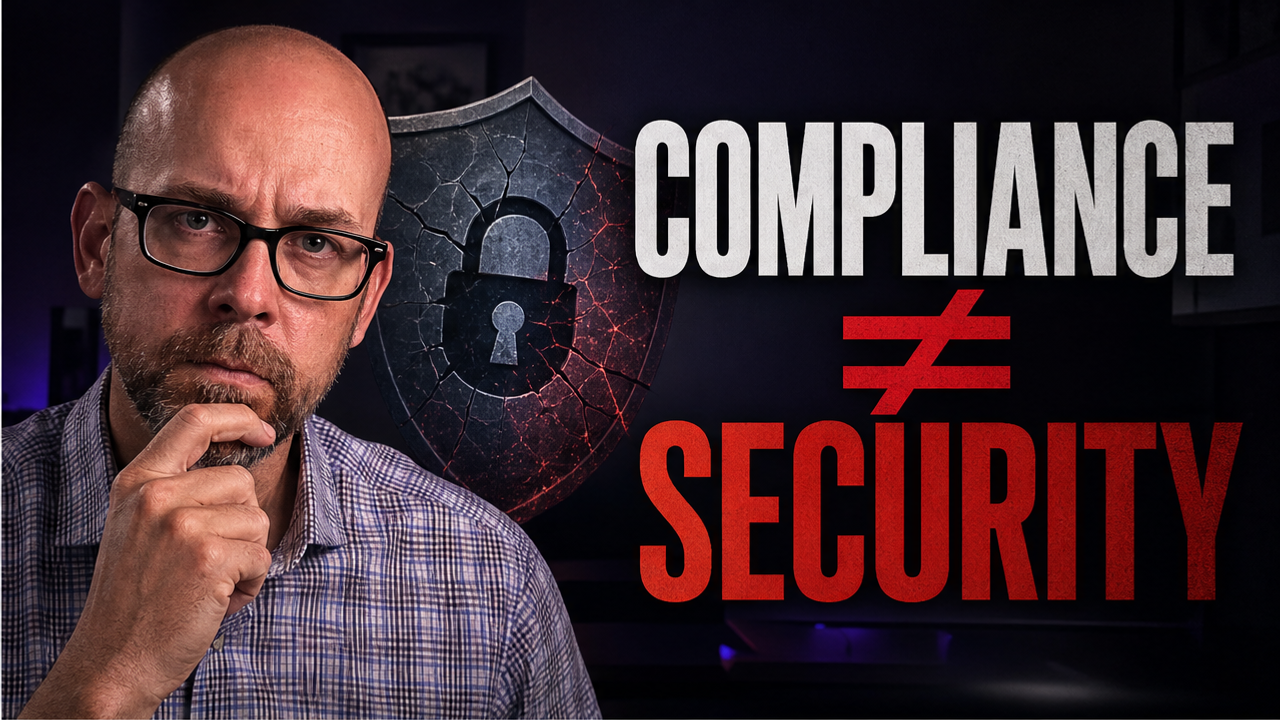
Compliance professionals should understand that meeting regulatory requirements doesn’t guarantee adequate security. Capital One had extensive compliance programs but still experienced a major breach. Regulations establish minimum standards, often based on past incidents rather than current threat landscapes. Effective security requires going beyond compliance checklists to address actual risks.
The breach also highlighted liability questions in cloud computing. Who bears responsibility when security failures involve both cloud provider infrastructure and customer configurations? Legal frameworks continue evolving to address these questions. Contracts between cloud providers and customers typically specify that customers own responsibility for their configurations, but courts may interpret these agreements differently during litigation.
Career Lessons and Professional Development
The Capital One breach offers several actionable lessons for building security awareness and responsibility throughout your career, regardless of your specific role or experience level.
Develop security fundamentals early. Understanding basic concepts like least privilege, defense in depth, and secure configuration applies across different technologies and roles. These principles remain constant even as specific tools and platforms change. Invest time in learning foundational security concepts rather than only focusing on particular vendor technologies.
Cultivate security mindfulness in daily work. Whether you’re writing code, configuring systems, analyzing data, or managing projects, consider security implications of your decisions. Ask questions about access requirements, data handling, and potential abuse scenarios. This mindset becomes habitual with practice and dramatically improves your contribution to organizational security.
Build documentation habits. Clear documentation of configurations, architectural decisions, and security controls helps teams maintain consistent practices as organizations grow. When you implement something, document why you made specific security choices. This knowledge prevents future team members from accidentally weakening security because they don’t understand the reasoning behind current configurations.
Seek feedback from security professionals. If your organization has security staff, ask them to review your work. Security teams often have limited capacity and focus on high-risk areas, but most security professionals appreciate when developers, administrators, or analysts proactively request input. This helps you learn while building relationships across teams.
Stay informed about security incidents affecting your industry or technology stack. Breach post-mortems like this Capital One analysis reveal common patterns and failure modes. Learning from others’ incidents helps you recognize similar vulnerabilities in your own environment before they’re exploited.
Understand business context for security decisions. Security always involves tradeoffs with functionality, usability, cost, and time-to-market. Effective security professionals articulate risks in business terms and propose solutions that address security concerns while supporting organizational goals. Pure security maximalism that ignores business realities doesn’t produce sustainable outcomes.
Develop response capabilities alongside prevention. Incidents will occur despite best efforts. Knowing how to investigate suspicious activity, contain incidents, and recover operations makes you significantly more valuable than someone who only focuses on prevention. Participate in incident response exercises and tabletop drills when opportunities arise.
Moving Forward With Confidence
The Capital One breach demonstrates that even large, sophisticated organizations with significant security resources can experience major incidents. This shouldn’t create fear or paralysis—it should inform realistic expectations and practical preparation.
Security incidents stem from accumulations of smaller failures rather than single catastrophic mistakes. Capital One’s breach required multiple security controls to fail simultaneously. The SSRF vulnerability alone wouldn’t have enabled data exfiltration without excessive IAM permissions. Proper monitoring could have detected the breach early and limited damage. Any one of these factors addressed differently might have prevented or contained the incident.
This pattern means individual professionals can meaningfully improve security through attention to their specific areas of responsibility. You don’t need to solve all security challenges simultaneously. Focus on implementing basic controls properly: appropriate access permissions, secure configurations, adequate logging, and regular reviews.
Organizations building or improving security programs should prioritize foundational capabilities over advanced solutions. Capital One failed at basic cloud configuration despite having mature security operations in other areas. Investment in fundamental practices—least privilege, configuration management, monitoring, response procedures—provides more security value than sophisticated tools layered on weak foundations.
The cloud security landscape continues evolving with better tools, clearer guidance, and more mature practices since 2019. Cloud providers now offer improved default configurations, better security services, and clearer documentation about shared responsibility. Industry frameworks provide tested approaches to common challenges. The lessons from Capital One helped drive many of these improvements.
Current and aspiring security professionals enter the field during a period of expanding opportunity. Organizations recognize that security can’t be an afterthought or purely technical function. They need people who understand both security fundamentals and business context, who can implement practical controls while communicating effectively with diverse stakeholders. The Capital One breach and similar incidents have elevated security’s organizational importance.
Building a career in cybersecurity means accepting that perfect security doesn’t exist. Sophisticated attackers will eventually find ways around defenses. New vulnerabilities emerge constantly. Organizational pressures create tradeoffs. Success involves managing risks, detecting issues early, responding effectively, and continuously improving based on lessons learned. The Capital One breach reminds us that these capabilities matter more than any specific technology choice or security product.
Enjoyed this article?
Subscribe to Professor Simon's weekly newsletter for practical insights, career guidance, and leadership lessons delivered every Friday.
A confirmation email will be sent. If you don't receive it, please check your spam or junk folder.
No spam. Unsubscribe anytime.
Prefer to Listen?
Listen to Professor Simon’s IT & Cybersecurity Podcast for practical conversations about cybersecurity careers, certifications, security leadership, and real-world lessons from the field.
Listen on Spotify