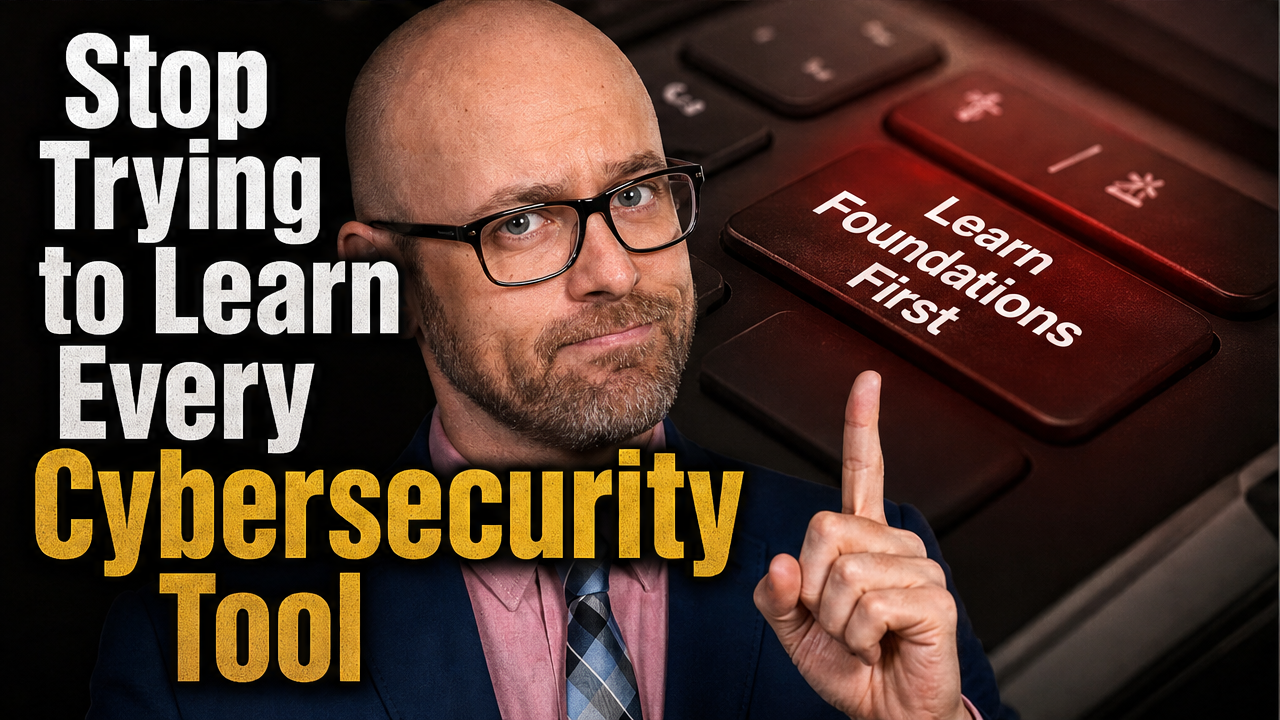
What Is Identity and Access Management? A Career Guide for Beginners

What Is Identity and Access Management? A Career Guide for Beginners
While most aspiring cybersecurity professionals set their sights on becoming penetration testers or SOC analysts, one of the fastest-growing disciplines in the field remains surprisingly overlooked. Identity and Access Management (IAM) represents a foundational yet evolving specialty that combines technical operations, policy enforcement, and strategic thinking—often with clearer career progression and less burnout than incident-heavy roles.
IAM professionals ensure that digital identities across organizations remain secure, properly provisioned, and compliant with regulatory requirements. As credential theft continues to outpace traditional perimeter breaches and cloud adoption accelerates, organizations face exploding demand for professionals who understand how to manage access from hire to retirement. For students, career changers, and IT professionals seeking entry into cybersecurity, IAM offers structured pathways that value process knowledge and attention to detail alongside technical skills.
Understanding Identity and Access Management Fundamentals
At its core, IAM encompasses the technologies, policies, and processes that control who can access what within an organization’s digital environment. Rather than focusing solely on preventing external attacks, IAM addresses a more persistent challenge: ensuring thousands of employees, contractors, and automated systems maintain appropriate access levels as roles change, projects evolve, and employment relationships end.
The discipline operates on four foundational pillars that guide every IAM program regardless of organization size or industry.
Administration establishes the framework for managing digital identities throughout their lifecycle. This includes creating accounts when employees join, modifying permissions when they change roles, and deactivating access when they depart. Organizations struggling with this phase frequently discover former employees retaining system access months after termination—a violation waiting to be exploited.
Authentication verifies that users are who they claim to be before granting access. Modern approaches extend far beyond username and password combinations. Multi-factor authentication (MFA) adds layers like biometric verification or hardware tokens, while single sign-on (SSO) balances security with usability by allowing one authenticated session to access multiple applications.
Authorization determines what authenticated users can actually do within systems. Just because someone proves their identity doesn’t mean they should access every database or modify critical configurations. Role-based access control (RBAC) assigns permissions based on job functions, while the principle of least privilege ensures users receive only the minimum access required for their responsibilities.
Auditing provides the accountability layer that makes IAM programs effective. Comprehensive logs track who accessed what resources, when they did so, and what actions they performed. These audit trails prove essential during compliance reviews, security investigations, and forensic analyses following incidents.
These pillars work together to create what practitioners call the identity lifecycle—the journey from account creation through modification to eventual deactivation.
Why Organizations Prioritize IAM Security
The shift toward IAM as a critical security function stems from fundamental changes in how attacks occur and how organizations operate.
Credential-based attacks have become the primary entry point for breaches. Despite what movies portray, most hackers don’t break through firewalls using sophisticated exploits. They log in with stolen credentials obtained through phishing, social engineering, or purchasing leaked databases. Once inside with legitimate-looking access, attackers move laterally through networks, escalate privileges, and exfiltrate data—all while appearing as normal user activity.
Cloud adoption has multiplied the complexity of access management exponentially. When applications lived in on-premises data centers, IT teams could control access through centralized directories. Today’s hybrid environments span multiple cloud providers, SaaS applications, and remote endpoints. Each platform introduces its own authentication mechanisms, creating a fragmented landscape where overlooked accounts or misconfigured permissions create security gaps.
Regulatory requirements continue to expand across industries and jurisdictions. GDPR mandates strict controls over personal data access. HIPAA requires detailed audit trails for healthcare information. SOX demands segregation of duties in financial systems. Organizations facing these frameworks need IAM programs that don’t just prevent breaches but demonstrate continuous compliance through documented policies and verifiable controls.
The zero-trust security model—which assumes no user or system should be trusted by default—places IAM at the center of modern security architecture. Rather than relying on perimeter defenses, zero-trust continuously verifies identity, enforces least privilege, and monitors behavior. This paradigm shift transforms IAM from a supportive function into a strategic security pillar.
Core IAM Components and Technologies
Several specialized capabilities extend the foundational IAM framework to address specific security challenges and operational needs.
Privileged Access Management (PAM)
PAM focuses on controlling and monitoring access for users with elevated permissions—system administrators, database managers, and other power users whose compromised accounts could cause catastrophic damage. Rather than granting permanent administrative rights, PAM solutions provide just-in-time access that grants elevated privileges only when needed and automatically revokes them afterward.
Consider a network administrator who needs occasional access to email servers for troubleshooting but shouldn’t maintain permanent administrative rights to communication systems. PAM enforces this separation while recording every privileged session for audit purposes.
Single Sign-On and Federation
SSO allows users to authenticate once and access multiple applications without repeated login prompts. Beyond convenience, this reduces password fatigue that leads to weak credentials and improves security team visibility by centralizing authentication logs.
Federation extends SSO across organizational boundaries, enabling partners, vendors, or customers to access specific resources using their own organization’s credentials. A contractor working on a six-month project can access necessary systems through federated identity without requiring a full employee account.
Multi-Factor Authentication
MFA adds verification layers beyond passwords. Possession factors like hardware tokens or smartphone apps, biometric factors like fingerprints or facial recognition, and location factors like approved network ranges create barriers that remain effective even when passwords leak.
Modern MFA implementations balance security with user experience. Adaptive authentication evaluates risk factors—login location, device recognition, behavior patterns—to require additional verification only when suspicious indicators appear.
Identity Governance and Administration
IGA platforms automate the policy enforcement and compliance processes that make IAM programs sustainable at scale. Access certification campaigns periodically require managers to review and approve their team members’ current permissions. Segregation of duties rules prevent conflicting permission combinations. Automated provisioning workflows create and modify accounts based on HR system triggers without manual IT intervention.
The Identity Lifecycle in Practice
Understanding how organizations manage digital identities from creation to deactivation illuminates what IAM professionals actually do day-to-day.
Joiners represent new employees, contractors, or automated systems requiring access. The onboarding process provisions accounts across multiple systems based on role templates, assigns appropriate permissions, distributes credentials securely, and documents everything for compliance records. Delays or errors during this phase immediately impact productivity and create security risks when users share accounts or receive excessive permissions to expedite access.
Movers include employees changing roles, departments, or responsibilities within the organization. These transitions require careful permission adjustments—removing access no longer needed while adding new requirements. Many organizations struggle with the mover phase, accumulating permissions as employees change positions rather than reassessing appropriately. This permission creep violates least privilege and expands attack surfaces as users gain access to increasingly diverse systems.
Leavers exit the organization through resignation, termination, retirement, or contract completion. Immediate account deactivation and access revocation prevent former employees from accessing systems maliciously or accidentally. Stories of terminated employees retaining access for weeks or months represent some of the most preventable yet common security failures. Proper leaver procedures also include credential rotation for shared accounts, notification of permission changes to affected teams, and archival of the departed user’s data according to retention policies.
This joiners-movers-leavers (JML) framework guides how IAM professionals structure processes, measure effectiveness, and identify gaps during audits.
Career Paths Within Identity and Access Management
IAM offers structured progression from operational roles handling tickets and routine tasks through engineering positions designing implementations to architectural roles setting strategic direction.
Entry-Level IAM Analyst
New professionals typically begin as IAM analysts or administrators handling day-to-day operational tasks. Responsibilities include processing access requests, provisioning new accounts, modifying permissions based on approved tickets, troubleshooting authentication issues, and deactivating accounts for departing employees.
These roles require attention to detail, understanding of organizational policies, and basic technical knowledge of directory services and authentication systems. Many successful IAM analysts transition from IT support roles where they already handled password resets, account unlocks, and basic access management tickets.
Mid-Level IAM Engineer
IAM engineers design and implement the technical solutions that enable identity programs. This includes configuring SSO integrations with new applications, developing automated workflows for common provisioning scenarios, maintaining directory services and authentication infrastructure, implementing MFA solutions, and creating reports for compliance audits.
Engineering roles require deeper technical skills around specific IAM platforms, scripting abilities for automation tasks, and understanding of integration protocols like SAML, OAuth, and LDAP. Engineers balance technical implementation with operational considerations—building solutions that remain maintainable and align with organizational policies.
Senior-Level IAM Architect
IAM architects operate at the strategic level, designing comprehensive programs that align with business objectives and security requirements. Responsibilities include developing enterprise IAM strategies, selecting technologies and vendors, creating governance frameworks and policies, ensuring compliance with regulatory requirements, and managing relationships with stakeholders across IT, security, and business units.
Architectural roles demand broad technical knowledge across multiple IAM domains, business acumen to communicate with executives, project management capabilities, and deep understanding of industry frameworks and compliance requirements. Many architects progress from engineering roles after demonstrating ability to see beyond individual implementations toward program-level outcomes.
Specialized IAM positions exist within larger organizations—PAM specialists, IGA administrators, cloud IAM engineers, and compliance-focused IAM managers who oversee program documentation and audit preparation.
Essential Skills for IAM Professionals
Success in IAM careers requires balancing technical competencies with process orientation and business awareness.
Technical foundations include understanding authentication protocols and how various verification methods work together. Directory services knowledge—particularly Active Directory and cloud alternatives like Microsoft Entra ID—remains essential since these platforms underpin most enterprise identity programs. Basic scripting ability using PowerShell, Python, or similar languages enables automation that makes programs scalable. Familiarity with cloud platforms and their native IAM capabilities has become increasingly valuable as organizations adopt hybrid architectures.
Process and governance skills differentiate IAM from purely technical roles. Successful practitioners understand how to document procedures, create maintainable workflows, enforce policies consistently, and prepare for audits. Attention to detail proves critical when provisioning errors can create security gaps or compliance violations. Project management capabilities help when implementing new systems or integrating acquisitions.
Communication abilities bridge technical implementations with business needs. IAM professionals regularly interact with HR teams during onboarding process design, collaborate with application owners during SSO integration, explain technical constraints to non-technical stakeholders, and document decisions for audit review. The ability to translate between technical capabilities and business requirements drives program success more than raw technical skills alone.
Getting Started in Identity and Access Management
Aspiring IAM professionals can begin building relevant skills and knowledge through structured learning paths that progress from foundational concepts to hands-on practice.
Foundational Knowledge
Start by understanding basic IAM concepts without diving immediately into specific tools. Learn the differences between authentication and authorization, explore how different authentication factors work, study the principle of least privilege and why it matters, and understand identity lifecycle management through the joiners-movers-leavers framework.
Free resources provide excellent starting points. Microsoft Learn offers comprehensive modules on identity fundamentals and Entra ID basics at no cost. Vendor documentation from Okta, Ping Identity, and others explains core concepts through platform-specific lenses. YouTube channels focused on cybersecurity fundamentals frequently cover IAM basics accessibly.
Hands-On Practice
Theory alone doesn’t prepare for IAM roles—practical experience matters. Create a free Microsoft Entra ID tenant to experiment with user provisioning, group management, and basic access controls. Set up a home directory environment using free tools to simulate account lifecycle management. Practice analyzing access logs to understand audit trail importance. Document everything you build as portfolio material demonstrating hands-on capability.
Many IAM principles don’t require expensive enterprise tools. Simulating user onboarding workflows, creating role-based access matrices, or designing policy documentation demonstrates understanding that translates across platforms.
Relevant Certifications
While certifications shouldn’t replace practical skills, several credentials validate IAM knowledge and help pass initial resume screens.
The Certified Access Management Specialist (CAMS) credential from the Identity Management Institute specifically targets IAM operations and best practices. CompTIA Security+ covers identity and access management as one domain within broader security fundamentals. Vendor-specific certifications like Microsoft Certified: Security, Compliance, and Identity Fundamentals demonstrate platform knowledge. ISC2’s CISSP includes IAM as a major domain but requires extensive experience and represents a longer-term goal.
Focus on understanding concepts before pursuing credentials. Employers value practitioners who can explain why policies matter and how to implement them over those who memorized exam questions without grasping underlying principles.
Leveraging Existing Experience for IAM Transitions
Professionals already working in IT or adjacent fields often possess more relevant IAM experience than they recognize.
IT support and helpdesk roles regularly handle access-related tasks—password resets, account unlocks, permission troubleshooting, and new user setup. These activities directly translate to entry-level IAM work. When transitioning, emphasize tickets handled, processes followed, and attention to detail in sensitive operations. Demonstrate understanding of why access controls matter beyond technical mechanics.
HR and operations backgrounds provide valuable context for governance-focused IAM roles. Understanding organizational structures, job role definitions, and compliance requirements helps when designing provisioning workflows or conducting access reviews. Non-technical professionals entering IAM should emphasize process discipline, stakeholder management, and documentation skills while building technical foundations.
Business analysts skilled at mapping processes and identifying inefficiencies bring capabilities that engineering-focused candidates sometimes lack. IAM programs succeed when technical implementations align with business workflows—a perspective that benefits from diverse backgrounds.
Common Misconceptions About IAM Careers
Several persistent myths discourage potential candidates from exploring IAM despite it being well-suited to their interests and strengths.
IAM doesn’t require constant coding or deep programming expertise. While scripting helps with automation, many IAM roles prioritize process design, policy enforcement, and stakeholder collaboration over software development. Non-programmers succeed in IAM by emphasizing other valuable capabilities.
IAM positions aren’t limited to massive enterprises. Organizations of all sizes need identity management—smaller companies may combine IAM with broader IT or security responsibilities, while mid-market firms increasingly create dedicated positions as cloud adoption and compliance requirements grow.
The field offers more work-life balance than incident-heavy security roles. IAM focuses on preventive controls and operational processes rather than responding to active attacks at odd hours. While implementations occasionally require after-hours maintenance windows, the discipline generally avoids the unpredictable escalations common in SOC or incident response roles.
IAM isn’t stagnant or purely administrative. The field evolves continuously as new technologies, attack methods, and architectures emerge. Cloud IAM, machine identity management, just-in-time access models, and AI-assisted governance represent current frontiers. Professionals who master fundamentals can specialize in emerging areas without starting over.
The Future Outlook for IAM Professionals
Several converging trends strengthen career prospects for those entering the identity and access management field.
Zero-trust adoption places identity verification at the core of security architecture rather than relying on network perimeters. This architectural shift increases IAM program importance and budget allocation. Organizations implementing zero-trust need professionals who understand continuous authentication, contextual access policies, and behavior analytics.
Machine and software identities now outnumber human accounts in most environments. Applications, APIs, containers, and automated systems require credentials and access management just like employees do. This expanding scope creates demand for IAM practitioners comfortable with DevOps practices and cloud-native architectures.
Regulatory compliance continues intensifying across industries and geographies. Each new privacy law or security framework adds requirements around access controls, audit trails, and data protection. IAM programs directly address these mandates, making positions more secure and valuable as compliance burden grows.
AI integration is reshaping IAM workflows through intelligent access recommendations, anomaly detection, and automated policy suggestions. Rather than replacing IAM professionals, these tools augment human decision-making and enable practitioners to manage larger scopes. Understanding how to leverage AI capabilities becomes a valuable skill rather than a threat to career prospects.
Building Your IAM Foundation
Identity and Access Management represents one of cybersecurity’s most accessible entry points for those willing to develop both technical foundations and process discipline. The field rewards attention to detail, policy understanding, and systematic thinking as much as pure technical prowess.
Career changers from IT support, HR, business analysis, or operations backgrounds bring valuable perspectives that purely technical candidates sometimes lack. Students can build relevant skills through free cloud platforms and home lab experimentation without expensive tools or training programs.
Rather than competing in overcrowded penetration testing or SOC analyst job markets, consider IAM as a strategic alternative with clear progression, growing demand, and often better work-life balance. Organizations need professionals who understand how to manage digital identities at scale while maintaining security and compliance—a need that continues expanding regardless of economic conditions or technology trends.
Start by mastering fundamental concepts around authentication, authorization, and lifecycle management. Gain hands-on experience with directory services and cloud platforms through free tiers and trials. Document your learning and experiments as portfolio material. Connect with IAM professionals through community groups focused on identity management rather than general cybersecurity networking.
The path from beginner to experienced IAM professional follows a learnable progression. Those who invest time understanding foundational principles, practice implementing concepts hands-on, and communicate their knowledge effectively position themselves for careers in one of cybersecurity’s most essential and overlooked specialties.
Enjoyed this article?
Subscribe to Professor Simon's weekly newsletter for practical insights, career guidance, and leadership lessons delivered every Friday.
A confirmation email will be sent. If you don't receive it, please check your spam or junk folder.
No spam. Unsubscribe anytime.
Prefer to Listen?
Listen to Professor Simon’s IT & Cybersecurity Podcast for practical conversations about cybersecurity careers, certifications, security leadership, and real-world lessons from the field.
Listen on Spotify