What Does a SOC Analyst Actually Do All Day?

If you’re considering a career as a SOC analyst, you probably have a mental picture of what the job involves. You might imagine monitoring dashboards for active cyberattacks, analyzing malware, or defending networks against sophisticated threat actors. That picture isn’t entirely wrong, but it’s incomplete enough to cause problems.
The gap between what people expect and what SOC analysts actually do creates real consequences. Students pursue certifications in security tools without building foundational IT knowledge. Career changers struggle in interviews because they’ve prepared for the wrong skills. Even people who land SOC positions sometimes leave within months because the daily reality doesn’t match what they anticipated.
Understanding what SOC analysts actually do matters if you want to prepare effectively, succeed in interviews, and build a sustainable career in cybersecurity. The core work isn’t what most people think.
Prefer to read the full breakdown? Keep scrolling. Prefer to watch? Full video above.
The Gap Between Perception and Reality
Most people imagine SOC analysts responding to confirmed security incidents throughout their shifts. They picture urgent investigations, active threat hunting, and constant decision-making about serious attacks. The reality is different.
According to industry reports, somewhere between 60% and 90% of security alerts turn out to be false positives or benign activities that triggered detection rules. The percentage varies by organization and how well their detection systems are tuned, but the pattern holds everywhere.
This means the primary job of a SOC analyst is not responding to attacks. It’s investigating events to determine whether they represent actual threats. That distinction changes everything about how you should prepare for the role.
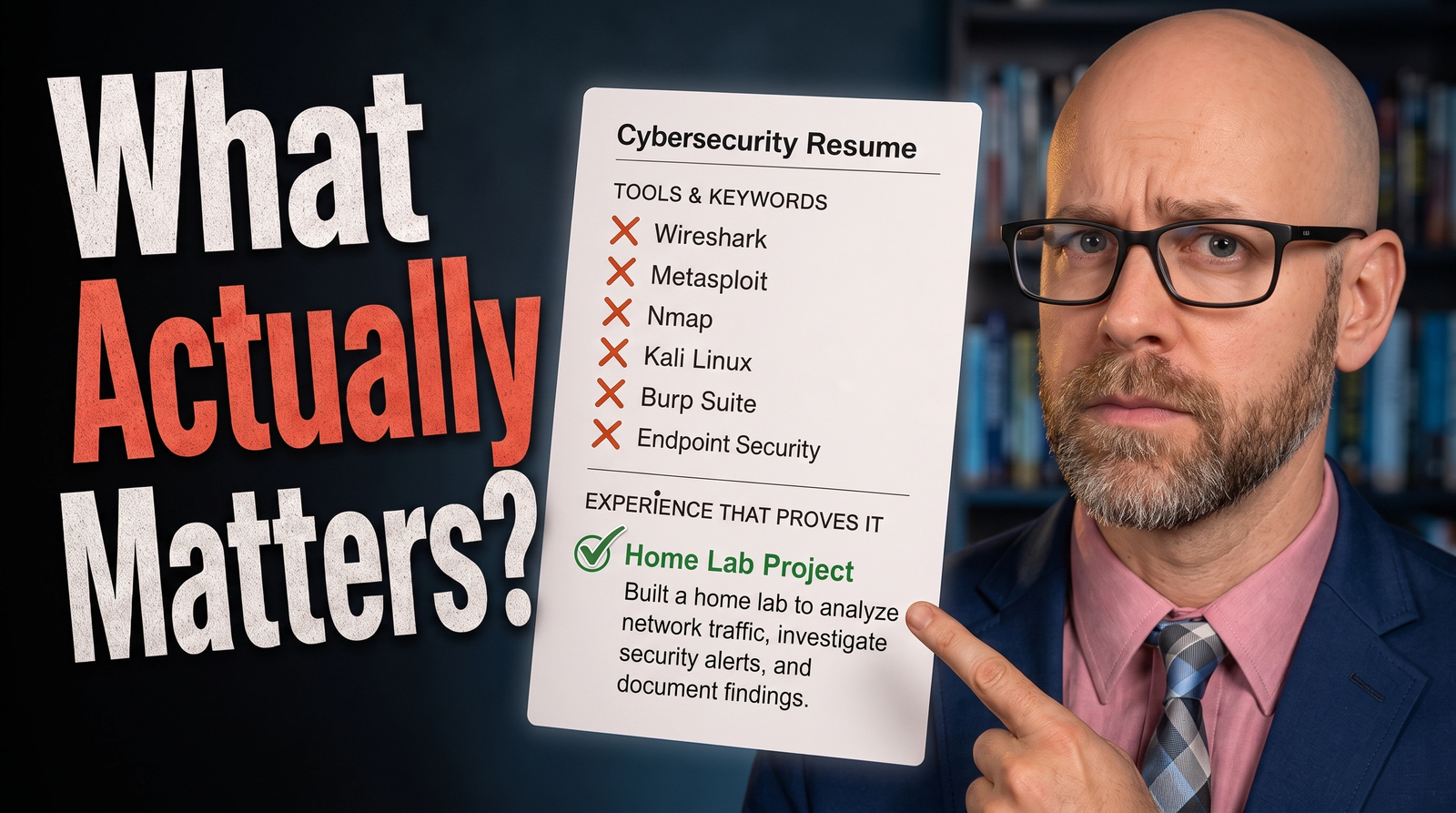
The misunderstanding extends to which skills matter most. Many people assume success requires expertise in SIEM platforms, intrusion detection systems, and other security tools. These tools matter, but they’re not the foundation of effective SOC work.
What actually makes someone effective in a SOC role is the ability to investigate systematically, understand what normal looks like in an IT environment, and make sound judgments about what deserves attention. Those capabilities depend more on foundational IT knowledge than on security tool expertise.
What a Typical Shift Actually Looks Like
A SOC analyst’s day revolves around an alert queue. When you start your shift, you inherit alerts generated by various security systems. Some are new. Others were escalated by the previous shift. Your job is to work through them systematically.
For each alert, you need to determine what actually happened. This means examining the context around the event. You look at what the user or system was doing before the alert fired. You check whether similar activity occurred elsewhere. You review logs from multiple sources to build a complete picture.
This investigation might take five minutes for a clearly benign event or several hours for something ambiguous. You’re gathering evidence, forming hypotheses about what caused the alert, and testing those hypotheses against available data.
Throughout this process, you’re documenting your steps. What did you check? What did you find? What did that information tell you? This documentation serves multiple purposes. Other analysts need to understand your investigation if they have to revisit the case. Incident responders need your findings if the situation escalates. Auditors might review your work months later.
Between investigations, you communicate with other teams. You ask IT administrators about scheduled maintenance that might explain unusual system behavior. You contact users to verify whether they initiated certain activities. You update senior analysts or managers about significant findings.
You also handle non-alert tasks. You might tune detection rules based on patterns you’ve noticed. You update documentation about applications or systems. You participate in handoff meetings between shifts. You research new attack techniques or vulnerabilities that might affect your organization.
The pace varies. Some shifts bring a steady stream of routine alerts. Others involve long, complex investigations that consume most of your time. Occasionally, you handle actual incidents that require coordination with multiple teams. But most hours involve the methodical work of determining whether unusual activity is actually suspicious.
Investigation Is the Core Skill
When an alert fires indicating that someone logged into a server from an unusual location, your job isn’t to immediately categorize it as high or low severity. Your job is to figure out what actually happened.
You check whether the user is traveling. You verify whether they’re accessing the server from a VPN that explains the location discrepancy. You examine what they did after logging in. You look at their recent authentication history. You determine whether the account shows other signs of compromise.
This investigative process requires you to know where to look for information and what that information means. Understanding authentication mechanisms helps you interpret login patterns. Knowing how VPNs work helps you recognize legitimate remote access. Familiarity with normal user behavior helps you identify genuine anomalies.
The investigation isn’t linear. You don’t simply follow a checklist. You form hypotheses based on initial evidence, then gather additional data to test them. If the evidence doesn’t support your hypothesis, you adjust and investigate further. This requires both technical knowledge and analytical thinking.
Security tools provide the raw data, but they don’t provide understanding. A SIEM can show you that a user accessed fifteen servers in five minutes. It can’t tell you whether that’s consistent with a system administrator running automated configuration scripts or whether it indicates lateral movement by an attacker. That judgment requires understanding both the technical activity and the organizational context.
Why IT Fundamentals Matter More Than You Think
Active Directory knowledge might not sound exciting compared to threat hunting or malware analysis, but it’s fundamental to SOC work. Many alerts involve account activity, authentication events, or privilege changes. Understanding how AD actually works allows you to quickly assess whether activity is suspicious or routine.
When you see an alert about a user being added to a privileged group, you need to know what that group controls, who has authority to make such changes, and whether the timing makes sense. An analyst who understands AD can evaluate this in minutes. Someone who only knows how to read the alert itself has to research every event from scratch.
Networking knowledge serves you similarly. If an alert indicates unusual traffic between two systems, understanding protocols, ports, and application communication patterns helps you determine whether the activity is legitimate. You can distinguish between normal database replication and potential data exfiltration because you understand what each should look like at the network level.
Operating system knowledge enables you to recognize whether processes running on a system are legitimate services or potential malware. You can evaluate whether file modifications indicate routine updates or unauthorized changes. You understand the difference between system-generated events and user-initiated actions.
These fundamentals accumulate into investigative effectiveness. Each piece of knowledge eliminates certain possibilities and suggests specific places to look for confirming or disconfirming evidence. An analyst with strong IT foundations reaches accurate conclusions faster and with greater confidence than someone who relies entirely on security tool outputs.
The Challenge of Distinguishing Normal from Suspicious
The hardest part of SOC work isn’t identifying obvious attacks. It’s determining whether unusual activity is malicious, misconfigured, or simply uncommon but legitimate.
An application suddenly communicating with an external IP address could be malware establishing command and control. It could also be a legitimate software update mechanism you weren’t aware of. The technical indicators might look similar. The difference matters enormously for how you respond.
Making this distinction requires environmental knowledge that builds over time. You learn which applications behave oddly. You understand which users have legitimate reasons for unusual access patterns. You recognize how various business processes create security events that look suspicious but aren’t.
This is why many SOC analysts view false positive investigations as valuable rather than wasted effort. Each investigation teaches you something about how your environment actually operates. You build a mental model of normal activity that helps you recognize genuine anomalies faster.
New analysts sometimes try to rely entirely on severity ratings or threat intelligence. These inputs help, but they can’t replace environmental understanding. A low-severity alert might indicate serious compromise if you recognize that the affected system never behaves that way. A high-severity indicator might be irrelevant if you know it represents activity your organization performs regularly.
Judgment develops with experience, but it develops faster when you understand the underlying technology and ask good questions during investigations.
Documentation and Communication
Technical people sometimes underestimate how much of SOC work involves writing and explaining rather than analyzing. The reality is that documentation and communication consume substantial time and directly affect your effectiveness.
Every investigation requires documentation. You record what you checked, what you found, and what you concluded. This documentation serves multiple audiences. Other analysts need to understand your work if the alert resurfaces or if related events appear. Senior staff need your findings to make escalation decisions. Compliance teams need records demonstrating proper investigation procedures.
Clear documentation also helps you. When you encounter a similar alert weeks later, your previous notes help you investigate faster. When you’re explaining a complex situation during an incident, documented evidence supports your analysis.
Communication extends beyond documentation. You regularly interact with IT teams to gather context or coordinate responses. You explain findings to users who triggered alerts. You brief managers during escalations. You participate in shift handoffs where you transfer knowledge to incoming analysts.
These communication skills matter as much as technical capabilities. An analyst who investigates thoroughly but documents poorly creates problems for the entire team. Someone who finds important indicators but can’t explain them clearly to incident responders limits the organization’s ability to respond effectively.
The communication isn’t always formal. Sometimes you’re asking a quick question in chat. Other times you’re writing detailed reports. Both require clarity and accuracy. Both require translating technical findings into information others can use to make decisions.
Making Escalation Decisions
One of the most important judgments a SOC analyst makes is deciding what to escalate. This decision requires balancing several considerations.
Escalating too readily wastes senior resources and creates alert fatigue among incident responders. When everything gets escalated, nothing gets appropriate attention. People start ignoring escalations or responding slowly because most turn out to be minor.
Failing to escalate actual incidents causes obvious problems. Delayed response can turn containable situations into major breaches. Missing early indicators of compromise can allow attackers to establish persistence.
Making sound escalation decisions requires both technical understanding and organizational awareness. You need to recognize technical indicators that suggest genuine threats. You also need to understand your organization’s risk tolerance, response capabilities, and priorities.
Sometimes escalation is clear. Confirmed malware execution or evidence of data exfiltration obviously needs immediate escalation. Other situations are ambiguous. Unusual but not clearly malicious activity might warrant escalation depending on the affected systems, available response resources, and organizational context.
This judgment improves with experience and mentoring, but it fundamentally depends on your ability to assess what you’re seeing technically and what it means for the organization.
Preparing for the Real Job
Understanding what SOC analysts actually do should change how you prepare for the role.
Build hands-on experience with Active Directory. Learn about user authentication, group policies, and common administrative tasks. Many alerts involve account and authentication activity, and understanding AD allows you to assess these events quickly and accurately.
Learn to read and interpret common log sources. Practice working with Windows Event Logs, Syslog, web server logs, and firewall logs directly rather than relying entirely on SIEM queries others have written. Understanding the raw data makes you more effective when you need to investigate beyond pre-built dashboards.
Develop documentation habits now. When you’re troubleshooting IT problems, practice documenting your process. The same structured approach applies to security investigations. The habit of recording what you checked and what you found serves you throughout your career.
Study how business applications and IT processes work in real environments. Understanding what normal activity looks like is fundamental to recognizing anomalies. This knowledge comes from practical IT experience, not from security certifications alone.
Develop a systematic investigation methodology. Practice gathering context, forming hypotheses, testing those hypotheses with evidence, and documenting findings. This structured approach prevents jumping to conclusions based on incomplete information.
If you’re transitioning from another field, consider gaining practical IT experience before or alongside security-specific training. Help desk work, system administration, or network support builds foundational knowledge that makes you more effective in security roles. That foundation often matters more than security certifications alone.
The Real Work
SOC analyst work is fundamentally investigative. You spend most of your time determining what actually happened, whether it matters, and what should be done about it. This requires solid IT fundamentals, systematic thinking, and good communication skills as much as familiarity with security platforms.
The work isn’t what most people imagine, but understanding the reality helps you prepare effectively. Focus on building foundational IT knowledge. Develop investigative habits. Practice documentation and communication. Learn security tools, but recognize they’re most valuable when you understand the underlying technology they monitor.
The organizations that need SOC analysts want people who can think through ambiguous situations, investigate systematically, and make sound judgments. They need analysts who understand how IT environments actually work and can distinguish normal from suspicious. Prepare for that reality, and you’ll find the role both achievable and rewarding.
Tagged:
Enjoyed this article?
Subscribe to Professor Simon's weekly newsletter for practical insights, career guidance, and leadership lessons delivered every Friday.
A confirmation email will be sent. If you don't receive it, please check your spam or junk folder.
No spam. Unsubscribe anytime.
Prefer to Listen?
Listen to Professor Simon’s IT & Cybersecurity Podcast for practical conversations about cybersecurity careers, certifications, security leadership, and real-world lessons from the field.
Listen on Spotify