Cybersecurity Isn’t One Career. Stop Preparing Like It Is.

If you are studying for Security+, learning Python, practicing penetration testing, reading about cloud security, and researching GRC frameworks all at the same time, you might think you are building a strong foundation. But here is the problem. You are preparing for five different jobs, and employers are trying to fill one specific role.
That disconnect is costing people time, money, and opportunities.
I see this pattern repeatedly when working with career changers and students entering cybersecurity. They consume certification training across multiple domains, build labs that touch every security specialty, and collect credentials that span offensive security, compliance, cloud protection, and incident response. They believe this broad preparation makes them versatile and employable.
Instead, it often makes them unprepared for any specific position.
The issue is not lack of effort. People work hard. They invest significant time and money. But they are solving the wrong problem. They are preparing for cybersecurity as though it were a single destination, when it is actually a collection of fundamentally different career paths that require different skills, different backgrounds, and different preparation strategies.
You cannot prepare for cybersecurity in general because cybersecurity is not a general job. You must choose a specific role within the field, understand what that role actually requires, and then intentionally build the skills, knowledge, projects, and credentials that prepare you for that particular destination.
Prefer to read the full breakdown? Keep scrolling. Prefer to watch? Full video above.
Why Cybersecurity Is Not One Career Path
When someone says they want to work in cybersecurity, that statement contains almost no useful information about what they actually want to do each day. Cybersecurity is not a job title. It is a category containing dozens of distinct roles.
Consider what a SOC analyst does compared to a GRC analyst. A SOC analyst spends their day monitoring security alerts, analyzing logs, investigating potential incidents, and determining whether unusual activity represents a genuine threat. They need pattern recognition skills, familiarity with SIEM tools, understanding of attack techniques, and the ability to triage alerts quickly. They work in a technical environment with structured shift work and clear escalation procedures.
A GRC analyst works in an entirely different world. They assess organizational compliance with regulatory requirements, document security controls, coordinate audits, communicate risk to business stakeholders, and maintain policy documentation. They need to understand control frameworks like NIST or ISO 27001, translate technical security concepts for non-technical audiences, and navigate organizational politics. Their work is less technical and more procedural, focused on governance rather than technical detection.
These are not variations of the same job. They require different skill sets, attract different personality types, and follow different career trajectories.
A penetration tester needs deep technical knowledge of exploitation techniques, offensive security tools, vulnerability assessment methodologies, and reporting skills to communicate findings. A security engineer designs and implements security solutions, requiring strong understanding of network architecture, system administration, automation, and infrastructure security. A cloud security specialist needs expertise in cloud platforms, identity and access management, infrastructure as code, and cloud-native security tools.
Each of these roles represents a different career path with different entry requirements, different daily responsibilities, and different advancement opportunities. Recognizing this distinction is the first step toward effective preparation.
The Consequences of Scattered Preparation
What happens when someone prepares broadly without choosing a specific destination?
They struggle to tell a coherent story to employers. When a hiring manager reviews a resume showing Security+ certification, OSCP certification, AWS security training, and a project portfolio spanning penetration testing, compliance documentation, and SIEM configuration, they cannot determine what role this candidate is prepared to fill.
The candidate might think they appear well-rounded and capable of multiple functions. The hiring manager sees someone who studied many things but mastered nothing relevant to the specific position they need to fill.
This scattered preparation also wastes significant resources. Certifications are expensive. Study time is limited. When someone pursues CISSP, OSCP, and CCSP simultaneously without understanding which roles each certification supports, they are spending thousands of dollars and hundreds of hours on credentials that may not align with any realistic career path available to them.
More critically, broad preparation without depth prevents candidates from demonstrating actual readiness for any specific function. Employers do not hire potential. They hire people who can perform a particular job. A candidate who knows a little about many security domains cannot compete effectively against a candidate who knows one domain well and can demonstrate practical ability in that specific area.
How Employers Actually Hire for Security Roles
Understanding the hiring perspective clarifies why focused preparation matters.
Employers write job descriptions for specific roles with specific responsibilities. A SOC analyst position lists requirements like experience with SIEM platforms, knowledge of common attack patterns, ability to analyze network traffic, and familiarity with incident response procedures. A GRC analyst position lists requirements like knowledge of compliance frameworks, experience documenting security controls, ability to coordinate audits, and strong written communication skills.
Hiring managers evaluate candidates against these specific requirements. They ask whether this person can perform this particular function. They look for evidence that the candidate has practiced the relevant skills, understands the relevant tools, and can contribute quickly to this specific team.
When a candidate presents focused preparation aligned with the role, the hiring manager sees a clear fit. The candidate studied the right certifications, built projects demonstrating the right skills, and can articulate why they pursued this specific preparation path. The story makes sense.
When a candidate presents scattered preparation across unrelated domains, the hiring manager faces uncertainty. Why did this person study offensive security if they are applying for a compliance role? Why do they have cloud certifications if they want to work in a SOC? Are they genuinely interested in this position, or are they applying broadly and hoping something works?
That uncertainty typically results in the candidate not advancing in the hiring process, regardless of how much total effort they invested in their preparation.
Choosing Your Destination Role
The solution begins with choosing a specific destination before investing heavily in preparation.
Start by researching actual job postings for roles that interest you. Not generic career path descriptions or certification marketing materials. Actual job postings from real employers looking to fill real positions. Read ten to fifteen postings for SOC analyst roles. Read another ten for GRC analyst positions. Read more for penetration testers, security engineers, or security administrators.
Notice what skills appear repeatedly. What tools do employers expect candidates to know? What certifications do they list as required or preferred? What prior experience do they mention? What educational backgrounds do they reference?
This research reveals several critical insights.
First, you will identify which roles are realistic entry points. Some positions like SOC analyst, junior GRC analyst, or security administrator commonly accept candidates without prior security experience if they demonstrate strong IT foundations and relevant certifications. Other roles like penetration tester, security architect, or security engineer typically require several years of prior experience in IT, development, or security.
Understanding which roles represent realistic first destinations prevents you from preparing for positions you cannot reasonably obtain without intermediate steps.
Second, you will see clear patterns in what each role requires. SOC analyst positions consistently mention SIEM tools, log analysis, incident response, and threat detection. GRC positions consistently mention frameworks like NIST or ISO, audit coordination, policy development, and risk assessment. These patterns tell you what to prepare for if you choose that destination.
Third, you will begin to understand which roles align with your current background, interests, and work style preferences. Someone with a networking background and interest in technical investigation might naturally align with SOC work. Someone with project management experience and strong writing skills might align better with GRC. Someone with a development background and interest in breaking things might align with offensive security roles.
Choose one realistic destination role based on this research. Write it down. Use it as the filter for every subsequent preparation decision.
Working Backward from Your Destination
Once you have identified your destination role, you can determine what preparation genuinely supports that specific path.
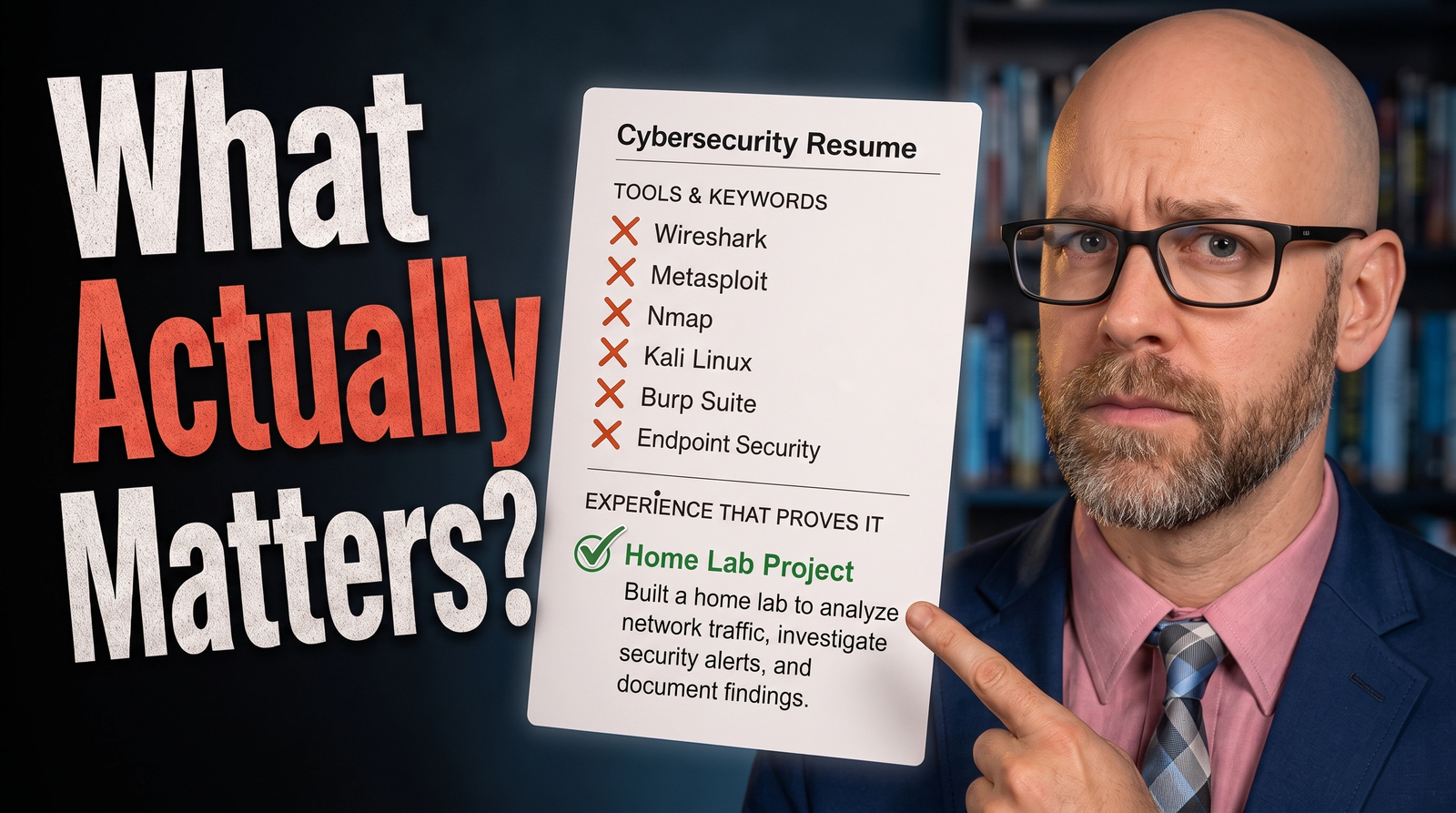
If your destination is a SOC analyst position, you need foundational networking knowledge, understanding of common attack techniques, familiarity with log analysis and SIEM platforms, and practical experience investigating security events. Security+ makes sense as a certification because it covers fundamental concepts SOC analysts use daily. Building a home lab where you practice analyzing packet captures, investigating simulated incidents, and writing detection rules demonstrates relevant skills.
If your destination is a GRC analyst position, you need understanding of compliance frameworks, knowledge of risk assessment methodologies, strong documentation skills, and ability to communicate security concepts to business stakeholders. Security+ still provides useful foundation, but certifications like CISA or vendor-neutral governance certifications become more relevant. Building a portfolio that includes policy templates, control mapping documentation, or risk assessment reports demonstrates relevant skills.
Notice how the preparation paths diverge quickly. The right certification depends on your destination. The right projects depend on your destination. The right technical depth depends on your destination.
This focused approach produces depth rather than superficial breadth. You develop actual competence in the skills your target role requires. You can speak credibly about the tools, processes, and challenges relevant to that specific function. You present a clear story to employers about what job you are ready to perform.
Depth in a relevant area beats superficial knowledge across many unrelated areas every time.
What About Keeping Your Options Open?
Some people resist choosing a specific destination because they fear making the wrong decision or limiting future opportunities.
This concern is understandable but misplaced.
Cybersecurity professionals commonly move between different security functions over the course of a career. Someone might start as a SOC analyst, move into threat intelligence, then transition to security engineering. Someone else might begin in GRC, move to security architecture, then transition to security leadership. Career paths within cybersecurity are rarely linear.
But you need to get into the field first. That requires landing your first security position. Focused preparation for a realistic entry role significantly increases your likelihood of getting that first opportunity.
Once you have security experience, transitioning to other security roles becomes substantially easier. You understand how security functions within an organization. You have credibility that comes from doing security work professionally. You can build new skills while employed rather than trying to prepare for everything before getting hired.
Attempting to keep all options open by preparing broadly for everything simultaneously often means you never get that critical first position. You cannot keep options open if you never get through the door.
Choosing a direction does not permanently lock you into one narrow path. It gives you a realistic strategy for entering the field. Everything becomes easier after that.
Practical Steps to Refocus Your Preparation
If you recognize yourself in this pattern of scattered preparation, here is how to refocus your approach.
First, research specific cybersecurity job postings for roles that genuinely interest you. Analyze what skills, experience, tools, and certifications appear repeatedly in those descriptions. Build a clear picture of what employers actually want for that role.
Second, choose one realistic destination role based on your current background, skills, interests, and the entry requirements you identified. This becomes your filter for all subsequent decisions about what to study, which certifications to pursue, and what projects to build.
Third, map out the foundational knowledge and skills required for your specific destination. Identify what you already have and what you need to develop. Prioritize depth in areas directly relevant to your destination over breadth across unrelated domains.
Fourth, select certifications that directly support your chosen role rather than collecting credentials across multiple unrelated specializations. One or two targeted certifications tell a clearer story than five scattered ones that suggest you have not decided what you actually want to do.
Fifth, build projects and lab experience that demonstrate your ability to perform specific functions required by your destination role. Focus on quality and relevance over quantity and variety. Three excellent projects directly relevant to your target role beat ten generic projects that touch every security domain.
This approach requires accepting that you cannot prepare for everything simultaneously. That limitation is actually an advantage. It forces you to make deliberate choices about where to invest your time and money. Those deliberate choices produce better outcomes than diffuse effort across too many directions.
One Clear Path Forward
Cybersecurity is not one career path. It is dozens of distinct roles requiring different skills, different backgrounds, and different preparation strategies.
The most effective way to enter this field is to choose a specific destination role first, then work backward to build the foundation that genuinely prepares you for that particular position. This produces focused preparation that tells a coherent story to employers and demonstrates actual readiness for a specific function.
Broad preparation without a clear destination feels safe because it appears to preserve flexibility. In practice, it often produces candidates who cannot articulate what job they are ready to perform and struggle to compete against candidates who prepared with intention and focus.
You do not need to prepare for every security role. You need to prepare for one realistic entry role well enough to get hired. Everything else becomes easier once you have that first position and actual security experience.
Choose your destination. Build the right foundation for that specific path. Get in the door. Then decide where to go next.
Take action today. Find five job postings for cybersecurity roles that interest you. Read them carefully. Notice what they actually require. Choose one realistic destination. Then start building the specific skills that role needs rather than trying to prepare for everything at once.
Tagged:
Enjoyed this article?
Subscribe to Professor Simon's weekly newsletter for practical insights, career guidance, and leadership lessons delivered every Friday.
A confirmation email will be sent. If you don't receive it, please check your spam or junk folder.
No spam. Unsubscribe anytime.
Prefer to Listen?
Listen to Professor Simon’s IT & Cybersecurity Podcast for practical conversations about cybersecurity careers, certifications, security leadership, and real-world lessons from the field.
Listen on Spotify