Stop Collecting Certifications. Build a Certification Strategy Instead.

I have reviewed countless resumes from cybersecurity and IT professionals who list six, seven, or eight certifications. When I interview these candidates, a pattern emerges. They can recite acronyms and frameworks, but they struggle to explain how concepts apply to real problems. They have credentials that look impressive on paper but do not connect to a coherent career direction.
The issue is not that these professionals lack intelligence or work ethic. They invested significant time and money into their education. The problem is that they treated certifications as collectibles rather than strategic tools.
If you have completed one or two certifications and are deciding what comes next, you are at a decision point. You can continue adding credentials based on what seems popular or what your peers are pursuing. Or you can step back and build an actual strategy that connects where you are to where you want to be.
The second approach requires more thought upfront but saves you from spending thousands of dollars and hundreds of hours on certifications that do not advance your specific goals.
Prefer to read the full breakdown? Keep scrolling. Prefer to watch? Full video above.
The Certification Treadmill Problem
The certification industry markets credentials as career accelerators. Training providers emphasize how their certifications will make you more marketable, increase your salary, and open new opportunities. This messaging is not entirely wrong, but it is incomplete.
What happens in practice is that professionals pursue one certification, see some positive results, and conclude that more certifications will produce more results. They finish Security+ and move to CEH. Then CISSP. Then maybe a cloud certification because everyone is talking about cloud security. Then a specialized certification because they heard it is in demand.
Each decision makes sense in isolation, but together they do not form a coherent path. The certifications do not build on each other. They do not align with a specific target role. They represent reactions to marketing, peer pressure, or fear of missing out rather than strategic choices.
This happens because most people start by asking “What certification should I get next?” instead of asking “Where am I trying to go, and what stands between me and that destination?”
Why More Certifications Do Not Always Mean Better Outcomes
The first relevant certification in your field provides significant value. It demonstrates baseline knowledge. It gets you past automated resume filters. It shows you are serious about professional development.
The second certification adds less value than the first, but still contributes. It might deepen your knowledge in your chosen area or demonstrate breadth across related domains.
By the time you reach five or six certifications, additional credentials rarely move the needle. The return on investment decreases with each new certification unless it opens a genuinely different specialization or satisfies a specific requirement for a role you are pursuing.
Hiring managers understand this. When they see a resume with eight unrelated certifications, they do not automatically think “This person must be highly qualified.” They often think “This person collects credentials instead of building depth” or “This person might not know what they actually want to do.”
I have also seen what happens when someone pursues an advanced certification without the foundational knowledge to support it. They memorize enough to pass the exam, but they cannot apply the concepts in interviews or on the job. This creates a credentials-to-competence gap that becomes obvious quickly and damages credibility.
The career obstacle at that point is rarely solved by adding another certification. The real barriers might be lack of practical experience, inability to articulate what you know, weak understanding of what employers actually need, or poor job search strategy.
Starting With Destination Instead of Catalog
Effective certification planning works backward. You start by defining your target role with specificity. Not “cybersecurity analyst” but what type of analyst, in what industry, at what size organization, focusing on what security domains.
This level of detail matters because certification requirements and values vary dramatically across contexts. A penetration tester at a consulting firm needs different credentials than a GRC analyst at a financial services company. A cloud security engineer at a startup values different certifications than a security operations analyst at a government contractor.
To research your target role effectively, examine 20 to 30 actual job descriptions for positions you want to reach in two to three years. Not entry-level roles if you already have some experience. Not aspirational senior positions if you are early in your career. The next realistic step.
Pay attention to what certifications appear consistently versus occasionally. Note whether they appear as requirements, preferences, or nice-to-haves. Look for patterns in what technical skills and knowledge areas get emphasized.
Then talk to people who currently do that work. Ask what credentials actually mattered when they got hired versus what appeared in the job description. Ask what they wish they had known before pursuing certain certifications. Ask what knowledge gaps they see in candidates who interview for similar positions.
This research gives you the information you need to make strategic decisions rather than guesses.
Learning Value Versus Resume Value
Certifications serve two distinct purposes, and understanding the difference changes how you evaluate them.
Some certifications teach you genuinely useful concepts, frameworks, or technical skills. You study the material and come away understanding something you can apply. The certification validates that you learned, but the learning itself is the primary value. These certifications have high learning value.
Other certifications primarily function as resume checkboxes. They satisfy compliance requirements, pass automated application filters, or meet contractual obligations for organizations that bid on certain types of work. You might learn something while studying, but the main value is the credential itself signaling to employers that you meet a specific requirement. These certifications have high resume value.
Both types are legitimate, but they serve different purposes. Conflating them leads to poor decisions.
If you need a certification primarily for resume value because it appears as a requirement in job descriptions for your target role, that is a valid reason to pursue it. You study efficiently to pass the exam without necessarily mastering every detail. The investment makes sense if it unlocks opportunities you cannot access without that credential.
If you need a certification primarily for learning value because you have knowledge gaps in that domain, you approach it differently. You focus on understanding concepts deeply enough to apply them in real situations. The certification validates your learning, but the knowledge is what matters.
Problems arise when people pursue certifications they do not need for either purpose. They choose based on marketing, popularity, or vague ideas about marketability without identifying whether they need what it teaches or what it signals.
The Knowledge Foundation Principle
Certifications have difficulty levels, but those levels do not always correspond to career experience. Some advanced certifications assume significant foundational knowledge that you might not have even if you have been working in IT for several years.
Pursuing a certification before you have the prerequisite knowledge leads to a specific pattern. You study hard, memorize what you need to pass, and earn the credential. But you cannot explain the concepts to someone else. You cannot recognize when to apply them in real situations. You cannot answer deeper questions in interviews.
This creates problems beyond wasted time and money. When your credentials suggest a level of expertise you do not actually possess, the gap becomes visible during technical interviews, on the job, or when working with colleagues who do have that expertise.
The solution is not to avoid challenging certifications. It is to match certification difficulty to your actual knowledge level rather than your aspirational level or career timeline.
Sometimes this means pursuing a foundational certification before an advanced one, even if that feels like moving backward. Sometimes it means gaining practical experience before adding the next credential because real-world exposure to problems helps concepts connect in ways that studying alone does not achieve.
The optimal sequence is not always linear progression through certifications. Sometimes the right move is to pause formal credentials and build hands-on experience that will make your next certification actually meaningful.
Context Matters: Market and Specialization Factors
General advice about certification value often misses critical context. A certification that is highly valued in one environment might be irrelevant in another.
Government contractors and organizations in highly regulated industries often require specific certifications because of compliance mandates or contract requirements. In those contexts, certain credentials are not just valuable but mandatory. CEH, CISSP, and other certifications that meet DoD 8570 requirements matter significantly if you want to work in those spaces.
Startups and technology companies in commercial sectors often care more about practical skills and what you can demonstrate than formal credentials. They might prefer to see GitHub contributions, security research, or evidence of hands-on technical ability over certification collections.
Geographic markets also vary. Some regions have dense government or defense contractor presence where certain certifications are standard expectations. Other regions center on commercial technology or financial services where different credentials hold weight.
Your specialization direction also affects certification value. If you are moving toward governance, risk, and compliance work, certifications in those domains matter. If you are moving toward technical security engineering, you need different credentials that demonstrate technical depth.
This means you cannot simply adopt someone else’s certification path, even if it worked well for them. You need to research what matters in your specific market, industry, organization type, and target role.
Building Your Certification Strategy
Once you have researched your target role and understand the distinction between learning and resume value, you can evaluate potential certifications systematically.
For each certification you are considering, ask four questions:
Does it teach you something you genuinely need to learn? Identify specific knowledge gaps between what you currently understand and what your target role requires. If the certification content addresses those gaps, it has learning value for you.
Does it satisfy a hiring requirement in your target market? Based on your job description research and conversations with people in similar roles, determine whether this certification appears consistently as a requirement or strong preference. If it does, it has resume value for you.
Does it align with your specialization direction? Certifications should connect to a coherent path rather than scatter across unrelated domains. If this certification builds on what you already know or develops an area you want to deepen, it fits your strategy. If it is a disconnected tangent, it probably does not.
Can you afford the investment relative to alternatives? Common IT and cybersecurity certifications range from a few hundred dollars to over a thousand dollars for exam fees alone, plus study materials and time investment. Consider whether spending that time and money on this certification produces better outcomes than alternative uses like hands-on practice, portfolio projects, or different professional development.
If a certification scores well on multiple criteria, it is probably a good strategic choice. If it only scores well on one dimension or fails all four questions, reconsider whether it belongs in your plan.
Sequence also matters. Build foundation before specialization. Allow time between certifications for practical application rather than pursuing credentials back to back. Knowledge needs to settle through real-world use before the next layer adds value.
When to Stop and Focus on Experience
Sometimes the right certification decision is to pursue none at all for a period of time.
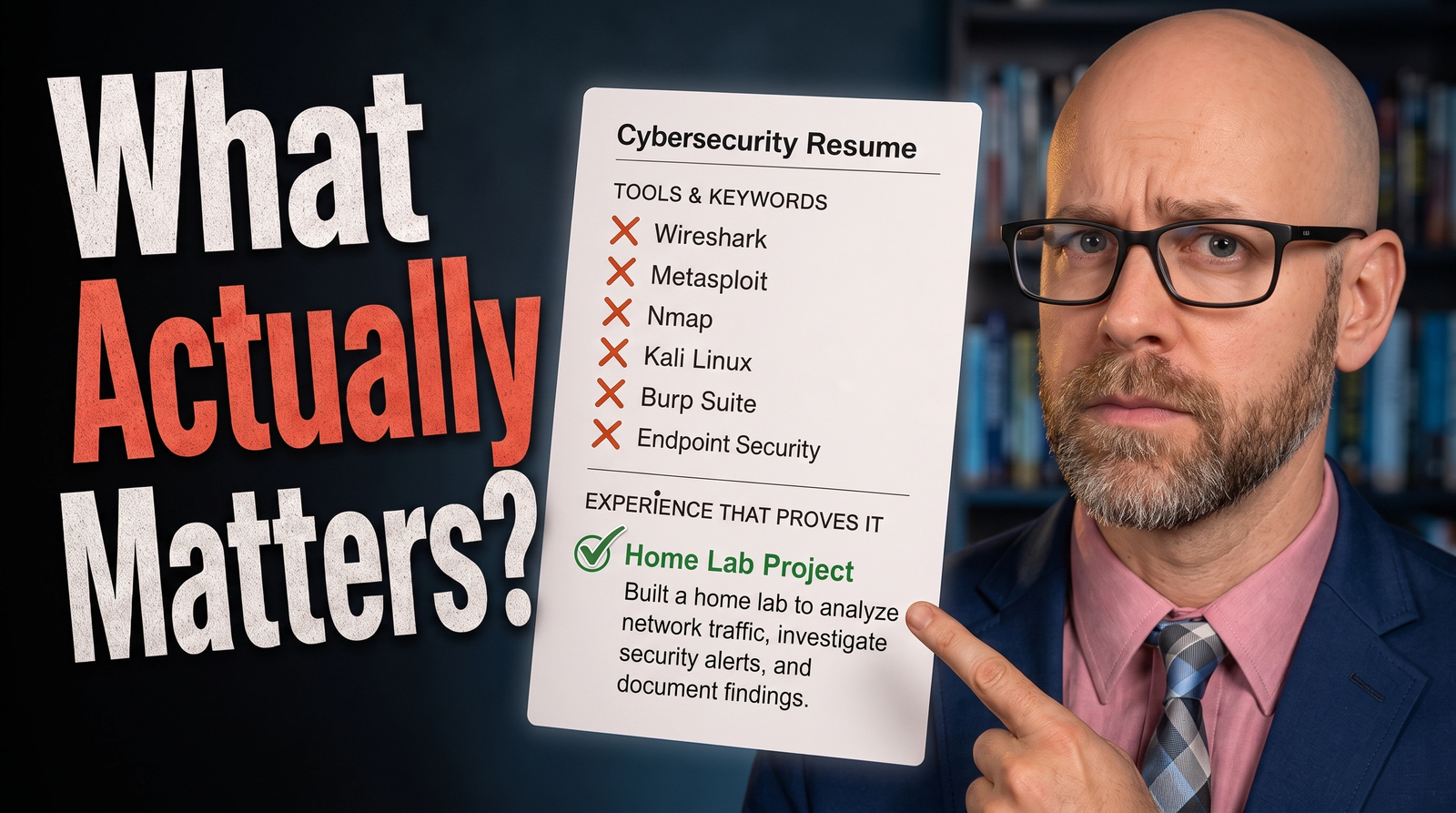
If you have foundational certifications in your field, additional credentials might not solve whatever career problem you are facing. Your resume might not need more certifications. It might need practical projects that demonstrate what you can do. You might not need more theoretical knowledge. You might need hands-on experience applying what you already know.
Certifications cannot substitute for experience. They complement it. If you have been accumulating certifications while avoiding labs, personal projects, contributions to security communities, or other practical skill-building, you have the sequence backward.
Similarly, if your career has stalled and your instinct is to get another certification, pause and diagnose the actual barrier. Is it truly missing credentials, or is it weak interviewing skills, lack of practical demonstration of your abilities, poor job search strategy, or insufficient professional network?
Adding another certification when that is not the real problem wastes resources and delays addressing what actually needs to change.
Moving From Collection to Strategy
The shift from collecting certifications to building a certification strategy starts with a change in how you make decisions. Instead of asking “What certification should I get next?” you ask a different sequence of questions.
Where am I trying to go? What role am I building toward, and what does success in that role actually require?
What gaps exist between where I am and where I want to be? What knowledge or credentials do I lack that create barriers to reaching that role?
Which certifications address those specific gaps? What credentials teach me what I need to learn or signal to employers that I meet their requirements?
Is now the right time to pursue another certification, or should I focus on gaining experience that will make my next credential more valuable?
This approach requires more upfront thinking. It does not provide simple answers or linear paths. But it prevents you from spending years and thousands of dollars on credentials that do not connect to where you actually want to go.
Certifications are useful tools for career development. They validate knowledge, satisfy requirements, and demonstrate commitment to professional growth. But they are tools, not destinations. Like any tool, their value depends on using the right one for the specific job you need to accomplish.
Strategic restraint and depth in a focused area often outperforms breadth without direction. A smaller number of well-chosen certifications that connect to a clear career path provides better outcomes than a large collection of credentials that do not form a coherent whole.
Start with where you want to go. Work backward to identify what you genuinely need. Build your certification path as a strategic investment in reaching that destination rather than a collection of credentials you hope will somehow lead to career success.
Before you register for your next certification, complete the target role research described in this article. Identify 20 job descriptions for your next realistic career step. Note what certifications appear consistently. Talk to at least three people currently in similar roles. Map your actual knowledge gaps honestly.
Then evaluate whether your next certification addresses what you discovered in that research or whether it is simply the next credential that seemed like a good idea. That exercise alone will save you from at least one certification that would not have advanced your specific goals.
Tagged:
Enjoyed this article?
Subscribe to Professor Simon's weekly newsletter for practical insights, career guidance, and leadership lessons delivered every Friday.
A confirmation email will be sent. If you don't receive it, please check your spam or junk folder.
No spam. Unsubscribe anytime.
Prefer to Listen?
Listen to Professor Simon’s IT & Cybersecurity Podcast for practical conversations about cybersecurity careers, certifications, security leadership, and real-world lessons from the field.
Listen on Spotify