You Have Security+. Why Can’t You Get a Cybersecurity Job?

You followed the advice. You studied for Security+, you passed the exam, you added it to your resume and LinkedIn profile. You started applying for entry-level cybersecurity positions, confident that you’d checked the most important box.
Then nothing happened.
You’re not getting interviews. The few responses you receive are rejections. Meanwhile, you’re seeing the same advice repeated everywhere: get Security+, break into cybersecurity, start your career. Except it’s not working, and you’re starting to wonder what you did wrong.
The uncomfortable answer is that you didn’t do anything wrong. You followed advice that was reasonable when it was first given. But the market changed faster than the advice did.
Security+ and similar entry-level certifications still matter. They demonstrate commitment and foundational knowledge. But they’ve become so common that they now represent a minimum baseline rather than a competitive advantage. When most candidates have the same certification, it stops distinguishing anyone.
Understanding why this happened and what actually gets people hired will help you figure out what to do next.
Prefer to read the full breakdown? Keep scrolling. Prefer to watch? Full video above.
Why Security+ Became Baseline Instead of Differentiator
Security+ didn’t lose value because the content became less relevant. It lost its competitive edge because it became ubiquitous.
The shift happened largely because of DoD 8570 and its successor, DoD 8140. These directives established baseline certification requirements for anyone working in certain information assurance roles for the Department of Defense or its contractors. Security+ satisfied multiple categories within these requirements, making it the obvious choice for organizations that needed to maintain compliance.
This created massive demand for the certification, not necessarily because hiring managers believed it was the best measure of capability, but because it was required documentation. Contractors needed people certified to win and maintain contracts. Security+ became a compliance checkbox.
As the certification became more accessible through boot camps, online training, and intensive test prep programs, the number of certified individuals grew substantially. CompTIA has issued millions of Security+ certifications. When you apply for an entry-level position, you’re competing against hundreds of other candidates who have the exact same credential.
This matters because employers now see Security+ the way they see a bachelor’s degree. It might be required, but having it doesn’t make you stand out. It just means you met the minimum threshold to be considered.
What Certifications Actually Prove (and What They Don’t)
Security+ tests whether you can recognize correct answers to structured questions. It measures knowledge recall. Can you identify the difference between symmetric and asymmetric encryption? Do you know what a firewall does? Can you match security controls to common threats?
These are important foundations. But they’re not the same as being able to do security work.
Certifications don’t measure judgment. They don’t assess whether you can diagnose an ambiguous problem when symptoms don’t match textbook scenarios. They don’t evaluate how you weigh tradeoffs between security and usability. They don’t reveal whether you can explain technical issues to non-technical stakeholders or adapt your approach when initial assumptions turn out to be wrong.
Employers need people who can think through situations that don’t have obvious answers. They need analysts who can investigate alerts that might be false positives or might be the beginning of a breach. They need administrators who can balance security requirements against business needs. They need communicators who can explain why something matters without relying on jargon.
The gap between knowing definitions and demonstrating judgment is exactly what employers try to assess during interviews. When they ask you to walk through how you’d approach a problem, they’re not testing whether you memorized the right answer. They’re evaluating how you think.
I’ve seen this firsthand when interviewing people for security roles. You can ask someone a straightforward question like, “What would you do if a user reported a suspicious email?” and almost everyone who has studied security can give you the textbook answer. Check the sender, look at the links, examine the headers, maybe isolate the message.
But then I’ll change one detail. What if the user already clicked the link? What if they entered their credentials? What if we don’t know whether MFA was enabled?
That’s where you start seeing the difference.
Some candidates get stuck because the situation no longer matches the answer they prepared. Others start asking questions. What access does this user have? Are there signs of a successful login? Do we have authentication logs? Should we reset the credentials or revoke active sessions? Who else received the message?
That second candidate might not know every technical answer. But they’re showing me something much more important. They know how to investigate a problem when the answer isn’t obvious.
And that’s much closer to what cybersecurity work actually looks like.
The Entry-Level Job That Isn’t Really Entry-Level
Part of the frustration comes from a fundamental mismatch between what jobs are called and what they actually require.
Many positions labeled as entry-level cybersecurity roles expect candidates to already have IT experience. They want people who’ve worked in help desk environments, who understand Active Directory because they’ve administered it, who know how to troubleshoot network connectivity issues because they’ve done it dozens of times.
The job description says entry-level. The requirements list Security+ and maybe a bachelor’s degree. But the actual expectations include technical troubleshooting ability, familiarity with enterprise environments, and practical problem-solving skills that only come from prior work.
This happens because true entry-level security jobs are relatively rare. Most organizations can’t afford to hire someone with no IT background and train them from scratch in both general IT concepts and security-specific skills. They need people who already understand the technical foundation and can focus on learning the security layer.
This creates a difficult situation for career changers. You can meet the stated requirements while still being considered unqualified because you lack the unstated prerequisites. Understanding this doesn’t make it less frustrating, but it does help clarify what you’re actually competing against.
What Employers Need Beyond the Certification
When hiring managers review applications, they’re trying to answer questions that certifications don’t address.
Can this person troubleshoot technical problems independently? Security work involves investigating issues where you don’t immediately know what’s wrong. Employers want evidence that you can work through ambiguity systematically rather than getting stuck when you encounter unfamiliar situations.
Can this person explain technical concepts clearly? You’ll need to write incident reports, communicate with other teams, and sometimes explain security decisions to people who don’t have technical backgrounds. Employers look for candidates who can demonstrate clear communication, not just technical vocabulary.
Does this person understand how concepts connect? Security isn’t a collection of isolated facts. It’s about understanding how systems work together, where vulnerabilities emerge from interactions between components, and how controls affect entire environments. Employers want to see systems thinking, not just memorized definitions.
Can this person learn and adapt? Technology changes constantly. New vulnerabilities emerge. Attack techniques evolve. Employers need people who can learn continuously, not just recall what they studied for a certification exam.
These capabilities don’t appear on transcripts or credential lists. Employers have to infer them from how you present your experience, how you talk about problems you’ve solved, and what evidence you can provide of applying knowledge to real situations.
Building Demonstrable Capability Without a Security Job
The strategic question becomes: how do you demonstrate these capabilities when you don’t have cybersecurity job experience?
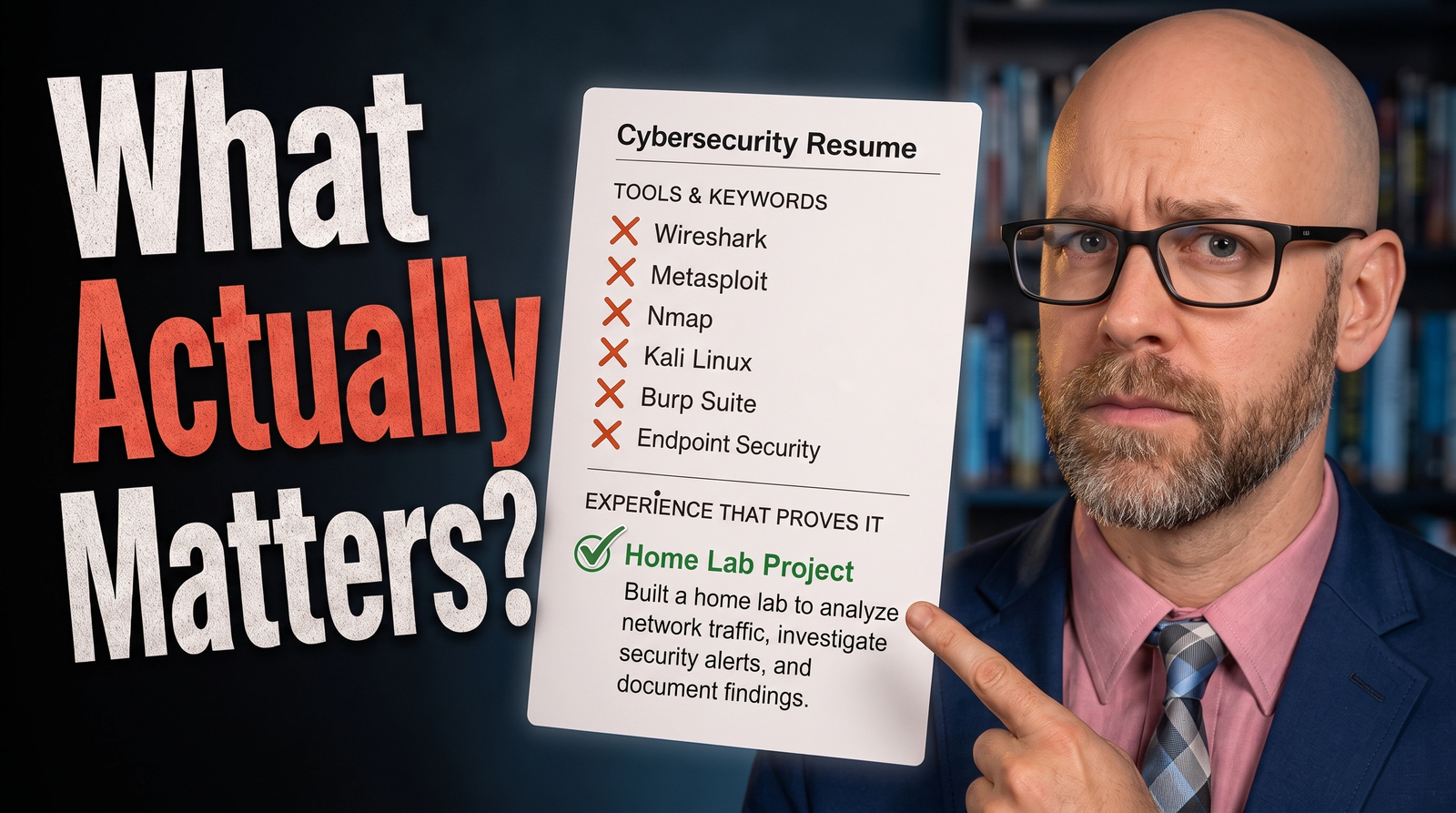
Build something you can explain and defend. Set up a home lab. Document a security assessment of your own network. Analyze a published breach report and write about what you would have done differently. The specific project matters less than having something that shows your thinking process.
The goal isn’t perfection. It’s creating evidence of how you approach problems. When you can walk someone through what you built, why you made specific choices, what didn’t work initially, and how you troubleshot issues, you’re demonstrating judgment and problem-solving ability.
Contribute to security communities in ways that reveal understanding. Answer questions in forums. Write about how you solved a specific problem. Explain a concept in your own words rather than copying documentation. Quality matters more than quantity.
When employers read your explanations, they can assess whether you actually understand the material. Someone who can explain why a particular approach makes sense in one context but not another is demonstrating deeper understanding than someone who recites textbook definitions.
Get IT experience if you don’t have it already. Help desk work teaches troubleshooting methodology. System administration builds understanding of how enterprise environments actually function. Network support develops the technical foundation that makes security work more effective.
Many successful security professionals spent several years in other IT roles first. That foundation isn’t wasted time. It’s what makes them more capable when they transition into security-specific positions.
Practice explaining your reasoning, not just stating answers. When you study, focus on why controls work and why particular approaches make sense in specific contexts. In interviews, walk through your thought process instead of jumping immediately to conclusions.
Employers want to see how you think through problems. Someone who says “I would implement multi-factor authentication” sounds like they memorized a recommendation. Someone who says “I’d start by identifying which accounts have the highest privilege and the greatest exposure, then prioritize MFA implementation based on risk and user impact” sounds like they’re thinking through the actual problem.
Realistic Paths Forward
The path into cybersecurity often looks different than the simplified advice suggests.
Target realistic opportunities instead of only applying to jobs explicitly labeled cybersecurity. Look for IT roles with security components. Consider compliance positions that involve security policies and controls. Explore internal opportunities where you can take on security-adjacent responsibilities within a broader IT role.
Building a track record matters more than having a specific job title immediately. Experience conducting access reviews, implementing security configurations, responding to security questionnaires, or supporting compliance audits all contribute to the foundation you’ll build on.
Consider organizations where you can grow into security responsibilities. Smaller companies often need IT generalists who handle security as part of broader infrastructure roles. Managed service providers expose you to multiple client environments. These situations let you build relevant experience even if your title doesn’t say security analyst.
Network with people actually working in security, but do it strategically. Don’t just collect LinkedIn connections. Have genuine conversations about how people entered the field, what actually helped them get hired, and what they wish they’d known earlier. Most people are willing to share insights if you’re respectful of their time and ask specific questions.
Recognize that the timeline may be longer than you hoped. This isn’t about working harder or being more dedicated. It’s about understanding that breaking into competitive fields often requires building foundations that take time. Frustration is understandable, but it shouldn’t derail your overall direction.
What This Means for Your Next Steps
Security+ still matters. Keep it current. But don’t expect it to be sufficient on its own.
Your priority now is demonstrating that you can think like a security professional, not just that you studied security concepts. That means building evidence of your judgment, problem-solving ability, and practical understanding.
Focus on creating things you can explain. Contribute in ways that reveal how you think. Build or strengthen your IT foundation if you need it. Practice articulating your reasoning process. Target opportunities that might not look exactly like your ideal job but that move you in the right direction.
The market shifted, and that’s genuinely frustrating when you followed advice that turned out to be incomplete. But understanding what actually gets people hired gives you better direction than continuing to do more of what isn’t working.
You’re not starting over. You have foundational knowledge. Now you need to show employers that you can use it.
What’s one project you could build this month that would let you demonstrate how you approach a security problem?
Start there. Make it something small enough to actually finish, specific enough to show your thinking, and documented well enough that you can explain it to someone who wants to understand your process.
That’s what moves you forward.
Tagged:
Enjoyed this article?
Subscribe to Professor Simon's weekly newsletter for practical insights, career guidance, and leadership lessons delivered every Friday.
A confirmation email will be sent. If you don't receive it, please check your spam or junk folder.
No spam. Unsubscribe anytime.
Prefer to Listen?
Listen to Professor Simon’s IT & Cybersecurity Podcast for practical conversations about cybersecurity careers, certifications, security leadership, and real-world lessons from the field.
Listen on Spotify