Security Incident Response: Who Does What When Things Go Wrong
Security Incident Response: Who Does What When Things Go Wrong
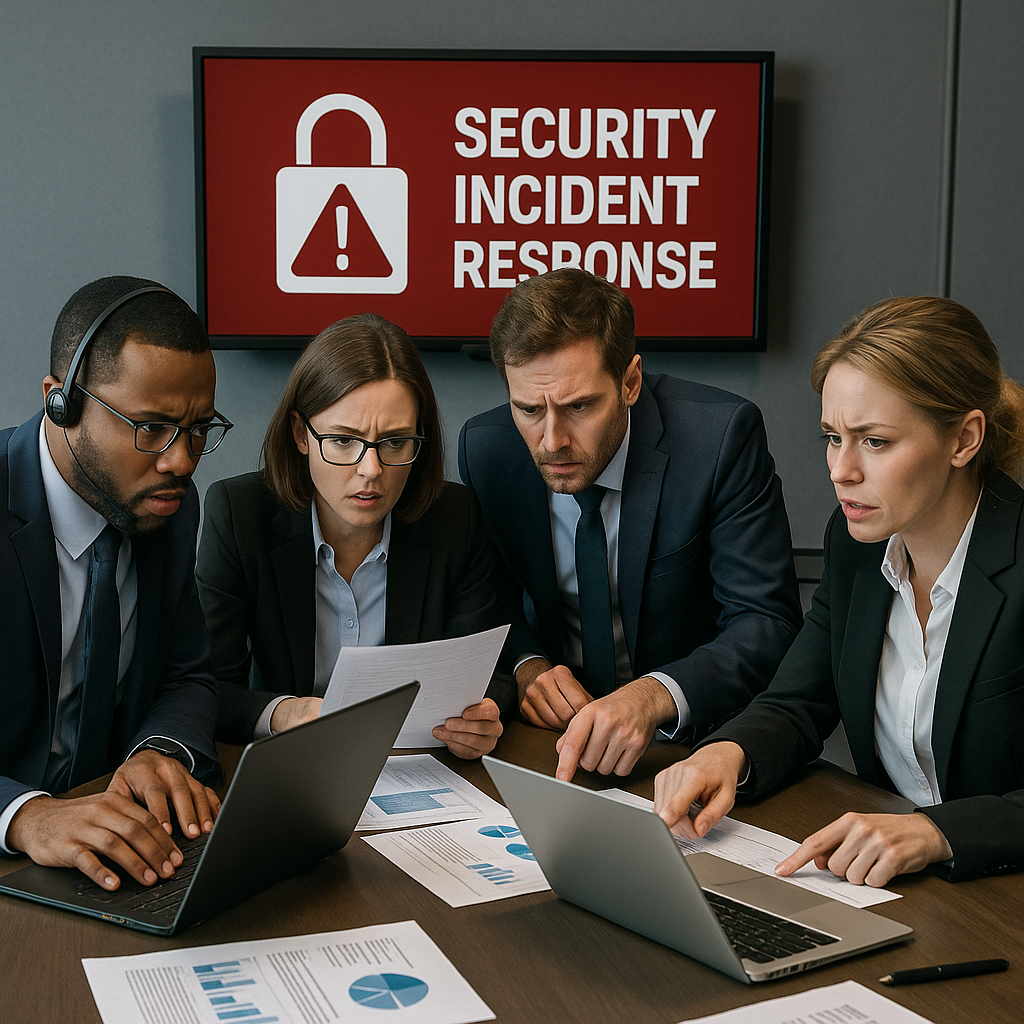
Most organizations discover their security incident response plan has critical gaps only after a breach or outage occurs. During these high-pressure moments, confusion about roles and responsibilities can turn a manageable incident into a catastrophic failure. Clear role definition separates organizations that contain incidents within hours from those that experience weeks of downtime and regulatory penalties.
Understanding who handles which tasks during a security incident prevents paralysis, reduces response time, and minimizes damage. This guide explains the critical roles every organization needs, their specific responsibilities, and how to implement an effective response structure regardless of team size.
Understanding Security Incident Response
Security incident response is the structured approach organizations use to prepare for, detect, contain, and recover from cybersecurity events. These events range from malware infections and data breaches to ransomware attacks and system compromises.
The goal is not to prevent every incident—that’s impossible. Instead, effective incident response focuses on minimizing impact, preserving evidence, and restoring normal operations quickly. Organizations with defined response roles recover 50% faster than those relying on improvised responses, according to analysis of enterprise security operations.
Response effectiveness depends on three factors: preparation before incidents occur, clear communication during active events, and thorough analysis afterward. Role clarity directly impacts all three areas. When team members understand their exact responsibilities, they act decisively rather than waiting for direction or duplicating efforts.
The Five Critical Incident Response Roles
Every organization needs these five core roles, though how they’re staffed varies by size and resources.
Incident Coordinator
The incident coordinator serves as the central command point during security events. This person activates the response plan, assigns tasks, tracks progress, and maintains situational awareness across all response activities.
Key responsibilities include:
- Declaring incidents and activating response procedures
- Assigning specific tasks to other role holders
- Maintaining incident timelines and documentation
- Coordinating communication between technical and business teams
- Making tactical decisions about containment and recovery steps
The coordinator doesn’t need to be the most technical person on staff. Strong organizational skills, decision-making ability under pressure, and familiarity with business operations matter more than deep technical expertise. In small organizations, this role often falls to an IT manager or security-aware operations director.
Common mistakes include coordinators getting pulled into technical troubleshooting instead of maintaining oversight, or attempting to handle multiple roles simultaneously. The coordinator’s job is orchestration, not execution.
Technical Responder
Technical responders execute the hands-on work of investigating, containing, and remediating security incidents. They analyze system logs, isolate compromised systems, remove malware, and restore services.
Responsibilities include:
- Investigating alerts and determining incident scope
- Collecting and preserving digital evidence
- Implementing containment measures like network segmentation
- Removing threats from affected systems
- Restoring systems from known-good backups
- Implementing fixes to prevent recurrence
This role requires technical depth in areas like system administration, network security, and forensic analysis. In larger organizations, multiple technical responders may work simultaneously on different aspects of the same incident. Small businesses often contract this role to managed service providers or cybersecurity consultants.
Technical responders must balance speed with thoroughness. Rushing containment without understanding full incident scope can leave attackers with persistent access. The most effective responders communicate findings clearly to non-technical stakeholders rather than disappearing into purely technical work.
Communications Lead
The communications lead manages all internal and external messaging during incidents. This role prevents information chaos, maintains stakeholder confidence, and ensures regulatory compliance.
Core duties include:
- Crafting status updates for executives and staff
- Preparing customer notifications when required
- Coordinating with legal counsel on disclosure requirements
- Managing media inquiries if incidents become public
- Documenting what information was shared and when
Effective communications leads understand both the technical situation and business implications. They translate technical findings into business impact statements. For example, rather than reporting “SQL injection in the web application,” they explain “unauthorized access to customer database; investigating whether data was copied.”
Timing matters critically. Internal stakeholders need frequent updates even when new information is limited. External communications require legal review and careful phrasing to avoid liability while maintaining transparency. Many breaches cause lasting reputation damage not from the incident itself but from poor communication afterward.
Legal and Compliance Advisor
The legal advisor ensures incident response activities comply with regulations, protect the organization from liability, and preserve evidence for potential legal proceedings.
Key responsibilities include:
- Assessing breach notification requirements under applicable laws
- Advising on evidence preservation for investigations or litigation
- Coordinating with cyber insurance carriers
- Evaluating contracts to determine vendor notification obligations
- Guiding decisions about law enforcement involvement
Different regulations impose different requirements. Healthcare organizations must consider HIPAA breach notification rules. Financial services firms face requirements from banking regulators. Companies handling EU resident data must evaluate GDPR obligations. The legal advisor maps these requirements to specific incident details.
In small organizations without dedicated legal staff, this role often falls to external counsel. Establishing relationships with attorneys experienced in cybersecurity incidents before breaches occur prevents delays when legal guidance is urgently needed.
Executive Decision Maker
The executive decision maker provides business authority for significant response actions. This person approves major expenditures, makes risk-based decisions about operational disruptions, and takes ultimate responsibility for organizational response.
Critical decisions requiring executive involvement:
- Whether to pay ransoms or negotiate with attackers
- Shutting down production systems to contain threats
- Authorizing emergency budget for response contractors
- Approving public disclosure of incidents
- Determining when to involve law enforcement
This role typically belongs to the CEO, COO, or another C-level executive with broad organizational authority. The executive doesn’t need technical expertise but must understand business risk and accept input from technical and legal advisors.
Common failures occur when executives either micromanage technical details or completely delegate without providing necessary authority. The best executive decision makers set clear parameters for responders, approve resource requests quickly, and shield the response team from organizational politics during active incidents.
Adapting Roles for Different Organization Sizes
Small businesses with limited IT staff can’t dedicate five different people to incident response. Role consolidation works when done thoughtfully.
Typical small organization structure:
- IT manager serves as both incident coordinator and technical responder
- Business owner or general manager acts as executive decision maker
- External legal counsel provides compliance guidance on retainer
- HR director or office manager handles communications lead duties
The key is documenting these combined responsibilities explicitly. When one person handles multiple roles, written procedures prevent important tasks from being overlooked during stressful incidents.
Larger organizations often expand beyond these five core roles. Enterprise security operations might include dedicated forensics specialists, threat intelligence analysts, recovery coordinators, and separate leads for different technical domains. The five roles described here represent the minimum viable structure.
Building Effective Role Documentation
Role definitions fail when they exist only as concepts rather than documented procedures. Each role needs a written description that response team members can reference during actual incidents.
Effective role documentation includes:
- Contact information for primary and backup role holders
- Specific tasks this role performs during incidents
- Authority level and decision-making boundaries
- Coordination points with other roles
- Resources and tools this role needs access to
- Common mistakes or pitfalls to avoid
Documentation should be action-oriented rather than theoretical. Instead of “The incident coordinator provides leadership,” write “The incident coordinator declares the incident level, activates the response team through the emergency contact system, and schedules the first status call within 30 minutes.”
Store role documentation in multiple accessible locations. Digital-only documentation becomes useless during incidents that disable primary systems. Many organizations maintain printed incident response binders with role descriptions, contact lists, and key procedures.
Training and Testing Response Roles
Documentation alone doesn’t create effective incident responders. Regular training and realistic exercises prepare team members to execute their roles under pressure.
Tabletop exercises walk teams through incident scenarios without actual system involvement. A facilitator describes an evolving situation while participants explain what actions they would take in their assigned roles. These exercises identify gaps in procedures, unclear role boundaries, and communication breakdowns.
Effective tabletop scenarios:
- Ransomware encryption of file servers during business hours
- Discovery of unauthorized database access from three months prior
- Malware infection spreading across workstations
- Compromise of email systems with potential data exfiltration
- Insider threat with intentional data deletion
Full-scale exercises involve actual technical response activities using test systems. Technical responders practice evidence collection and system isolation. Communications leads draft status updates. Executive decision makers evaluate whether to activate business continuity procedures.
Organizations should conduct tabletop exercises quarterly and full-scale tests annually at minimum. Each exercise should target specific learning objectives rather than simply repeating the same scenario.
Integration with Business Continuity
Incident response roles intersect with business continuity planning but serve different purposes. Incident response focuses on addressing security events. Business continuity ensures critical business functions continue during disruptions.
During major incidents, both frameworks activate simultaneously. The incident coordinator leads security response activities while a business continuity coordinator manages operational workarounds. These roles must communicate constantly to align technical recovery with business needs.
For example, during a ransomware incident:
- Technical responders assess which systems are compromised
- The business continuity team identifies alternative workflows
- The incident coordinator and continuity coordinator jointly prioritize recovery order
- Communications leads message both technical status and business capability
Small organizations often combine incident response and continuity coordination into a single role. Larger enterprises maintain separate teams with defined handoff procedures.
Communication Frameworks During Active Incidents
Role effectiveness depends heavily on structured communication during fast-moving incidents. Ad hoc status calls and scattered email threads create information overload and missed updates.
Effective incident communication structure:
- Scheduled status calls at defined intervals (every 2-4 hours initially)
- Dedicated communication channels separate from normal operations
- Standardized status report format covering scope, actions taken, next steps, and timeline
- Clear escalation paths for urgent decisions
- Documentation requirements for all significant actions
The incident coordinator owns the communication cadence. Other role holders report to the coordinator rather than creating separate update chains. This prevents confusion about current situation status and conflicting information reaching stakeholders.
Many organizations use incident management platforms or collaboration tools to centralize communication. These tools maintain searchable records of decisions and actions, valuable for post-incident analysis and potential legal proceedings.
Common Role Implementation Failures
Organizations frequently encounter predictable problems when implementing incident response roles.
Role confusion occurs when responsibilities overlap without clear boundaries. Technical responders and incident coordinators both believe they’re leading the response. Communications leads and legal advisors disagree about public statement timing. Documenting decision authority prevents these conflicts.
Single points of failure emerge when only one person can perform a critical role. If the sole technical responder is unavailable during an incident, response stalls. Every role needs identified backup personnel with equivalent training.
Scope creep happens when non-security incidents get handled through security response procedures. Power outages, hardware failures, and software bugs need different response approaches than security compromises. Clear incident classification criteria direct events to appropriate response frameworks.
Authority gaps appear when role holders can’t access necessary resources. Technical responders need elevated system privileges to investigate and contain threats. Communications leads need authority to message customers without multiple approval layers. These capabilities should be provisioned during preparation, not discovered as gaps during active incidents.
Post-Incident Activities and Role Responsibilities
Security incident response doesn’t end when systems are restored. Each role has specific post-incident responsibilities that improve future response capability.
The incident coordinator leads the post-incident review meeting, typically held within one week of incident closure. This meeting evaluates what worked well, what failed, and what should change. All role holders participate and contribute observations.
Technical responders document the incident timeline, technical findings, and remediation steps. This documentation serves multiple purposes: regulatory compliance, insurance claims, and organizational knowledge building. Thorough technical reports take several hours to produce but prove invaluable during future similar incidents.
The communications lead conducts stakeholder follow-up, confirming that all necessary parties received appropriate closure notifications. This role also evaluates whether communication timing and content met stakeholder needs.
Legal advisors ensure all compliance requirements are satisfied, including regulatory notifications, breach reporting, and evidence preservation for any ongoing investigations.
The executive decision maker reviews incident costs, evaluates whether response procedures worked effectively, and authorizes recommended security improvements to prevent recurrence.
Organizations that treat post-incident activities as optional waste the learning opportunity every incident provides. The most mature security programs deliberately extract lessons from each event and systematically address identified gaps.
Building a Role-Ready Organization
Implementing effective incident response roles requires deliberate organizational preparation. Start by documenting the five core roles with specific responsibilities tailored to organizational structure and available personnel. Assign primary and backup people to each role based on skills and availability rather than job titles.
Conduct initial role training where assigned personnel review their responsibilities, ask questions, and practice coordination. Schedule the first tabletop exercise within 30 days of role implementation to identify immediate gaps while documentation is fresh.
Integrate incident response roles into existing security and IT procedures. Update contact lists, system access controls, and vendor relationships to support assigned roles. Verify that role holders can actually perform their documented responsibilities with available tools and authority.
Review and update role assignments quarterly as personnel change. Test response procedures at least annually through exercises. Refine documentation based on exercise findings and actual incident experience.
Organizations that invest in role clarity before incidents occur respond decisively when events happen. Those that improvise during crises discover their gaps at the worst possible time. The difference between controlled incident response and organizational chaos often comes down to answering one question clearly: who does what when things go wrong?
Enjoyed this article?
Subscribe to Professor Simon's weekly newsletter for practical insights, career guidance, and leadership lessons delivered every Friday.
A confirmation email will be sent. If you don't receive it, please check your spam or junk folder.
No spam. Unsubscribe anytime.
Prefer to Listen?
Listen to Professor Simon’s IT & Cybersecurity Podcast for practical conversations about cybersecurity careers, certifications, security leadership, and real-world lessons from the field.
Listen on Spotify