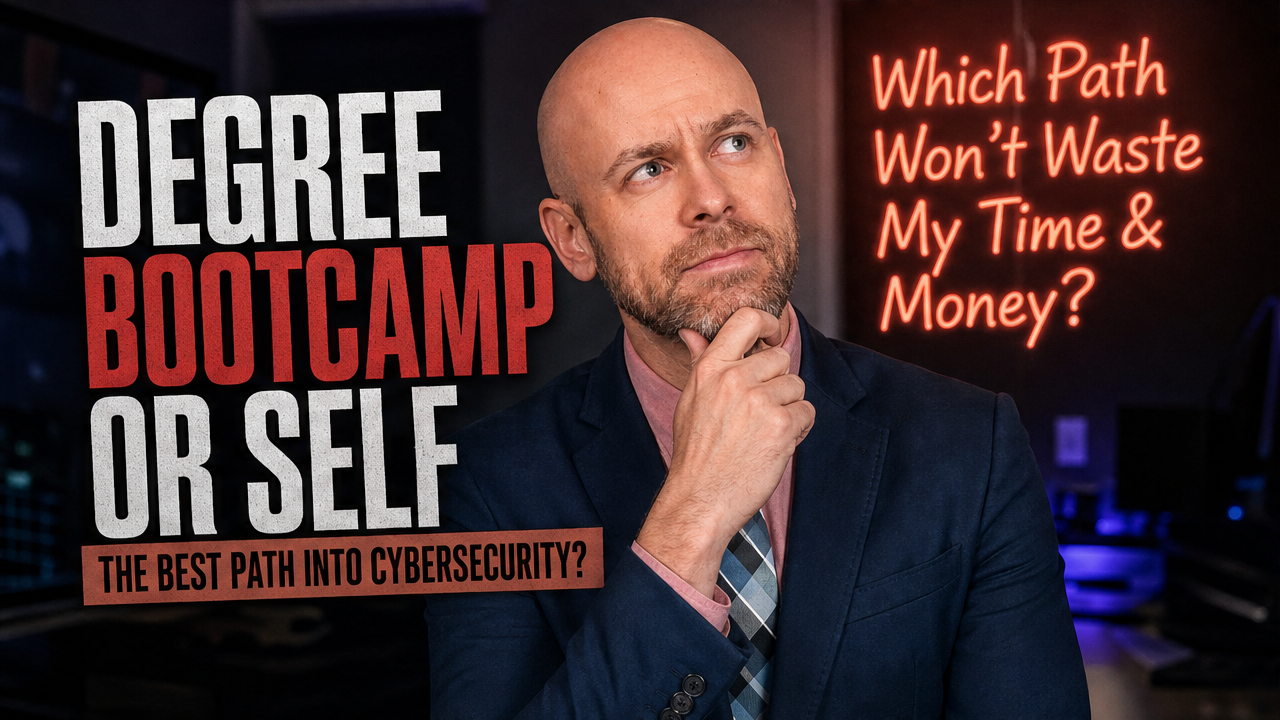
Is Cybersecurity Really Recession-Proof? The Truth About Job Security

Is Cybersecurity Really Recession-Proof? The Truth About Job Security
Economic uncertainty drives many professionals to evaluate which career paths offer the most stability. While tech layoffs dominate headlines, one sector consistently emerges as more resilient than others: cybersecurity. But the common claim that cybersecurity is completely “recession-proof” requires closer examination. The reality is more nuanced—and more useful for anyone considering this career path.
The field does offer stronger job security than most technology roles, but understanding why that protection exists and what limitations it carries matters for making informed career decisions. This guide examines the evidence behind cybersecurity’s reputation for stability, explores what makes these roles different from other tech positions, and provides realistic expectations for those entering or considering the field.
Why Cybersecurity Resists Economic Downturns
Cybersecurity roles remain in demand during recessions for reasons fundamentally different from other technology functions. While companies may delay software projects or reduce development teams, security operations continue because the underlying threats do not pause for economic cycles.
Regulatory compliance creates a baseline of non-negotiable security work. Organizations in healthcare, finance, government contracting, and other regulated industries must maintain specific security controls regardless of revenue conditions. A hospital cannot stop protecting patient records during a downturn. A financial services firm cannot ignore payment card industry requirements because quarterly earnings declined. These legal obligations create a floor beneath cybersecurity hiring that does not exist for many other tech roles.
Breach costs escalate faster than security budgets. When a company faces choosing between maintaining security staff or accepting increased breach risk, the financial calculation often favors retention. The IBM Cost of a Data Breach Report consistently shows average breach costs exceeding several million dollars, making even expensive security teams appear cost-effective by comparison. Organizations understand that cutting security to save money can result in losses that dwarf the salary savings.
The threat landscape remains active regardless of economic conditions. Ransomware operators, state-sponsored groups, and financially motivated attackers do not reduce activity during recessions—they often increase targeting as organizations become more vulnerable through reduced security postures. This persistent threat environment maintains pressure on companies to sustain defensive capabilities.
According to research cited by Boise State University, cybersecurity spending was projected to total $1.75 trillion from 2021 to 2025, with open positions growing 350% from 2013 to 2021. These figures reflect sustained organizational commitment even across varying economic conditions.
The Workforce Gap Advantage
A significant factor protecting cybersecurity employment is the persistent shortage of qualified professionals. Multiple industry studies cite a global shortfall ranging from 3.4 to 4.07 million unfilled cybersecurity positions depending on measurement methodology and timing.
This workforce gap creates competitive pressure that favors job seekers and existing employees. When qualified candidates are scarce, organizations become more reluctant to eliminate positions even during cost-cutting periods. The difficulty and expense of rehiring specialized talent makes retention more economically rational than layoffs in many situations.
The Bureau of Labor Statistics projects information security analyst roles will grow 32% through 2032, substantially faster than the average for all occupations. This growth projection reflects both expanding organizational security needs and continued difficulty filling available positions.
Recession-Resistant Does Not Mean Recession-Proof
Despite strong protective factors, cybersecurity is not completely immune to economic pressures. Some security teams do experience layoffs, budget reductions, and hiring freezes during severe downturns. The more accurate description is recession-resistant rather than recession-proof.
Certain security roles face more vulnerability than others. Positions focused on proactive improvements—security architecture for future systems, application security for products not yet launched, or advanced threat hunting programs—may be deprioritized when organizations shift to defensive postures. Meanwhile, roles directly tied to operations, compliance, and incident response tend to remain more protected because they address immediate, ongoing needs.
Company financial health and industry sector matter significantly. A financially stable healthcare provider or financial institution maintains security staffing more reliably than a struggling startup or a company in a severely impacted industry. Security teams at organizations facing bankruptcy or acquisition face the same existential risks as any other department.
Geographic and organizational factors create variation. Large enterprises with dedicated security budgets demonstrate different resilience patterns than small businesses operating with limited IT staff who handle security as one of many responsibilities. Remote-friendly security roles may see different demand patterns than positions requiring physical presence.
What This Means for Career Security
For professionals evaluating cybersecurity as a career path, the field offers stronger employment stability than most technology roles while remaining subject to economic realities that affect all positions.
The strongest protection comes from building skills that address mandatory rather than optional security functions. Understanding compliance frameworks, developing operational security capabilities, gaining incident response experience, and learning to manage security for essential business systems creates more resilient career positioning than focusing exclusively on emerging or experimental security domains.
Diversifying technical knowledge across multiple security areas provides additional protection. A professional who understands both network security and cloud security, or who combines technical skills with risk management knowledge, becomes harder to replace and more valuable across varying organizational priorities.
Understanding total compensation rather than salary alone matters for career decisions. Security roles often include components beyond base pay—signing bonuses, equity, certification and training budgets, and retention incentives. BitLyft research indicates only 15% of cybersecurity professionals wanted to return to office full-time, suggesting remote work flexibility represents another form of compensation that affects job quality and retention.
Real Work Conditions and Expectations
The security aspects that protect jobs during recessions also shape working conditions in ways career changers should understand before entering the field.
Security incidents do not follow business hours. Many cybersecurity roles include on-call responsibilities, after-hours escalations, and potential disruption of personal time. A security operations center analyst might work remotely most days but face calls during weekends when an incident is detected. An incident responder might maintain regular hours for weeks then work extended shifts during a breach investigation.
Remote work is common but not always equivalent to lifestyle flexibility. The same portability that allows working from anywhere can mean supporting systems across time zones or responding to urgent issues regardless of personal schedules. BitLyft research found that 80% of security professionals experience pushback when enforcing policy, with 91% feeling pressure to compromise security for business continuity—stressors that persist regardless of physical work location.
The work involves continuous learning. Threats evolve constantly, technology platforms change regularly, and compliance requirements update periodically. Successful cybersecurity careers require ongoing skill development and adaptation. This creates job security through specialized knowledge but also demands sustained learning effort.
Entry Strategies for Career Changers
Individuals considering cybersecurity specifically for job security should understand practical pathways into the field that align with the roles demonstrating strongest recession resistance.
Transferable skills from adjacent fields matter more than perfect credentials. Help desk experience teaches troubleshooting and customer service. Network administration builds understanding of infrastructure. IT audit develops compliance knowledge. Risk management creates relevant analytical frameworks. These backgrounds provide legitimate entry points even without formal security titles.
Job posting requirements describe ideal candidates, not absolute minimums. Many successful security professionals entered the field by applying to positions where they met some requirements while demonstrating capacity to learn remaining skills. Focusing applications on roles where existing experience transfers logically makes more sense than waiting to satisfy every listed qualification.
Portfolio evidence of practical skills can substitute for formal experience. Home lab projects, capture-the-flag competitions, open source security tool contributions, and documented research demonstrate capability more concretely than education alone. Building visible proof of security skills creates competitive advantage for candidates without traditional backgrounds.
Certifications serve specific strategic purposes. Entry-level certifications like Security+ establish baseline knowledge. Specialized certifications in network security, cloud security, or specific compliance frameworks signal targeted expertise. Expensive advanced certifications make more sense after securing initial employment when employers often provide funding for continuing education.
Skills That Actually Protect Jobs
Understanding which capabilities create most career resilience helps prioritize learning for security newcomers.
Networking knowledge forms the foundation of many security roles because most threats and controls involve network traffic, access, and communication. Understanding TCP/IP, routing, switching, firewalls, and basic network security creates applicable skills across numerous security positions.
Incident response capabilities remain consistently valuable because organizations always need people who can investigate alerts, contain threats, and coordinate recovery. These skills directly address operational necessities that continue during economic uncertainty.
Compliance and risk management knowledge translates across organizations and industries. Understanding regulatory frameworks, audit processes, control implementation, and risk assessment provides skills that remain relevant regardless of specific technologies or platforms.
Communication skills differentiate security professionals who advance from those who stagnate. The ability to explain technical risks to non-technical stakeholders, write clear documentation, present findings effectively, and coordinate across teams creates value that extends beyond pure technical capability. Research from BitLyft indicates 47% of cybersecurity professionals leave roles due to limited promotion and development opportunities—career advancement that often depends on communication and leadership skills rather than technical depth alone.
Cloud security skills have become increasingly foundational as organizations migrate systems and data. Understanding identity management, cloud architecture, configuration security, and cloud-specific threats addresses current organizational priorities.
Automation and scripting capabilities have grown in importance as AI and automated tools handle repetitive operational tasks. Rather than eliminating security jobs, automation has shifted human work toward higher-value analysis, tuning, investigation, and strategic activities. Security professionals who can work effectively with automated tools while handling the complex judgment automation cannot manage create more sustainable career positions.
The Role of Economic Cycles in Career Planning
Economic downturns affect career progression differently than employment security. Understanding this distinction helps set realistic expectations.
Hiring for security roles slows during severe recessions even as layoffs remain relatively limited. Organizations continue operations with existing staff while reducing new headcount. This creates more difficult entry conditions for newcomers while protecting current employees. Career changers should anticipate potentially longer job search periods during economic contractions but should not interpret slower hiring as lack of long-term opportunity.
Promotion velocity and project funding face pressure even when positions remain secure. A security analyst might maintain employment while seeing career advancement opportunities delay or training budgets reduce. Professionals should evaluate total career trajectory across economic cycles rather than expecting linear progression regardless of broader conditions.
Specialized roles remain more available than generalist positions during tight labor markets. Organizations facing hiring constraints prioritize filling specific capability gaps over adding general staff. Developing demonstrable expertise in particular security domains—cloud security, identity management, compliance, threat intelligence—creates competitive advantages during periods when companies hire more selectively.
Making an Informed Decision
Cybersecurity offers stronger employment stability than most technology careers through a combination of regulatory requirements, persistent threats, operational necessity, and workforce shortages. These factors create meaningful protection during economic uncertainty while not eliminating all employment risk.
The field works best for individuals who genuinely find security problems interesting rather than those purely chasing job security. The ongoing learning requirements, operational pressures, and technical complexity demand sustained engagement that becomes difficult to maintain without authentic interest in the subject matter.
Understanding realistic working conditions—including potential after-hours responsibilities, continuous learning needs, and organizational pressures—allows better assessment of whether the career trade-offs align with personal priorities. Remote work flexibility and strong compensation matter, but they come paired with expectations and stresses specific to security work.
For career changers, recent graduates, and early-career professionals evaluating paths forward, cybersecurity represents a field with stronger recession resistance than most technology roles while requiring honest assessment of whether the work itself, not just the job security, matches individual capabilities and interests. The strongest long-term security comes from building valuable skills in a field that maintains engagement rather than entering a career primarily for defensive employment reasons.
Enjoyed this article?
Subscribe to Professor Simon's weekly newsletter for practical insights, career guidance, and leadership lessons delivered every Friday.
A confirmation email will be sent. If you don't receive it, please check your spam or junk folder.
No spam. Unsubscribe anytime.
Prefer to Listen?
Listen to Professor Simon’s IT & Cybersecurity Podcast for practical conversations about cybersecurity careers, certifications, security leadership, and real-world lessons from the field.
Listen on Spotify