Deep Fake Defense: How to Protect Yourself When You Can’t Trust What You See
Deep Fake Defense: How to Protect Yourself When You Can’t Trust What You See
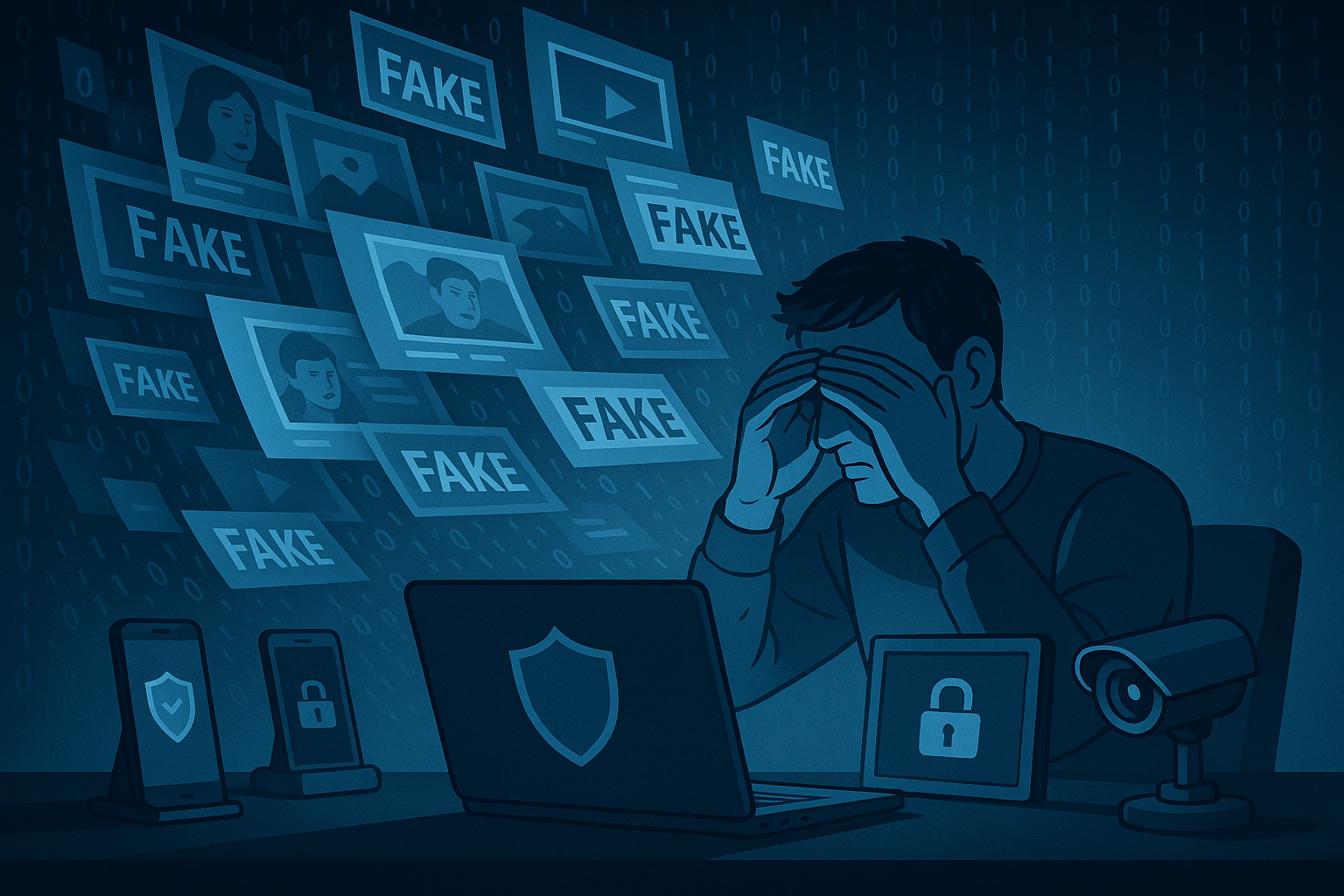
A Hong Kong finance worker transferred $25 million to fraudsters after a video conference call with what appeared to be the company’s chief financial officer and other colleagues. Every person on that call was a deep fake—AI-generated imposters mimicking real executives down to their mannerisms and voices. The employee followed standard verification procedures, saw familiar faces on video, and still lost millions.
This isn’t science fiction. Deep fake technology has evolved from a curiosity into a practical tool for fraud, and the barrier to creating convincing fakes continues to drop. What once required specialized expertise now takes minutes with publicly available software. The question isn’t whether deep fakes will affect ordinary people—it’s how to protect yourself when your eyes and ears can no longer be trusted.
Understanding the Deep Fake Threat Landscape
Deep fakes use artificial intelligence to create synthetic video, audio, or images that convincingly impersonate real people. The technology analyzes hours of source material—public videos, social media posts, recorded calls—then generates new content that mimics speech patterns, facial expressions, and voice characteristics with startling accuracy.
The financial impact extends beyond corporate targets. Scammers have used deep fake audio to impersonate family members requesting emergency funds, created fake video endorsements from celebrities to promote investment scams, and generated synthetic identities to open fraudulent accounts. The Federal Trade Commission reports increasing complaints about AI-enhanced fraud, with victims losing thousands to scams they believed came from trusted sources.
Three factors make deep fakes particularly dangerous. First, they exploit the human tendency to trust visual and auditory information over text. Second, they scale effortlessly—a single deep fake video can reach millions. Third, they erode the baseline assumption that seeing or hearing someone confirms their identity, forcing a fundamental shift in how we verify authenticity.
How Deep Fake Scams Actually Work
Most deep fake fraud follows predictable patterns. Scammers typically start with reconnaissance, gathering photos, videos, and voice samples from social media profiles, company websites, or public appearances. LinkedIn profiles, YouTube videos, and TikTok accounts provide rich source material. Even a few minutes of clear audio enables convincing voice cloning.
The attack itself usually creates urgency. A deep fake video call from a “supervisor” demands immediate wire transfer approval. A synthetic voice message from a “family member” claims they’re in trouble and need money sent right away. An AI-generated video of a “CEO” announces a time-sensitive investment opportunity. The pressure to act quickly prevents careful verification.
Sophistication varies widely. Basic deep fakes show obvious artifacts—unnatural eye movements, lighting inconsistencies, audio sync problems. Advanced versions fool even careful observers. The technology improves monthly, with open-source tools now producing results that required professional equipment just years ago.
Red Flags That Suggest Deep Fake Manipulation
Several telltale signs can reveal synthetic content, though detection grows harder as the technology advances. Visual anomalies often appear around edges—where skin meets hair, glasses frames, or backgrounds. Deep fake faces may struggle with natural blinking patterns or show subtle distortions during complex expressions. Lighting that doesn’t match environmental context or shadows that fall incorrectly suggest manipulation.
Audio deep fakes often falter on spontaneity. Cloned voices may handle prepared statements convincingly but stumble with unexpected questions or rapid topic changes. Background noise that doesn’t match the claimed environment, unnatural breathing patterns, or audio that sounds slightly “compressed” even on good connections warrant suspicion.
Behavioral inconsistencies matter more than technical flaws. A colleague who normally follows established protocols suddenly demands immediate action through unusual channels. A family member uses formal language instead of familiar phrases or nicknames. A business contact requests sensitive actions without referencing shared context or recent conversations.
Context mismatches provide crucial signals. A video call from someone who should be in a different time zone, claims to be in one location while backgrounds suggest another, or demonstrates knowledge gaps about recent shared experiences all indicate potential fraud.
Practical Verification Protocols for Everyday Use
Protecting yourself requires building verification habits into routine interactions, especially for requests involving money, sensitive information, or urgent action.
Establish out-of-band verification for any unexpected request, regardless of how convincing the source appears. If someone calls requesting urgent action, hang up and call them back using a known, saved number—not one they provided. If a video call seems legitimate but unusual, send a text or email to a separate, verified address asking for confirmation. Attackers control the fraudulent channel but rarely compromise multiple independent communication methods simultaneously.
Create shared authentication systems with family members, close friends, and colleagues. Agree on specific questions only the real person could answer—details about shared experiences, inside jokes, or family history that don’t appear on social media. Some families establish code words for emergencies, updated regularly and never transmitted digitally.
Professional contexts benefit from formal verification procedures for financial transactions or sensitive data access. Multi-person approval for transfers above certain thresholds, callback requirements to verified numbers for authorization requests, and written confirmation through authenticated channels add friction that stops most deep fake attacks.
Challenge timing and urgency claims aggressively. Legitimate emergencies rarely prevent taking sixty seconds to verify identity through an independent channel. Scammers rely on panic overriding careful thinking. Any request demanding immediate action without time for verification deserves extreme skepticism.
Protecting Your Digital Footprint
Limiting available source material makes creating convincing deep fakes of you significantly harder. Review privacy settings on social media platforms to restrict who can access photos, videos, and voice recordings. Public TikTok videos, YouTube channels, and Instagram stories provide exactly the material deep fake tools need.
Consider the long-term implications before posting video or audio content publicly. That cheerful birthday message or conference presentation becomes training data for anyone wanting to clone your voice or appearance. Professional contexts may require public presence, but personal accounts offer more control.
Be particularly cautious about high-quality video and audio. Clear, well-lit video from multiple angles gives deep fake algorithms better source material. Professional recordings with clean audio make voice cloning more effective. Lower quality material actually provides some protection by giving algorithms less to work with.
Remove or limit old content when possible. That college YouTube channel from ten years ago or those early podcast episodes remain available for anyone to scrape. Platforms like Google’s “Results About You” tool help identify and request removal of some personal content, though complete elimination remains difficult.
What to Do If You Suspect a Deep Fake Scam
Stop the interaction immediately without explaining your suspicion. If on a call, end it. If responding to a message, cease communication. Scammers adapt tactics in real time when they realize targets are skeptical. Don’t give them the chance to adjust their approach.
Verify through completely separate channels. Call the person who supposedly contacted you using a number you already have saved. Send an email to an address you’ve used before, not one provided in the suspicious communication. Contact them through workplace communication systems if appropriate.
Report the incident even if you didn’t lose money. File reports with the FBI’s Internet Crime Complaint Center, the FTC, and local law enforcement. These reports help authorities track patterns and warn others. If the scam involved impersonating someone you know, alert them so they can warn their other contacts.
Document everything you can. Save copies of suspicious videos, audio files, phone numbers, email addresses, or messages. Screenshot social media profiles used in the scam. Note exact times and dates. This information helps investigations and may prevent others from falling victim.
If you did transfer money or share sensitive information, act immediately. Contact your bank or financial institution to report fraud and attempt to reverse transactions. Change passwords and enable multi-factor authentication on any accounts that might be compromised. Consider placing fraud alerts with credit bureaus if personal information was exposed.
Preparing Organizations and Teams
Workplace deep fake defense requires organizational policies, not just individual awareness. Companies should establish mandatory verification procedures for financial transactions, data access requests, and system changes—especially those coming through voice or video channels claiming urgency.
Train employees on deep fake risks using realistic examples without inducing panic. Show side-by-side comparisons of real and synthetic content. Practice verification protocols in simulation exercises. The Hong Kong incident happened despite security awareness because the deep fakes were simply too convincing for untrained eyes.
Create escalation procedures for suspicious requests. Employees should know exactly who to contact if a communication seems legitimate but triggers concern. Clear reporting channels without fear of appearing foolish encourage verification rather than risky compliance.
Update authentication systems to reduce reliance on biometric or voice verification alone. Multi-factor authentication using hardware tokens or authenticator apps provides stronger protection than systems depending on “something you are” when your appearance and voice can be synthesized.
Building Long-Term Resilience
The deep fake threat will intensify before defenses catch up. Detection tools exist but lag behind generation capabilities. Organizations like the Content Authenticity Initiative work on digital provenance standards—cryptographic signatures proving content origin—but adoption remains limited.
The practical defense centers on procedural skepticism rather than technical detection. When any video, voice call, or image might be synthetic, authentication must rely on knowledge, multi-channel verification, and established protocols rather than trusting your senses.
This represents a fundamental shift in how humans assess trust. For thousands of years, seeing someone’s face or hearing their voice provided reasonable identity confirmation. That era has ended. The new baseline assumes visual and audio information can be manipulated and builds verification systems accordingly.
The skills needed aren’t technical. They’re procedural and cultural—building habits that verify before acting, establishing shared authentication systems with trusted contacts, and maintaining healthy skepticism about urgent requests regardless of apparent source. These practices feel cumbersome initially but become second nature with consistency.
Future-Proofing Your Security Posture
As deep fake technology continues advancing, several proactive steps provide ongoing protection. Stay informed about emerging threats through reputable cybersecurity news sources, but avoid panic-driven responses to every new technique. The core defensive principles—verification, skepticism about urgency, multi-channel authentication—remain constant.
Regularly update authentication protocols with family and colleagues. Code words lose value when used once and never changed. Shared knowledge becomes less effective when posted publicly. Periodic review ensures systems stay current and participants remember procedures.
Consider the verification burden before establishing complex systems. A protocol nobody uses because it’s too complicated provides no protection. Balance security with practicality, focusing effort on high-risk scenarios like financial transactions and sensitive data access rather than every casual interaction.
Teach these principles to vulnerable populations. Elderly family members, children gaining digital independence, and those less familiar with technology face elevated risk. Regular conversations about verification, demonstrations of deep fake capabilities, and established procedures for checking urgent requests prevent victimization.
The deep fake threat isn’t coming—it’s here. The Hong Kong finance worker, the families who’ve sent money to synthetic voices, and the companies that have lost millions to AI-generated impersonators all believed they could trust what they saw and heard. That trust, once a reasonable baseline, now requires verification. The question isn’t whether deep fakes will become convincing enough to fool you. They already are. The question is whether you’ll build the habits needed to protect yourself anyway.
Enjoyed this article?
Subscribe to Professor Simon's weekly newsletter for practical insights, career guidance, and leadership lessons delivered every Friday.
A confirmation email will be sent. If you don't receive it, please check your spam or junk folder.
No spam. Unsubscribe anytime.
Prefer to Listen?
Listen to Professor Simon’s IT & Cybersecurity Podcast for practical conversations about cybersecurity careers, certifications, security leadership, and real-world lessons from the field.
Listen on Spotify