Critical Questions Every Cybersecurity Professional Should Ask First

Critical Questions Every Cybersecurity Professional Should Ask First
Before implementing any security tool or purchasing the latest threat detection platform, cybersecurity professionals face a fundamental problem: they often focus on solutions before understanding what they’re actually protecting. This approach leads to wasted resources, security gaps, and frustrated teams defending assets that don’t matter while overlooking critical vulnerabilities.
The most effective security programs start not with technology, but with questions. Four foundational questions form the baseline for every security decision, vendor evaluation, and risk assessment. These questions might seem simple, but answering them thoroughly—and honestly—separates organizations with mature security postures from those scrambling after incidents.
Understanding What Actually Needs Protection
What Is Your Critical Data
The first question cuts through complexity: what data, systems, or operations would cause the most damage if compromised? Many organizations answer this question superficially, listing “everything” as critical or defaulting to compliance-driven categories like personally identifiable information.
Real critical data varies dramatically by industry and business model. For a hospital, patient records and medical device systems represent life-or-death priorities. An e-commerce platform might prioritize payment processing availability over customer browsing histories. A manufacturing firm’s proprietary designs or shop-floor control systems could determine competitive survival.
Identifying truly critical assets requires input from business leaders, not just IT departments. The accounting team knows which financial systems must remain operational during quarter-close. Operations teams understand which production systems create bottlenecks when unavailable. Legal and compliance teams can articulate which data exposures trigger regulatory penalties or litigation risks.
Organizations that skip this step often implement security measures that protect low-value assets while leaving crown jewels exposed. One common example: heavily securing employee email systems while leaving unpatched file servers containing strategic plans accessible to any internal user.
Where Your Assets Actually Live
Once critical data is identified, the second question follows: where does this information reside? The answer is rarely simple in modern environments mixing on-premises infrastructure, cloud services, employee devices, and third-party systems.
Critical customer data might exist in production databases, backup systems, data warehouses, analytics platforms, CRM tools, email archives, and employee laptops. Each location requires different security controls, yet many organizations lose track of data proliferation over time.
Forgotten assets create the most dangerous vulnerabilities. Researchers consistently find breaches originating from decommissioned servers still connected to networks, abandoned cloud storage buckets, or retired applications that still sync production data. These “dusty” assets receive no patches, monitoring, or access reviews because security teams don’t know they exist.
Answering this question requires asset inventories that go beyond IT purchasing records. Network scanning tools reveal unauthorized devices. Data discovery tools map where sensitive information flows. Cloud security posture management platforms identify shadow IT deployments. Manual interviews with department heads often uncover undocumented systems purchased with discretionary budgets.
The National Institute of Standards and Technology emphasizes asset identification as the first step in their Cybersecurity Framework precisely because you cannot protect what you don’t know exists. Manufacturing environments particularly struggle with this question when internet-connected operational technology devices outnumber traditional IT assets without appearing in standard inventories.
Understanding Access and Control
Who Currently Has Access
The third question addresses a truth many organizations find uncomfortable: who can actually access your critical data right now? The answer usually includes far more people than security policies suggest.
Access creep accumulates over time as employees change roles, contractors complete projects but retain credentials, service accounts multiply, and emergency access grants become permanent. One financial services firm discovered during an access review that 40% of employees could view customer account balances despite only 8% needing this access for their roles.
Comprehensive access reviews examine multiple layers. User accounts and permissions form the obvious starting point, but service accounts, API keys, administrative credentials, and physical access also matter. Third-party vendors frequently receive broad access during implementations that persists years beyond project completion.
Shared credentials create particularly difficult visibility problems. When multiple team members use a single service account, audit logs cannot distinguish between legitimate activity and potential misuse. When executives share passwords rather than requesting additional licenses, security teams cannot enforce access policies consistently.
Answering this question requires pulling access reports from every system touching critical data—not just the primary application but supporting databases, backup systems, administrative tools, and cloud platforms. The results often surprise even experienced security teams.
Who Should Have Access
The fourth question provides the benchmark for measuring current state: who actually needs access to perform their job functions? This question forces organizations to apply least privilege principles and justify every access grant.
Job role analysis identifies legitimate access requirements. Customer service representatives need to view account information but rarely require the ability to modify financial data directly. Database administrators need extensive access to maintain systems but shouldn’t routinely view sensitive customer information in production. Developers require access to test environments but rarely need production access outside coordinated deployments.
The gap between who has access and who should have access represents immediate risk. Every unnecessary permission creates potential for insider threats, compromised credentials, or simple human error. Security researchers consistently find that 90% of cyber incidents involve human factors, making access control one of the most effective risk reduction strategies available.
Implementing least privilege access doesn’t mean restricting access so tightly that work cannot proceed. It means providing just enough access to complete required tasks, with processes to temporarily elevate privileges when exceptions arise. Ticketing systems, privileged access management tools, and just-in-time access platforms support this approach without creating bottlenecks.
Applying These Questions in Practice
Building Your Asset Baseline
Answering these four questions creates the foundation for every subsequent security decision. The process should begin with structured data collection across the organization.
Create asset inventories that categorize systems by criticality. High-value targets receive the most stringent controls. Medium-value systems get standard protections. Low-value assets use baseline security appropriate to organizational risk tolerance. This tiered approach allocates limited security resources where they provide the greatest risk reduction.
Map data flows between systems to understand how information moves through your environment. Customer data collected through web forms might flow into CRM systems, then to marketing platforms, analytics tools, and archive storage. Each transfer point requires appropriate security controls. Missing or weak controls at any stage expose the entire data lifecycle.
Document access requirements by role and system. Standard job profiles speed onboarding while ensuring consistent access grants. Exception processes handle unique requirements without creating permanent access violations. Regular attestation cycles force managers to review subordinate access and remove unnecessary permissions.
Prioritizing Security Investments
These four questions provide objective criteria for evaluating security tools and services. Vendors frequently market solutions addressing dramatic threats like nation-state attacks or zero-day exploits. These scenarios make compelling demonstrations but rarely align with an organization’s actual risk profile.
Before evaluating any security product, map it to specific answers from your four questions. A data loss prevention tool makes sense only after identifying what data needs protection and where it resides. Privileged access management platforms address gaps between current and required access. Security information and event management systems require clear understanding of critical assets needing monitoring.
This approach prevents expensive purchases that solve theoretical problems rather than actual vulnerabilities. One mid-size company postponed advanced threat detection platform acquisition after determining they lacked basic asset inventories and access controls. Spending on fundamentals provided better risk reduction than sophisticated tools protecting unknown assets.
Risk assessments become more focused when starting with these questions. Rather than cataloging every conceivable threat, assessment teams can model attack scenarios against known critical assets. Adversary thinking exercises ask: if attackers wanted to inflict maximum damage, which of our critical systems would they target? How would they gain access? What existing controls would detect or prevent the attack?
Communicating with Business Leaders
Security professionals must translate these four questions into language that resonates with non-technical executives and board members. Business leaders typically don’t care about specific vulnerabilities or technical controls. They care about operational impact, financial risk, and competitive advantage.
Framing discussions around these questions demonstrates that security teams understand business priorities. Instead of requesting budget for “endpoint detection and response tools,” security leaders can explain: “We’ve identified that our product design files represent critical intellectual property currently accessible to 200 employees when only 30 require access. We need tools to monitor and control access to these assets.”
The National Association of Corporate Directors recommends that boards regularly ask executives questions that translate directly to these four fundamentals: Which adversaries would want to harm our organization most? How confident are we in our ability to detect a significant intrusion? These board-level questions cascade down to operational teams who must answer the four foundational questions to provide informed responses.
Regular reporting on these four questions demonstrates security program maturity. Quarterly updates showing reduced access gaps, improved asset inventory coverage, and better alignment between data classification and control implementation tell a story of risk reduction that executives and boards can understand without technical expertise.
Common Mistakes and How to Avoid Them
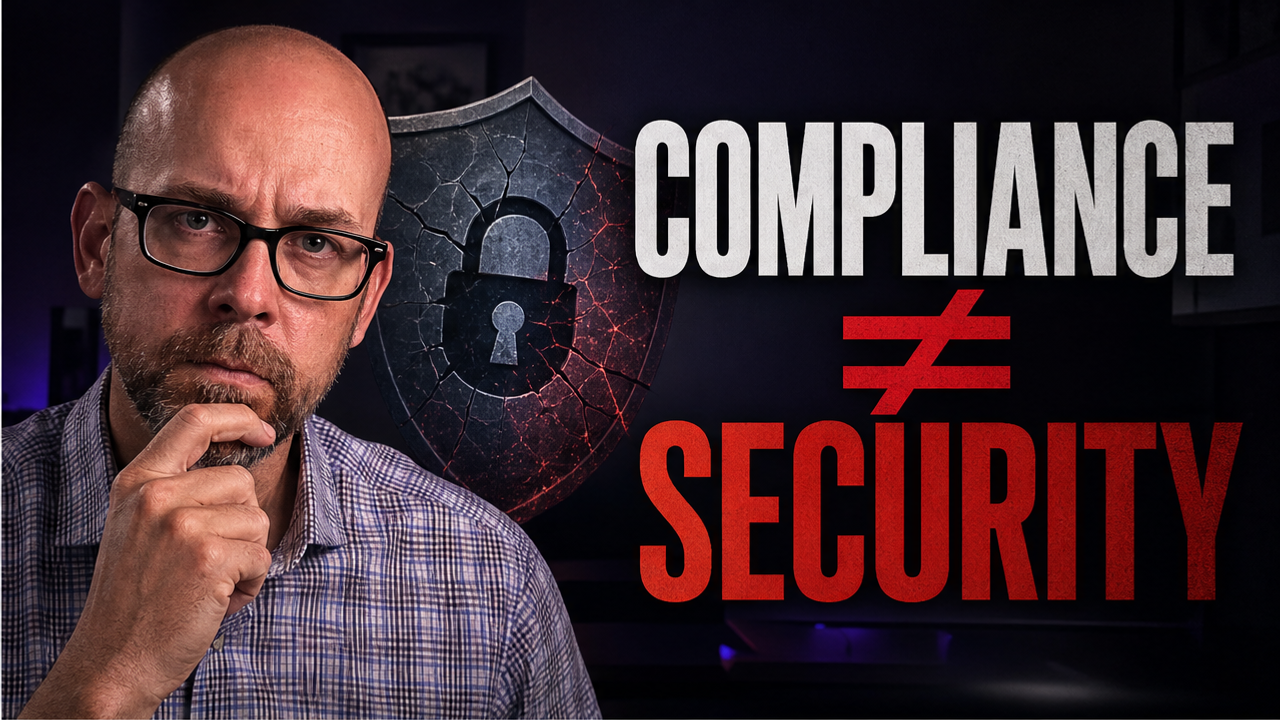
Assuming Compliance Equals Security
One of the most dangerous misconceptions equates compliance framework requirements with comprehensive security. Organizations that can answer these four questions for assets covered by PCI DSS, HIPAA, or other regulations often cannot answer them for systems outside compliance scope.
Compliance provides useful baselines but rarely addresses organization-specific risks. The four questions apply universally—to regulated and unregulated data, to customer information and internal intellectual property, to IT systems and operational technology. Effective security programs extend these questions across the entire environment, using compliance as a floor rather than a ceiling.
Neglecting Regular Updates
Asset environments constantly change. New applications get deployed, employees join and leave, cloud services proliferate, and critical business priorities shift. Answering these four questions once during a security assessment provides snapshot value but quickly becomes outdated.
Mature organizations build processes to continuously maintain answers to these questions. Asset management systems track infrastructure changes. Identity governance platforms flag access anomalies. Data classification programs embed protection requirements into new system implementations. Quarterly business reviews update criticality assessments as company strategy evolves.
Overlooking Human Elements
Technical tools can inventory assets and audit access permissions, but understanding what truly matters to the business requires human judgment. The most critical systems aren’t always those with the highest transaction volumes or largest databases.
Regular conversations with business unit leaders reveal which systems enable strategic initiatives, which data losses would cause reputational damage, and which operational disruptions would cascade across the organization. These qualitative assessments complement technical inventories and often identify critical assets that automated discovery tools miss.
Building Your Question Framework
Organizations just beginning to address these questions should expect the process to take weeks or months, not days. Comprehensive answers require input from across the business and often reveal uncomfortable truths about security gaps or control weaknesses.
Start with one critical business process or data category. Map that narrow scope thoroughly: identify the data, locate all repositories, audit current access, and define required access. This pilot approach builds expertise and demonstrates value before scaling to the entire organization.
Document findings in formats that support ongoing maintenance rather than one-time reports. Asset databases, access control matrices, and data flow diagrams become living references that security teams update as environments evolve. These artifacts also support incident response when teams need to quickly understand what systems a compromised account could access or where exfiltrated data might have originated.
Use these four questions as filters for every security initiative. When colleagues propose new tools, ask how they address gaps in your answers. When vendors present solutions, ask them to map capabilities to your specific critical assets and access control requirements. When executives request security updates, frame progress in terms of improved visibility and control around what matters most.
The path to effective cybersecurity doesn’t start with tool selection, compliance checkboxes, or threat intelligence subscriptions. It starts with honest answers to four straightforward questions about what you’re protecting, where it lives, who can access it, and who should access it. Everything else is implementation detail.
Enjoyed this article?
Subscribe to Professor Simon's weekly newsletter for practical insights, career guidance, and leadership lessons delivered every Friday.
A confirmation email will be sent. If you don't receive it, please check your spam or junk folder.
No spam. Unsubscribe anytime.
Prefer to Listen?
Listen to Professor Simon’s IT & Cybersecurity Podcast for practical conversations about cybersecurity careers, certifications, security leadership, and real-world lessons from the field.
Listen on Spotify