Critical Infrastructure Protection: What It Is and Why It Matters
Critical Infrastructure Protection: What It Is and Why It Matters
Every day, millions of people depend on systems they rarely think about—until something goes wrong. When a cyberattack shut down the Colonial Pipeline in 2021, gas stations across the Southeast ran dry. When hackers targeted Ukraine’s power grid in 2015, hundreds of thousands of people lost electricity in the middle of winter. These incidents reveal a fundamental truth: the infrastructure that keeps modern society functioning is under constant attack.
Critical infrastructure protection (CIP) has evolved from a secondary concern to a national security priority. With more than 420 million attacks targeting critical infrastructure annually—averaging 13 attacks every second—understanding what these systems are and how they’re defended has become essential knowledge for anyone entering cybersecurity or working in sectors that depend on these vital systems.
This guide explains what critical infrastructure is, why protecting it matters, the threats these systems face, and the frameworks organizations use to defend them.
Defining Critical Infrastructure
Critical infrastructure encompasses the physical and virtual systems essential to national security, economic stability, and public safety. These aren’t just government facilities or military installations—they’re the power plants, water treatment facilities, hospitals, transportation networks, and communication systems that enable daily life.
The United States formally recognized critical infrastructure as a protection priority in 1998 through Executive Order 13010. This directive established the foundation for coordinated protection efforts across government and private sectors. Today, the Cybersecurity and Infrastructure Security Agency (CISA), formed in 2018, serves as the nation’s risk advisor for infrastructure resilience.
The formal framework identifies 16 critical infrastructure sectors. Understanding these sectors helps clarify why CIP extends far beyond traditional cybersecurity concerns.
The Sixteen Critical Infrastructure Sectors
Each sector represents systems where disruption would have cascading effects on public health, safety, or economic security.
Energy
The energy sector includes electrical generation and distribution, oil and natural gas production and transportation, and nuclear facilities. When energy systems fail, nearly every other sector experiences immediate impact—hospitals lose power, water pumps stop functioning, and transportation systems cease operation.
Water and Wastewater Systems
Water infrastructure provides safe drinking water and wastewater treatment. These systems depend on electrical power for pumping and treatment processes, creating interdependencies that attackers can exploit. The 2016 cyber-attack on New York’s Rye Brook Dam demonstrated that even small water control systems face sophisticated threats.
Healthcare and Public Health
Hospitals, emergency medical services, pharmaceutical manufacturing, and public health agencies form this sector. Healthcare infrastructure faces unique constraints—downtime isn’t just inconvenient, it’s potentially fatal. This makes healthcare targets particularly vulnerable to ransomware attacks where criminals exploit the life-safety priority to extort payment.
Transportation Systems
This sector includes aviation, maritime shipping, rail networks, highway systems, and mass transit. Modern transportation relies heavily on operational technology for traffic control, vehicle operation, and logistics management. A compromise in these systems affects not just passenger movement but the entire supply chain for goods and materials.
Communications
Telecommunications networks, internet infrastructure, broadcasting systems, and data centers enable all other sectors to function. When communications infrastructure fails, coordination across all other sectors becomes impossible. The rollout of 5G networks has introduced new attack surfaces while legacy systems complicate the overall security posture.
Financial Services
Banking systems, stock exchanges, payment processing networks, and insurance services maintain economic stability. These systems operate under strict availability and integrity requirements—milliseconds of latency matter, and even minor data corruption can cascade into significant financial losses.
Chemical
Chemical manufacturing facilities produce materials ranging from industrial inputs to hazardous substances. Safety is paramount in this sector—unauthorized changes to control systems can cause environmental disasters or endanger public health. The 2008 attack on a chemical plant in Texas demonstrated how compromised industrial controls create physical danger.
Critical Manufacturing
This sector produces essential components for defense, energy, transportation, and communications. Manufacturing relies on supervisory control and data acquisition (SCADA) systems to manage production processes. Supply chain attacks targeting manufacturing can introduce vulnerabilities into products used across other critical sectors.
Defense Industrial Base
Companies that design, develop, and produce military systems and components form this sector. Defense contractors face stringent compliance requirements and must protect sensitive technical data while maintaining operational efficiency.
Emergency Services
Law enforcement, fire services, emergency medical services, and emergency management agencies coordinate response to crises. These organizations depend on communications infrastructure and information systems to function effectively during the events when infrastructure is most likely to be compromised.
Food and Agriculture
Food production, processing, storage, and distribution systems sustain the population. This sector faces both cyber and physical threats—from compromised production control systems to contamination risks in processing facilities.
Government Facilities
Federal, state, and local government buildings and operations provide essential services and house critical systems. These facilities often contain both operational technology and sensitive information systems, creating complex security requirements.
Information Technology
Software development, hardware manufacturing, and IT services enable nearly every other sector. The 2020 SolarWinds supply chain attack demonstrated how compromised IT infrastructure can affect thousands of organizations simultaneously.
Commercial Facilities
Shopping centers, sports venues, entertainment facilities, and other public gathering spaces present both physical and operational security challenges. While not always obvious as critical infrastructure, mass gathering facilities affect public confidence and economic activity.
Dams
Dam systems control water levels for power generation, irrigation, flood control, and water supply. The Rye Brook Dam incident showed that even small control systems governing dam operations face determined adversaries.
Nuclear Reactors, Materials, and Waste
Nuclear power generation, nuclear material handling, and radioactive waste management require the highest security standards. Both physical security and cybersecurity measures protect against catastrophic consequences from unauthorized access or system compromise.
Why Critical Infrastructure Faces Unique Threats
Critical infrastructure differs from standard corporate IT environments in ways that create distinct security challenges. Understanding these differences explains why protecting infrastructure requires specialized approaches.
Operational Technology Versus Information Technology
Most cybersecurity professionals develop skills protecting information technology—computers, networks, and data systems. Critical infrastructure predominantly relies on operational technology (OT)—the industrial control systems, SCADA platforms, and physical process controllers that operate power plants, water systems, and manufacturing facilities.
OT systems prioritize availability and safety over confidentiality. A compromised corporate database might leak sensitive information. A compromised power grid control system could cause blackouts affecting millions. The consequences of OT failures are immediate and physical, not just digital.
Legacy System Prevalence
Critical infrastructure equipment often operates for 20 to 30 years. Many industrial control systems were designed decades ago when internet connectivity wasn’t contemplated and security wasn’t a design consideration. These legacy systems can’t be easily replaced—they’re expensive, deeply integrated into operations, and often function reliably despite their age.
This creates a fundamental tension: modern security practices assume rapid patching and frequent updates, but infrastructure operators prioritize stability and uptime. Taking a power substation offline to apply security patches risks creating the very disruption attackers might cause.
Interconnected Dependencies
The 16 sectors don’t operate independently. Energy systems power water treatment facilities. Water systems support power plant cooling. Transportation networks move fuel to generators. Healthcare facilities depend on power, water, and communications simultaneously.
This interconnection means vulnerabilities in one sector cascade throughout the entire network. An attacker doesn’t need to directly compromise a hospital—taking down the electrical grid or water supply achieves the same disruptive effect.
Regulatory Complexity
Different sectors face different compliance requirements. The energy sector operates under North American Electric Reliability Corporation Critical Infrastructure Protection (NERC CIP) standards—more than 100 specific requirements covering everything from physical security to cyber asset management. Non-compliance carries penalties up to $1 million per day per violation.
Defense contractors must meet Defense Federal Acquisition Regulation Supplement (DFARS) requirements. European organizations face the EU Network and Information Security (NIS) Directive, updated as NIS2 with expanded scope and penalties. Healthcare organizations navigate HIPAA requirements alongside infrastructure protection mandates.
Organizations operating across multiple sectors must reconcile overlapping, sometimes conflicting regulatory frameworks while maintaining operational effectiveness.
Real-World Attacks Demonstrate the Stakes
Abstract discussions about infrastructure protection become concrete when examining actual incidents. These cases show that critical infrastructure isn’t hypothetically vulnerable—it’s actively targeted by sophisticated adversaries.
Ukraine Power Grid Attack (2015)
In December 2015, attackers using BlackEnergy 3 malware compromised three Ukrainian power distribution companies. The attackers didn’t just penetrate networks—they opened breakers and disconnected substations, causing blackouts affecting approximately 225,000 customers. The attack demonstrated several concerning capabilities: the ability to operate industrial control systems remotely, coordination across multiple targets simultaneously, and destruction of backup power supplies to hinder recovery.
This incident proved that electrical grid compromise wasn’t theoretical. Nation-state actors had developed both the access and the operational knowledge to manually control power systems.
Rye Brook Dam Cyber-Attack (2016)
A small dam in Rye Brook, New York, became the target of a cyber intrusion that compromised the dam’s operational controls. While the dam’s sluice gate happened to be disconnected for maintenance at the time—preventing immediate consequences—the incident demonstrated that water control systems are vulnerable and that attackers are willing to target infrastructure regardless of size.
The attack raised questions about thousands of similar facilities across the country. If a small municipal dam warranted sophisticated attack efforts, what about the larger systems controlling flood prevention, irrigation, and hydroelectric generation?
Colonial Pipeline Ransomware (2021)
When the DarkSide ransomware group compromised Colonial Pipeline’s business networks in May 2021, the company preemptively shut down pipeline operations affecting fuel supply across the Southeastern United States. The company paid a $4.4 million ransom.
The incident revealed several critical insights: even with operational technology theoretically separated from IT networks, business system compromise forced operational shutdown. The psychological pressure of infrastructure responsibility drove rapid ransom payment. The public impact was immediate—gas stations ran dry, prices spiked, and regional panic buying exacerbated shortages.
Framework for Protecting Critical Infrastructure
Organizations protecting critical infrastructure employ layered defense strategies addressing multiple threat vectors simultaneously. While specific implementations vary by sector and organization size, fundamental principles remain consistent.
Asset Visibility and Inventory
Organizations cannot protect assets they don’t know exist. This sounds obvious, yet incomplete asset inventories remain one of the most common security gaps in critical infrastructure. The proliferation of internet-connected devices, operational technology equipment, and legacy systems creates visibility challenges.
Effective CIP begins with comprehensive asset discovery: identifying every device connected to networks, cataloging operational technology systems, documenting communication pathways between systems, and maintaining accurate configuration records. This inventory provides the foundation for all subsequent security measures.
Vulnerability Assessment and Risk Analysis
Once organizations understand what assets exist, they must evaluate vulnerabilities and prioritize remediation based on risk. Not all vulnerabilities carry equal weight—a security flaw in an administrative system differs significantly from a weakness in power generation controls.
Risk analysis considers threat likelihood, potential impact, existing controls, and remediation feasibility. For legacy systems that can’t be patched, compensating controls become necessary—network segmentation, enhanced monitoring, and strict access limitations reduce risk when direct remediation isn’t possible.
Network Segmentation
Critical infrastructure protection relies heavily on network segmentation—separating systems based on function, security level, and operational requirements. This creates security zones where compromise in one area doesn’t automatically grant access to others.
Proper segmentation isolates operational technology from corporate IT networks, separates critical controls from less sensitive systems, establishes demilitarized zones for external communications, and restricts lateral movement within networks. The goal is containing breaches, not preventing them entirely—defense assumes attackers will gain initial access, so limiting what that access enables becomes crucial.
Access Control and Authentication
Industrial environments often resist sophisticated authentication mechanisms. Legacy systems may not support modern identity management, operational requirements demand rapid access during emergencies, and skilled technicians may resist security measures perceived as hindering their work.
Effective access control balances security with operational reality through role-based permissions aligned to job functions, multi-factor authentication where technically feasible, privileged access management for administrative functions, and detailed audit logging of all access and changes. The principle of least privilege applies—users receive only the minimum access necessary for their specific responsibilities.
Continuous Monitoring and Anomaly Detection
Traditional security approaches focus on preventing intrusions. Modern CIP emphasizes detecting compromises rapidly and responding effectively. This shift acknowledges that determined adversaries will eventually succeed at initial compromise—what matters is how quickly defenders identify and contain the breach.
Network detection and response (NDR) systems monitor traffic patterns for anomalies. Behavioral analytics establish baselines of normal activity and flag deviations. Security information and event management (SIEM) platforms aggregate logs and correlate events across systems. Industrial intrusion detection systems purpose-built for OT environments monitor SCADA protocols and control system communications.
The goal is reducing dwell time—the period between initial compromise and detection. In the Ukraine power grid attack, adversaries maintained access for months while conducting reconnaissance and positioning for the coordinated attack. Faster detection limits opportunities for such preparation.
Incident Response and Recovery Planning
Even comprehensive preventive measures won’t stop all attacks. Critical infrastructure organizations must plan for successful compromises with detailed incident response procedures, clearly defined roles and responsibilities, communication protocols for internal and external stakeholders, and recovery procedures prioritizing restoration of essential services.
Recovery planning for infrastructure differs from standard business continuity—the focus is restoring safe operations, not just system availability. A hastily restored power grid with compromised controls poses greater danger than a controlled shutdown. Recovery procedures must verify system integrity before resuming operations.
Regulatory Drivers and Compliance Frameworks
Understanding CIP requirements often means navigating complex regulatory landscapes. While some organizations prioritize security for its own sake, compliance obligations drive significant CIP investment.
NERC CIP Standards
Organizations operating bulk electric systems in North America must comply with NERC CIP standards—currently comprising more than 100 specific requirements covering physical security, electronic security perimeters, system security management, incident reporting, recovery planning, personnel training, and configuration management.
The standards are mandatory and enforceable. Violations can result in penalties reaching $1 million per day per violation. This financial exposure makes NERC CIP compliance a board-level concern, not just an operational requirement. The standards also establish a culture of documented security practices—organizations must prove compliance through auditable evidence.
DFARS and Defense Contractor Requirements
Defense contractors and organizations handling Controlled Unclassified Information (CUI) face DFARS requirements based largely on NIST Special Publication 800-171. These requirements specify 110 security controls covering access control, incident response, system protection, and configuration management.
DFARS compliance is contractual—organizations that can’t demonstrate compliance lose eligibility for defense contracts. The requirements extend to subcontractors and suppliers, creating cascading compliance obligations throughout the defense industrial base supply chain.
EU Network and Information Security Directive
The European Union’s NIS Directive, updated as NIS2, establishes cybersecurity requirements for operators of essential services and digital service providers. The directive requires organizations to implement appropriate security measures, report significant incidents, and demonstrate risk management capabilities.
NIS2 expanded the scope to include more sectors and smaller organizations while increasing penalty potential for non-compliance. Organizations with European operations or serving European customers face these requirements regardless of headquarters location.
National Infrastructure Protection Plan
The U.S. National Infrastructure Protection Plan (NIPP) provides the framework for critical infrastructure resilience nationwide. While not a regulatory mandate like NERC CIP or DFARS, the NIPP establishes strategic priorities and coordinates public-private partnerships for infrastructure protection.
The NIPP emphasizes risk-informed decision making, integrated approaches across sectors, and partnerships between government and infrastructure operators. It provides the conceptual foundation that specific sector regulations implement.
Emerging Approaches and Technologies
Critical infrastructure protection continues evolving as threats advance and technologies mature. Several emerging approaches are reshaping how organizations defend essential systems.
Zero Trust Architecture for Industrial Environments
Zero Trust principles—verify explicitly, assume breach, and apply least privilege—originated in corporate IT environments but are being adapted for operational technology. Traditional OT security relied on network perimeter defense and isolation. Zero Trust assumes attackers have already penetrated perimeters and focuses on limiting what compromised credentials can access.
Implementing Zero Trust in industrial environments faces challenges. Legacy systems often lack authentication capabilities. Continuous verification can introduce latency incompatible with real-time control requirements. Asset identification and behavioral baselining are more complex in OT environments where devices may communicate on proprietary protocols.
Despite these challenges, Zero Trust principles are gradually being incorporated into infrastructure protection strategies—particularly in environments undergoing modernization where new systems can be designed with Zero Trust capabilities from inception.
Supply Chain Risk Management
The SolarWinds compromise demonstrated that trusted vendors and software providers represent significant attack vectors. Organizations can implement comprehensive security measures while still being compromised through supplier relationships or software updates.
Supply chain risk management for critical infrastructure now includes vendor security assessments, software composition analysis, hardware component verification, and update integrity checking. The challenge is balancing security verification with operational needs—exhaustive supplier vetting creates procurement delays and limits vendor options.
Artificial Intelligence and Machine Learning
Machine learning algorithms are being deployed for anomaly detection in industrial environments. These systems establish behavioral baselines and identify deviations that might indicate compromise or system malfunction. The advantage is detecting novel attacks that signature-based systems would miss.
However, machine learning in OT environments requires careful tuning. Industrial processes have unique operational patterns that don’t resemble typical IT activity. False positives can lead to alert fatigue and operator distrust of security systems. Training datasets must reflect normal operational variations while remaining sensitive to genuine threats.
Building a Career in Critical Infrastructure Protection
The workforce gap in critical infrastructure protection creates opportunities for professionals with the right combination of skills. The Department of Energy’s March 2021 initiatives explicitly included building a research and talent pipeline for next-generation cybersecurity professionals—acknowledging that demand exceeds supply.
Essential Knowledge Domains
Professionals entering CIP need knowledge spanning industrial operations, networking fundamentals, security principles, and sector-specific regulations. Unlike corporate IT security where deep specialization in penetration testing or incident response may suffice, infrastructure protection requires broader understanding of how operational systems function and why their security requirements differ.
Educational backgrounds vary among successful CIP professionals. Some come from engineering disciplines with cybersecurity training added. Others start in IT security and develop operational technology knowledge through experience. Formal CIP programs—like those meeting the National Center for Education Statistics curriculum framework for information security programs—provide structured pathways.
Relevant Certifications
Several certifications demonstrate CIP competency, including GIAC Global Industrial Cyber Security Professional (GICSP), ISA/IEC 62443 Cybersecurity Certificate Programs, Certified SCADA Security Architect (CSSA), and Certified Information Systems Security Professional (CISSP) with Industrial Control Systems focus. Beyond credentials, hands-on experience with industrial control systems and operational environments provides credibility that certifications alone cannot.
Career Progression
Entry-level positions often focus on monitoring, vulnerability assessment, or compliance documentation. Mid-career roles involve security architecture design, incident response leadership, and risk management. Senior positions include Chief Information Security Officer roles with infrastructure operators, consulting positions advising multiple organizations, and policy development within regulatory bodies or government agencies.
The unique combination of operational knowledge and security expertise commands premium compensation. Organizations recognize that finding qualified CIP professionals is difficult and retention is critical.
Common Misconceptions About Infrastructure Protection
Several persistent misconceptions complicate discussions about critical infrastructure security. Clarifying these points helps both professionals entering the field and decision-makers allocating resources.
Air-Gapped Systems Are Immune
Many people assume that systems physically isolated from the internet are secure by default. Colonial Pipeline demonstrated otherwise—even theoretically isolated systems can be compromised through supply chain attacks, malicious insiders, or interconnections that weren’t properly documented.
Air-gapping reduces risk but doesn’t eliminate it. Organizations relying solely on physical isolation without defense-in-depth security measures maintain false confidence while remaining vulnerable.
Critical Infrastructure Protection Is Only About Cyber Threats
CIP encompasses physical security, natural disaster resilience, insider threat management, and supply chain integrity alongside cybersecurity. A sophisticated cyberattack and a hurricane both disrupt operations—comprehensive protection addresses all threat categories.
This broader scope explains why critical infrastructure protection involves professionals from diverse backgrounds including physical security specialists, emergency management coordinators, and operations engineers alongside cybersecurity practitioners.
Compliance Equals Security
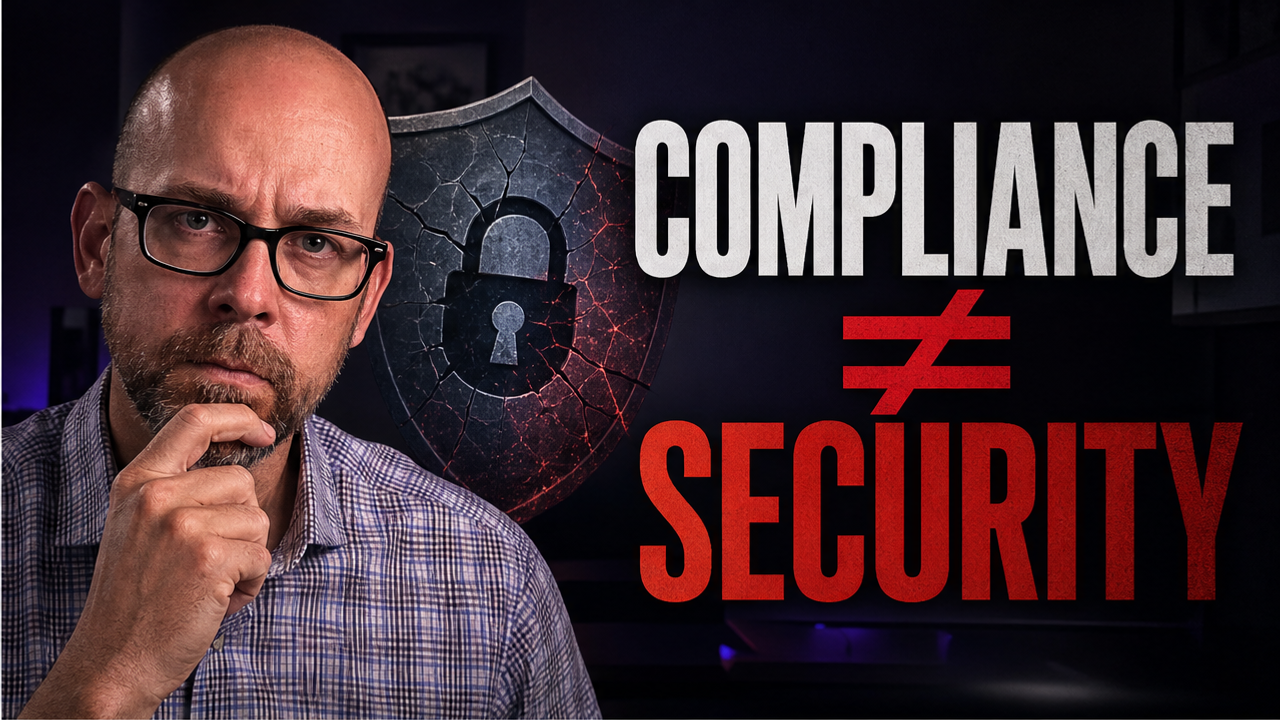
Meeting NERC CIP requirements, passing DFARS audits, or satisfying EU-NIS obligations provides a security baseline—nothing more. Regulatory compliance establishes minimum acceptable security postures. Organizations focused solely on checkbox compliance often miss sophisticated threats that exploit areas outside compliance scope or leverage compliance gaps.
True resilience requires security culture beyond compliance, continuous improvement as threats evolve, and incident response capabilities that function under real attack conditions, not just audit conditions.
One-Time Implementation Suffices
Some organizations treat CIP as a project with a completion date. They conduct vulnerability assessments, implement remediation measures, document compliance, and consider the work finished. This approach fails because threat landscapes change constantly, operational environments evolve as equipment is added or modified, and regulatory requirements are updated based on emerging threats.
Effective CIP is an ongoing process requiring continuous monitoring, periodic reassessment, regular training updates, and adaptive responses to new threat intelligence.
Practical Steps Forward
Organizations beginning critical infrastructure protection journeys or individuals entering the field both benefit from clear starting points.
For Organizations
Begin with comprehensive asset inventory across both IT and OT environments. This foundational step enables all subsequent security measures. Conduct risk assessments prioritizing based on potential impact and threat likelihood rather than attempting to address all vulnerabilities simultaneously.
Establish network segmentation separating critical operational systems from less sensitive environments. Implement monitoring capabilities appropriate for OT environments—don’t simply deploy IT-focused security tools without considering operational requirements.
Develop incident response plans specific to infrastructure scenarios. Test these plans through tabletop exercises involving both IT security and operational personnel. Verify that recovery procedures account for safety verification before resuming operations.
For Individuals
Develop understanding of both cybersecurity fundamentals and operational technology systems. Pursue hands-on experience with industrial control systems through training labs, internships, or entry-level positions with infrastructure operators.
Study real-world incidents to understand how attacks unfold and how defenders detect and respond. The Ukraine power grid attack, Colonial Pipeline compromise, and similar cases provide detailed lessons about adversary capabilities and effective defensive measures.
Consider formal education in CIP programs or relevant certifications demonstrating specialized knowledge. Join professional communities focused on industrial security—organizations like the Industrial Control Systems Joint Working Group provide resources and networking opportunities.
Understand the regulatory landscape for sectors of interest. NERC CIP, DFARS, EU-NIS, and other frameworks shape how organizations approach security. Familiarity with compliance requirements makes professionals immediately valuable to employers navigating these mandates.
The Growing Importance of Infrastructure Resilience
Critical infrastructure protection has moved from specialized niche to mainstream security priority. The increasing attack frequency—420 million annually and rising—combined with demonstrated adversary capabilities and regulatory expansion ensures that CIP will remain a critical focus area.
The workforce gap creates opportunity. Organizations need professionals who understand both cybersecurity and operational technology. Students and career changers who develop this combination of skills position themselves for impactful careers protecting systems that millions depend on daily.
For professionals already in related fields, deepening infrastructure security knowledge opens career advancement opportunities. The stakes are real, the challenges are substantial, and the need for qualified practitioners continues growing.
Understanding what critical infrastructure is, why protecting it matters, and how organizations approach its defense provides the foundation for effective participation in this crucial field—whether as a security practitioner, operational professional, policy maker, or informed citizen recognizing the complexity of keeping essential systems secure.
Enjoyed this article?
Subscribe to Professor Simon's weekly newsletter for practical insights, career guidance, and leadership lessons delivered every Friday.
A confirmation email will be sent. If you don't receive it, please check your spam or junk folder.
No spam. Unsubscribe anytime.
Prefer to Listen?
Listen to Professor Simon’s IT & Cybersecurity Podcast for practical conversations about cybersecurity careers, certifications, security leadership, and real-world lessons from the field.
Listen on Spotify