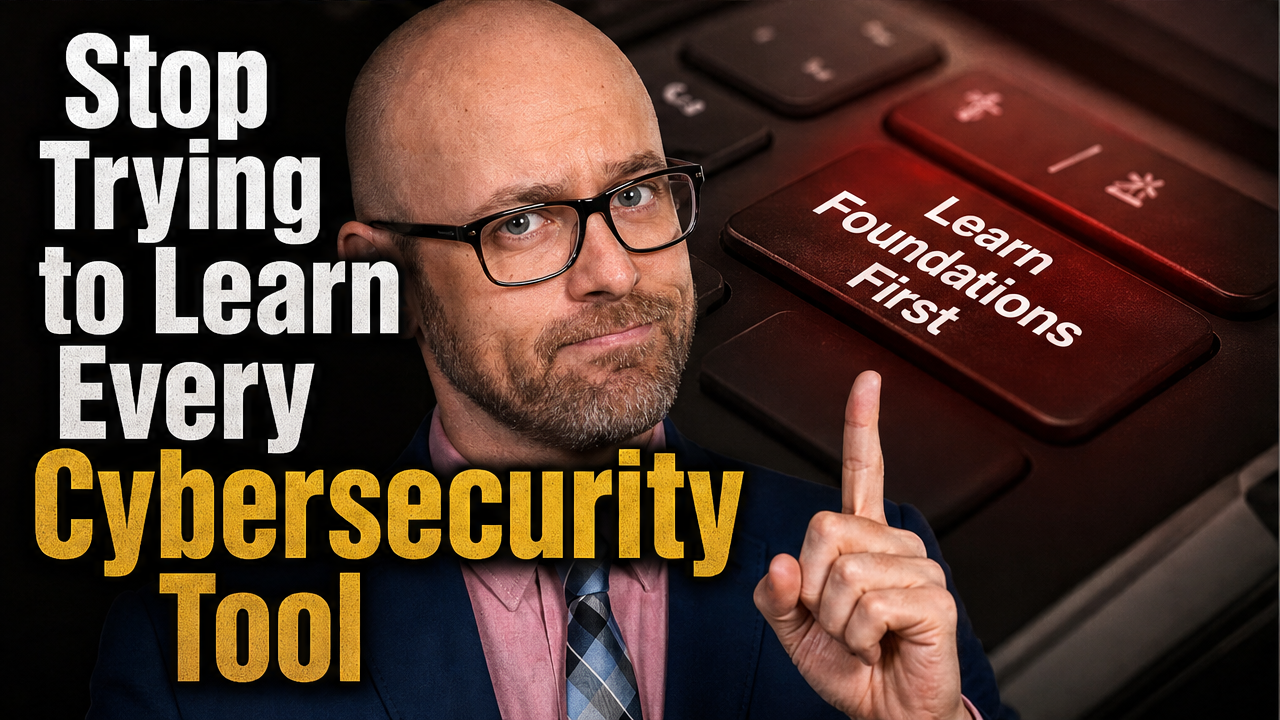
Building Confidence in Cybersecurity: Evidence-Based Strategies for Early-Career Professionals

Building Confidence in Cybersecurity: Evidence-Based Strategies for Early-Career Professionals
Confidence remains one of the most underestimated skills in cybersecurity. While technical competence receives significant attention through certifications, training programs, and hands-on labs, the psychological foundation that allows professionals to apply their knowledge effectively is often neglected. This gap creates a paradox: qualified individuals who possess the necessary skills but lack the confidence to use them in real-world situations, apply for appropriate roles, or speak up during critical incidents.
Research from organizational security teams and industry practitioners reveals that confidence and competence are distinct but interdependent capabilities. Technical skill without decision-making confidence during incidents creates operational gaps. Conversely, overconfidence without underlying competence leads to dangerous blind spots. Understanding how to build authentic, evidence-based confidence—grounded in measurable progress rather than hollow affirmations—provides early-career cybersecurity professionals with a competitive advantage and sustainable career foundation.
Understanding the Confidence-Competence Relationship
Confidence and competence operate on separate but interconnected tracks. Competence refers to the actual skills, knowledge, and capabilities a professional possesses. Confidence reflects the psychological readiness to apply those capabilities under pressure, uncertainty, or scrutiny.
Many cybersecurity newcomers experience scenarios where these two dimensions misalign. A career changer might possess strong analytical skills from a previous role but lack confidence in applying them to security contexts. A recent graduate might have completed rigorous training but freeze when asked technical questions in job interviews. These situations do not indicate a lack of ability—they reveal underdeveloped confidence mechanisms.
Organizations recognize this distinction at scale. Security teams may have documented incident response procedures but lack confidence in executing them during actual breaches. Leadership teams may understand cyber risk conceptually but hesitate when making budget or strategic decisions under time pressure. The pattern appears across experience levels: competence exists, but confidence lags behind.
Building authentic confidence requires understanding this relationship. Confidence built on inflated self-assessment or encouragement without evidence collapses under stress. Sustainable confidence emerges from deliberate practice, documented achievement, and repeated exposure to realistic scenarios.
Why Impostor Syndrome Persists in Cybersecurity
Impostor syndrome—the persistent belief that success results from luck rather than merit—affects cybersecurity professionals at unusually high rates. Several field-specific factors contribute to this phenomenon.
The cybersecurity landscape evolves rapidly. New vulnerabilities, attack techniques, frameworks, and tools emerge constantly. Even experienced professionals cannot master every domain, which creates a perpetual sense of incomplete knowledge. Beginners interpreting this as personal inadequacy rather than field-wide reality internalize unrealistic standards.
The field attracts high achievers who measure themselves against idealized expert profiles. Online communities showcase specialized achievements, advanced certifications, and sophisticated technical accomplishments. Without context about the time, resources, and focused specialization behind these achievements, newcomers compare their broad beginner progress against others’ narrow expert demonstrations.
Security work involves frequent failure exposure. Penetration testers identify vulnerabilities by repeatedly failing to exploit systems until they succeed. Incident responders analyze breaches that occurred despite existing controls. This constant engagement with failure states—while professionally valuable—can psychologically reinforce self-doubt if not properly reframed.
The field’s emphasis on continuous learning, while intellectually stimulating, creates a psychological environment where “not knowing” feels like incompetence rather than normal professional state. Cybersecurity professionals who expect themselves to have immediate answers to every question set themselves up for perpetual inadequacy feelings.
Recognizing these systemic factors helps separate legitimate skill gaps from distorted self-perception. The goal is not eliminating self-doubt entirely—some healthy questioning drives growth—but preventing it from blocking appropriate career actions.
The Receipts Method: Building Evidence-Based Confidence
The most effective confidence-building strategy involves creating an undeniable record of measurable achievements. Security professionals refer to this as “keeping receipts”—documentation that proves progress, validates competence, and provides concrete evidence during moments of self-doubt.
This approach counters impostor syndrome’s core mechanism: the tendency to discount accomplishments and attribute success to external factors. When internal narratives suggest inadequacy, external evidence provides objective counterweight.
Effective receipts come in multiple forms. Completed projects with documented outcomes demonstrate applied skills. A home lab setup that successfully implements network segmentation, intrusion detection, or vulnerability scanning proves technical capability. Certifications validate knowledge against industry standards. Positive feedback from instructors, colleagues, or mentors provides third-party competence assessment.
The documentation process matters as much as the achievements themselves. A simple spreadsheet or document tracking completed work creates a reviewable timeline. Entries should include specific details: what was accomplished, which skills were applied, what challenges were overcome, and what was learned.
Many professionals resist documentation, viewing it as self-promotion or unnecessary effort. This perspective misunderstands the psychological function. The receipts are not primarily for external audiences—they serve as personal evidence during confidence crises. When questioning whether to apply for a job, the receipts provide data: “I have completed three relevant projects, earned two certifications, and received positive feedback from four professionals in the field.” This converts subjective anxiety into objective assessment.
The method also reveals actual skill gaps distinct from perceived inadequacy. Reviewing receipts might show strong technical documentation skills but limited hands-on incident response experience. This creates actionable development priorities rather than vague feelings of “not being good enough.”
Creating a Small Wins Tracking System
Large accomplishments—certifications earned, jobs secured, major projects completed—provide significant confidence boosts but occur infrequently. Sustainable confidence requires recognizing smaller, incremental progress that happens daily or weekly.
A small wins tracking system captures these micro-accomplishments. The system can be as simple as a weekly journal entry or as structured as a categorized database. The critical element is consistent documentation of specific progress.
Examples of trackable small wins:
- Completed a challenging hands-on lab or training module
- Successfully explained a technical concept to someone less experienced
- Identified and researched a new vulnerability or attack technique
- Contributed a question or answer in a professional community
- Updated resume or portfolio with recent work
- Received acknowledgment or thanks for assistance provided
- Solved a technical problem independently after researching solutions
- Practiced a difficult skill (network packet analysis, log review, scripting)
The psychological impact comes from accumulated evidence. Individual wins may seem trivial, but reviewing three months of weekly progress reveals significant growth. This counters the common beginner experience where progress feels invisible because each day’s work seems incremental.
Small wins tracking also provides interview preparation material. Rather than struggling to recall accomplishments during job applications, professionals with documented wins can quickly identify relevant examples that demonstrate specific competencies.
The system works best when wins are recorded promptly. Weekly reviews capture details that fade from memory. Monthly reviews identify patterns: which activities produce the most learning, which skills are being consistently practiced, which areas receive less attention than intended.
Specialization as a Confidence Accelerator
Many cybersecurity beginners attempt to develop broad competence across all domains simultaneously. This approach creates surface-level familiarity with many topics but rarely builds the deep competence that generates authentic confidence.
An alternative strategy involves identifying a specific domain or skill for focused development. This does not mean permanent specialization or ignoring other areas—it means deliberately building deep competence in one area as a foundation for broader exploration.
Specialization accelerates confidence through several mechanisms. Focused effort produces faster visible progress than distributed effort. A professional dedicating significant time to network security fundamentals will advance more rapidly than someone dividing equal time across network security, application security, cloud security, and governance.
Deep competence in one area provides a psychological anchor. When confronting new topics, the professional can reference their existing deep knowledge: “I don’t know cloud security architecture yet, but I understand network segmentation deeply, which gives me a framework for learning cloud network controls.” This reduces the feeling of starting from zero.
Specialization also creates clearer job market positioning. Entry-level roles often seek focused competencies rather than shallow breadth. A candidate who can demonstrate genuine skill in threat intelligence analysis, incident response, or security architecture stands out more than a candidate who lists superficial familiarity with fifteen tools.
The selection of specialization matters less than the commitment to depth. Strong options include specific technical skills (log analysis, vulnerability assessment, security automation), role-focused competencies (SOC analyst capabilities, governance and compliance), or technology domains (cloud security, endpoint protection, identity management).
Practical depth indicators include the ability to teach the topic to others, solve non-routine problems independently, explain trade-offs between different approaches, and recognize when additional expertise is needed. These capabilities require sustained focus rather than brief exposure.
Transforming Failure Into Feedback
Cybersecurity work involves constant failure exposure. Security tools generate false positives requiring investigation. Penetration tests fail to find vulnerabilities on first attempts. Incident investigations initially pursue incorrect hypotheses. Security architectures require iteration when implementation reveals design flaws.
Professionals who interpret these failures as personal inadequacy struggle to build confidence. Those who reframe them as expected feedback mechanisms develop resilience and accelerate learning.
Organizations demonstrate this principle through crisis simulations and tabletop exercises. These deliberately expose teams to failure scenarios—ransomware encrypting critical systems, data breaches requiring notification, supply chain compromises affecting operations—in controlled environments. The failures that occur during simulations (miscommunication, unclear authority, inadequate procedures) are treated as valuable discovery rather than incompetence.
Individual professionals can apply the same framework. Technical failures—a misconfigured firewall rule, an incorrect log analysis conclusion, a security control that doesn’t work as expected—provide specific learning opportunities. The critical step is extracting and documenting the lesson.
Effective failure-to-feedback conversion involves structured reflection. What was the intended outcome? What actually happened? What caused the gap? What specific knowledge or skill would have prevented the failure? How can that knowledge or skill be developed?
This differs from rumination, which repeatedly reviews failures without extracting actionable insights. Failure-to-feedback conversion is time-bounded, specific, and forward-looking. The goal is not eliminating future failures—impossible in complex domains—but ensuring different failures occur as competence expands into new areas.
Documentation of failure-derived learning also becomes part of the receipts collection. “Attempted to configure IDS rules, generated excessive false positives, researched tuning methodology, successfully reduced false positive rate by 60%” demonstrates problem-solving capability and learning agility—traits valued by hiring teams.
Building Your Confidence Network
Isolation undermines confidence-building. Professionals working alone lack external feedback to calibrate self-assessment, miss opportunities to observe how others approach problems, and have limited support during difficult learning periods.
Strategic relationship-building accelerates confidence development. This does not require large networks or extensive socializing—it requires intentional connection with specific types of people.
Mentors with experience in target roles provide guidance, realistic expectations, and credibility validation. A mentor who successfully transitioned from a different field into cybersecurity can confirm that career changers’ concerns are normal and surmountable. A mentor working as a security analyst can describe what actual day-to-day work involves, reducing anxiety about unknown job requirements.
Peers at similar career stages provide mutual support and shared learning. Study groups, lab partners, or accountability partners create reciprocal feedback loops. Explaining concepts to peers reinforces understanding while revealing gaps. Observing peers’ struggles normalizes difficulty rather than interpreting it as personal failing.
More advanced peers slightly ahead in the career journey provide near-term roadmaps. Someone who secured their first security role six months ago offers recent, specific insights about job searching, interview expectations, and early-career challenges.
Communities of practice—whether in-person meetups, online forums, or professional associations—provide broader exposure to diverse perspectives and approaches. Participation in communities builds confidence through recognition that questions and uncertainties are shared experiences rather than individual inadequacies.
Building these networks requires initiative but not aggressive self-promotion. Contributing valuable questions, sharing resources, offering assistance to others, and participating consistently creates relationship foundations. Many cybersecurity professionals actively support newcomers, having received similar support during their own entry.
The confidence impact comes from repeated external validation that calibrates self-perception. When a respected professional confirms that a question is sophisticated or that progress is appropriate for experience level, it counters internal impostor syndrome narratives.
Applying for Jobs Before Feeling Ready
Job descriptions in cybersecurity often list extensive requirements that discourage qualified candidates from applying. Postings seeking “junior” analysts may list five years of experience, multiple certifications, and familiarity with dozens of tools. Entry-level positions may require knowledge of advanced techniques typically learned on the job.
This creates a confidence barrier: candidates assume every requirement must be met before applying. Research into hiring practices reveals this assumption is incorrect.
Job descriptions often represent idealized wish lists rather than absolute requirements. Hiring managers distinguish between essential qualifications and preferred qualifications, even when the posting does not explicitly separate them. Many organizations prioritize learning ability, cultural fit, and core foundational skills over comprehensive tool experience.
Recruiters and hiring managers report that candidates meeting 60-70% of listed requirements are often competitive, particularly for genuinely entry-level roles. The candidate who meets every requirement may be overqualified or too expensive for the budget allocated to the position.
Several categories of requirements deserve particular interpretation. Tool-specific experience often matters less than general category familiarity. A posting requiring “experience with Splunk” typically accepts candidates with other SIEM experience or strong log analysis fundamentals. Requirements for specific vendors’ products often reflect current infrastructure rather than hiring prerequisites.
Years of experience requirements are frequently negotiable for candidates demonstrating strong fundamentals and aptitude. A career changer with six months of intensive training, portfolio projects, and relevant transferable skills may compete effectively against candidates with longer but less focused experience.
The confidence strategy involves honest self-assessment against core requirements while recognizing that comprehensive tool lists and advanced skills represent growth opportunities rather than entry barriers. Applying for positions slightly beyond current comfort zones creates growth trajectory and occasionally reveals that perceived gaps matter less than expected.
Application rejection provides valuable feedback when actively solicited. Requesting specific feedback about skill gaps or interview performance—professionally, briefly, and acknowledging the person’s time constraints—occasionally yields actionable guidance. Even without explicit feedback, patterns across multiple applications reveal market expectations.
The alternative—waiting until meeting every requirement—delays career progress unnecessarily. Confidence in one’s ability to learn and adapt often matters more than comprehensive current knowledge.
Preparing for Interviews With Confidence
Job interviews intensify confidence challenges. The combination of evaluation pressure, technical questioning, and unfamiliar environments can trigger performance anxiety even in well-prepared candidates.
Effective interview preparation addresses both content and psychological readiness. Content preparation involves reviewing technical fundamentals, practicing common questions, and developing clear examples of past work. Psychological preparation involves managing anxiety and building confident communication patterns.
Technical preparation should focus on fundamentals over memorization. Understanding core concepts deeply allows candidates to reason through unfamiliar questions rather than relying on recalled answers. When asked about topics outside current knowledge, acknowledging the gap while demonstrating related knowledge and learning approach impresses interviewers more than fabricated expertise.
Behavioral questions benefit from structured examples using the STAR format (Situation, Task, Action, Result). The receipts collection and small wins tracking provide source material. Examples should demonstrate problem-solving, learning ability, collaboration, and resilience—traits valued across roles.
Confidence-building interview techniques include physical preparation (adequate rest, appropriate attire, early arrival), environmental familiarity (researching interview format, reviewing company information), and psychological centering (brief positive self-statements reviewing documented qualifications).
During interviews, several strategies project confidence while maintaining authenticity. Speaking at a measured pace rather than rushing demonstrates composure. Taking brief pauses to think before answering complex questions shows thoughtfulness rather than uncertainty. Asking clarifying questions when prompts are ambiguous demonstrates engagement rather than confusion.
Technical questions that exceed current knowledge offer opportunities to demonstrate learning process. A confident response acknowledges the gap, describes related knowledge, and outlines how the candidate would research the topic. This demonstrates self-awareness and learning ability—often more valuable than immediate knowledge.
Post-interview confidence-building involves reflection without rumination. Identifying what went well, what could be improved, and what was learned creates growth rather than anxiety. Requesting feedback, when appropriate, provides external data to supplement self-assessment.
Interview rejection, while disappointing, provides practice and calibration. Many successful cybersecurity professionals report multiple rejections before securing positions. Each interview builds comfort with the format and refines self-presentation.
Organizational Confidence and Individual Development
Individual confidence-building connects to broader organizational needs. Organizations increasingly recognize that technical controls and documented procedures provide incomplete security without confident execution. Security teams that hesitate during incidents, leadership that delays critical decisions, and stakeholders who avoid engaging with cyber risk create operational vulnerabilities.
This recognition drives organizational investment in confidence-building mechanisms: crisis simulations, tabletop exercises, cross-functional training, and leadership engagement programs. These initiatives aim to build decision-making confidence alongside technical competence.
For early-career professionals, understanding this organizational context provides additional motivation. Personal confidence development prepares individuals not only for current roles but for future contributions to organizational resilience. The analyst who builds strong decision-making confidence today becomes the senior analyst who performs effectively during incidents, the team lead who guides others through uncertainty, or the manager who engages executives confidently on security strategy.
Organizations value professionals who demonstrate both competence and confidence because they reduce organizational risk. Hiring teams assess candidates’ ability to handle pressure, communicate clearly during stressful situations, and make sound decisions with incomplete information. These capabilities are built through deliberate confidence development, not technical study alone.
The connection between individual and organizational confidence also appears in team dynamics. Professionals confident in their specializations contribute more effectively to cross-functional teams. Those comfortable acknowledging knowledge gaps while demonstrating strong foundations in core areas enable healthier collaboration than those hiding uncertainty behind false expertise.
Measuring Progress and Maintaining Momentum
Confidence-building requires sustained effort over months and years. Maintaining momentum involves creating measurement systems that make progress visible and celebrating milestones appropriately.
Progress metrics should be specific and observable. Technical skills can be measured through completed labs, projects, or certification progress. Professional development can be tracked through networking contacts made, mentorship relationships established, or community contributions. Job search progress can be quantified through applications submitted, interviews completed, or feedback received.
Regular review intervals—weekly, monthly, and quarterly—create checkpoints for assessment. Weekly reviews capture immediate progress and maintain accountability. Monthly reviews identify patterns and trends. Quarterly reviews enable larger strategic adjustments to learning priorities or career direction.
Milestone celebration provides psychological reinforcement. Completing a difficult certification, finishing a significant project, or securing informational interviews with target companies merit recognition. The celebration need not be elaborate—acknowledging achievement and reflecting on effort invested provides confidence reinforcement.
Progress measurement also reveals plateaus or setbacks. These are normal in skill development but can undermine confidence if unexpected. Understanding that expertise develops through alternating periods of rapid progress and consolidation reduces anxiety during slower growth phases.
Adjusting strategies based on measured progress demonstrates adaptive learning. If job applications generate no interviews, the data suggests resume refinement or application targeting needs adjustment. If technical labs consistently prove too difficult, prerequisite skills may need strengthening. If community participation feels draining rather than energizing, different engagement formats may better suit individual preferences.
Moving Forward With Evidence-Based Confidence
Confidence in cybersecurity develops through deliberate practice, documented achievement, strategic relationship-building, and reframed failure. These mechanisms work because they ground psychological readiness in objective evidence rather than wishful thinking or external validation alone.
Early-career professionals who implement systematic confidence-building alongside technical development create sustainable career foundations. The combination of competence and confidence enables effective job performance, successful career transitions, and contributions to organizational resilience.
The path involves honest self-assessment, structured skill development, evidence documentation, strategic networking, and willingness to apply for opportunities before feeling completely ready. Each element addresses specific confidence barriers while building genuine capability.
Impostor syndrome and self-doubt will not disappear entirely—even experienced professionals encounter them. The goal is preventing these feelings from blocking appropriate career actions. Professionals with documented evidence of their competence, support networks providing calibrated feedback, and experience converting failure into learning can navigate uncertainty without paralysis.
Cybersecurity needs professionals who combine technical skill with decision-making confidence. Organizations seek individuals who can learn continuously, perform under pressure, and contribute to team resilience. These capabilities emerge from intentional confidence development, not just technical training.
The investment in confidence-building pays dividends throughout a career. Skills learned early—evidence-gathering, feedback-seeking, deliberate practice, strategic networking—compound over time. The analyst who builds strong confidence foundations becomes the senior professional who mentors others, leads teams through crises, and shapes organizational security culture.
Building confidence is building capability. Both require evidence, practice, and persistence.
Enjoyed this article?
Subscribe to Professor Simon's weekly newsletter for practical insights, career guidance, and leadership lessons delivered every Friday.
A confirmation email will be sent. If you don't receive it, please check your spam or junk folder.
No spam. Unsubscribe anytime.
Prefer to Listen?
Listen to Professor Simon’s IT & Cybersecurity Podcast for practical conversations about cybersecurity careers, certifications, security leadership, and real-world lessons from the field.
Listen on Spotify