Should You Take a Pay Cut to Break Into Cybersecurity?
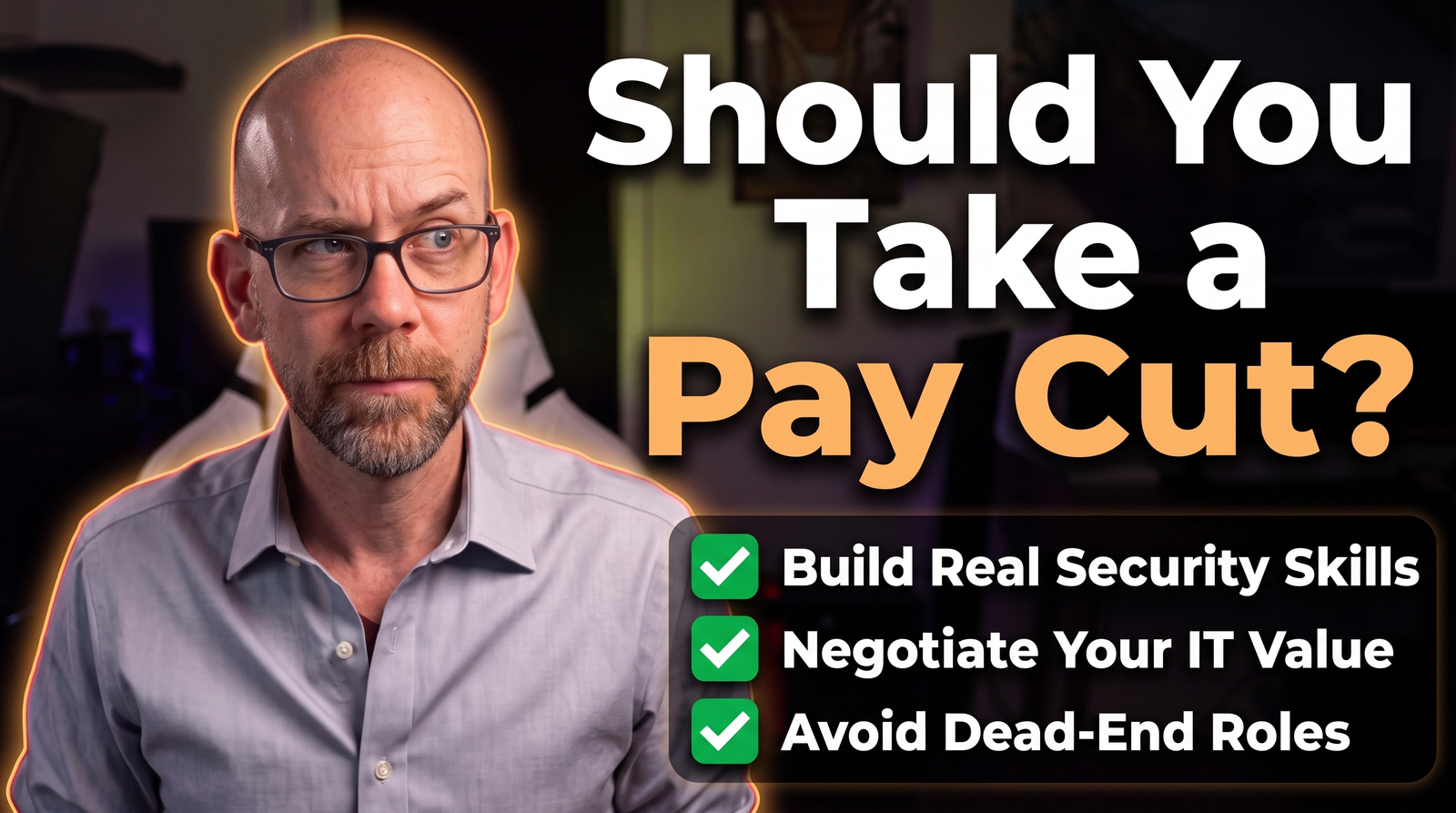
I regularly hear from IT professionals who have been told they need to take a significant pay cut to break into cybersecurity. A network engineer with ten years of experience gets offered a junior security analyst role at 30 percent less than current pay. A cloud administrator finds a security position that pays what they made five years ago. And the common advice is always the same: you need to get your foot in the door.
But that advice assumes something that is not always true. It assumes your existing technical expertise has no value in security. It assumes you must restart your compensation trajectory because you lack a security title. And it assumes any security role automatically advances your career more than staying in your current position.
These assumptions deserve examination. Taking a pay cut to enter cybersecurity can be a strategic investment or an unnecessary setback depending on what you actually receive in exchange for reduced income.
The Pay Cut Dilemma Facing IT Professionals
If you have spent five, ten, or fifteen years building expertise in networking, systems administration, cloud infrastructure, identity management, or development, you have skills organizations need. You understand how technology actually works. You have managed production environments. You have responded to outages and performance issues. You have made architectural decisions.
Then you start exploring cybersecurity opportunities. Many of the roles you find pay less than your current salary. Sometimes significantly less. The job descriptions want security experience you do not have on paper, even when you have spent years working with the systems, platforms, and technologies those security teams need to protect.
You face a genuine decision. Do you accept lower compensation to gain security experience and a security title? Do you hold out for roles that recognize your existing expertise? Do you look for alternative paths into security that preserve your income?
There is no universal answer. But there is a framework for evaluating whether a specific opportunity justifies the financial sacrifice.
What You Actually Get in Exchange for Lower Pay
A security title alone does not advance your career. What matters is the capabilities you develop, the responsibilities you gain, the quality of your exposure to security work, and the realistic timeline for career advancement.
Start by examining what you will actually do in the role. Some security positions involve meaningful work: participating in architecture reviews, conducting security assessments, responding to incidents, developing security policies, evaluating tools, or working directly with development teams on secure coding practices. This work builds capabilities that open doors.
Other security positions involve repetitive tasks that do not create growth: processing alerts someone else triaged, running scans without interpreting results, following playbooks without understanding the reasoning, or handling administrative work that could be automated. These roles add a security title to your resume without developing capabilities that justify future salary increases.
Ask specific questions before accepting any offer. What projects will you work on in your first six months? What security capabilities will you develop? Who will mentor you? What does career progression look like for someone performing well in this role? What security tools, methodologies, or frameworks will you gain hands-on experience with?
The answers reveal whether you are buying genuine career acceleration or just renting a security title.
Next, evaluate the quality of exposure and mentorship. Taking a pay cut makes strategic sense when you gain access to experienced security professionals who will actually invest in your development. It makes sense when you join a team working on substantive security problems. It makes sense when you will participate in real security decision-making rather than just executing tasks someone else defined.
It makes less sense when you join a dysfunctional security team. When you report to someone with limited security expertise themselves. When the organization treats security as a compliance checkbox. When the security program lacks resources, executive support, or clear direction.
You are not just evaluating a role. You are evaluating an environment. The wrong environment will delay your career development while also reducing your income.
When Your IT Experience Justifies Better Compensation
Organizations building security programs need people who understand the systems being secured. Your existing technical expertise often translates directly into security value.
Consider what you already know. If you have managed Active Directory for years, you understand identity security at a level that takes security-only practitioners years to develop. You know how delegation works, how trust relationships function, how authentication protocols operate, and where misconfigurations create risk. That knowledge has immediate security value.
If you have built and managed cloud infrastructure, you already understand the platforms most organizations need to secure. You know how IAM policies work, how network segmentation functions in cloud environments, how data flows between services, and where security controls need implementation. Security teams need that expertise.
If you have years of networking experience, you understand traffic patterns, protocols, network architecture, and how systems communicate. You can read packet captures. You understand routing and switching. You know how networks actually function at a level that informs security monitoring, incident response, and threat detection.
If you have worked in systems administration, you understand operating systems, configurations, patch management, logging, and the practical realities of maintaining production environments. You know what normal looks like, which helps you recognize abnormal.
This expertise does not require apologizing for lacking a security title. It requires articulating how your technical background translates into immediate security value.
Many IT professionals undervalue their own expertise when discussing compensation. They focus on what they have not done rather than on what they already know. They accept entry-level security salaries when their technical depth justifies mid-level security compensation.
Before accepting a significant pay cut, research what your capabilities are actually worth in the security market. A cloud engineer with five years of experience should not accept entry-level security analyst compensation without understanding what cloud security engineers earn. An identity and access management specialist should not restart at junior security pay when identity security roles exist that recognize that expertise.
When you receive an offer below your current salary, negotiate. Explain what you already understand about the systems, platforms, or technologies the security team protects. Describe how your experience accelerates your ability to contribute. Ask how the compensation reflects your existing technical expertise rather than treating you as someone starting from zero.
Some organizations will not adjust their offer. Others will. But you should know whether you are being appropriately valued or unnecessarily undervalued before making the decision.
Warning Signs of a Bad Pay Cut Decision
Certain patterns suggest a pay cut will not deliver the career benefits you expect.
If the security team lacks experienced professionals who can mentor you, be cautious. You are paying for education through reduced salary. If no one can provide that education, you are just accepting less money.
If the role primarily involves repetitive tasks that do not build marketable capabilities, reconsider. Processing alerts, running scans, or handling security administration might be necessary work, but if that represents most of what you will do for the next two years, question whether the experience justifies the financial sacrifice.
If the organization cannot articulate a clear advancement timeline or if promotion cycles seem unrealistically slow, pay attention. You need a path back to your current compensation and beyond it. If the organization’s compensation structure or promotion practices make that unlikely within a reasonable timeframe, the tradeoff becomes less attractive.
If the security program lacks resources, executive support, or strategic direction, recognize that you may be joining a team that cannot provide the experience you need. Struggling security programs can teach you things, but they may not teach you the right things or position you well for your next opportunity.
If the organization dismisses your existing technical expertise rather than recognizing its value, that suggests a cultural problem. You want to work somewhere that values what you bring, not somewhere that only sees what you lack.
Evaluating the Timeline for Salary Recovery
A temporary pay cut differs from a permanent setback. You need to estimate how long it will realistically take to return to your current salary and advance beyond it.
This timeline depends on several factors. How does the organization structure security compensation? What do promotion cycles look like? How quickly do high performers advance? What do market rates look like for security professionals with the capabilities you will develop?
If returning to your current compensation requires three years in a role that provides limited capability development, the tradeoff looks different than accepting a pay cut when strong performance and marketable skills enable salary recovery within 18 months through internal advancement or external opportunities.
Research salary ranges for the security specialization you are entering. Entry-level security analysts currently earn between $60,000 and $85,000 in most markets. Mid-level security engineers earn between $90,000 and $130,000. Senior security architects and specialists earn $130,000 to $180,000 or more. Cloud security engineers, identity security specialists, and DevSecOps engineers often command higher ranges due to market demand.
If you currently earn $95,000 as a systems administrator and accept a security analyst role at $70,000, you need a realistic plan for closing that $25,000 gap and moving beyond it. That plan should account for the capabilities you will develop, the advancement opportunities available, and typical security salary progression.
Set a realistic timeline for salary recovery and know your walkaway point. If an opportunity cannot return you to current compensation within 24 months or provide capabilities that justify an extended financial sacrifice, it may not be the right transition vehicle.
Alternative Paths That Preserve Income
Career transitions do not always require accepting permanent employee roles with reduced salaries.
Some IT professionals can transition through contract security work. Organizations need security contractors for assessments, implementations, compliance projects, or temporary staffing. Contract rates often exceed permanent employee salaries, and the work builds verifiable security experience.
Others build security consulting practices. If you have deep technical expertise in areas with security implications—cloud architecture, identity systems, network design, application development—you can potentially offer security-focused consulting that pays better than junior security roles while building credentials and experience.
Some find project-based security engagements through platforms connecting freelancers with organizations needing security work. This approach requires initiative and tolerance for uncertainty, but it challenges the assumption that the only path into security runs through lower-paying full-time positions.
Others negotiate internal transitions that recognize existing expertise. If your current organization needs security capabilities in areas you already understand, an internal move might preserve more of your compensation than external opportunities that treat you as a career-changer.
These alternatives involve tradeoffs. Contract work and consulting require business development, financial management, and comfort with variable income. Project-based work may lack the structured learning environment of permanent roles. Internal transitions depend on organizational needs and timing.
But they represent options worth considering before accepting significant pay cuts for permanent positions.
Making the Decision
Whether to accept a pay cut for a security role depends on your specific situation. Your financial circumstances matter. Your timeline matters. Your risk tolerance matters. What you will actually gain from the role matters most.
Evaluate the tradeoff systematically. What specific capabilities will you develop? What responsibilities will you gain? What quality of mentorship and exposure will you receive? How long will it realistically take to return to current compensation and advance beyond it? What alternatives might preserve more income while building security experience?
Challenge the assumption that your IT expertise has no security value. Articulate what you already know about the systems, platforms, and technologies that need securing. Research what those capabilities are worth in the security market. Negotiate based on the value you bring rather than apologizing for lacking a security title.
Recognize warning signs that suggest a pay cut will not deliver expected benefits. Weak security teams, limited mentorship, repetitive work, unrealistic advancement timelines, and organizations that undervalue technical expertise all indicate tradeoffs that may not justify financial sacrifice.
Some security opportunities genuinely warrant accepting temporary income reduction in exchange for capability development, quality exposure, and realistic advancement paths. Others ask you to sacrifice income without providing commensurate value in return.
Your job is determining which type of opportunity you face.
One Practical Takeaway
Before accepting any security role that pays less than your current position, write down specifically what you will gain: the capabilities you will develop, the responsibilities you will hold, the mentorship you will receive, and the timeline for returning to current compensation. If you cannot articulate clear answers based on conversations with the hiring manager, you do not have enough information to evaluate the tradeoff.
What Comes Next
Making informed career decisions requires understanding both the security field and your own value within it. If you found this framework helpful, I regularly share insights on cybersecurity careers, professional development, and navigating the security industry through my newsletter and educational content. The decisions you make about career transitions significantly impact both your immediate financial situation and your long-term trajectory. Make them with clear eyes and complete information.
Tagged:
Enjoyed this article?
Subscribe to Professor Simon's weekly newsletter for practical insights, career guidance, and leadership lessons delivered every Friday.
A confirmation email will be sent. If you don't receive it, please check your spam or junk folder.
No spam. Unsubscribe anytime.
Prefer to Listen?
Listen to Professor Simon’s IT & Cybersecurity Podcast for practical conversations about cybersecurity careers, certifications, security leadership, and real-world lessons from the field.
Listen on Spotify