Nobody Owns AI Governance at Your Company. That’s the Problem
Nobody Owns AI Governance at Your Company. That’s the Problem.
Ask most organizations who owns AI governance, and you’ll get a pause before the answer. That pause is the whole story.
It’s not that companies don’t care. Most of them care quite a bit, at least on paper. There’s usually an acceptable use policy, maybe a slide deck from legal, maybe a memo from IT about which tools are approved. What there almost never is, is a single person or team who can actually answer the question “are we allowed to do this” with authority, speed, and consistency.
Prefer to read the full breakdown? Keep scrolling. Prefer to watch? Full video above.
Everyone Owns a Piece, Nobody Owns the Whole
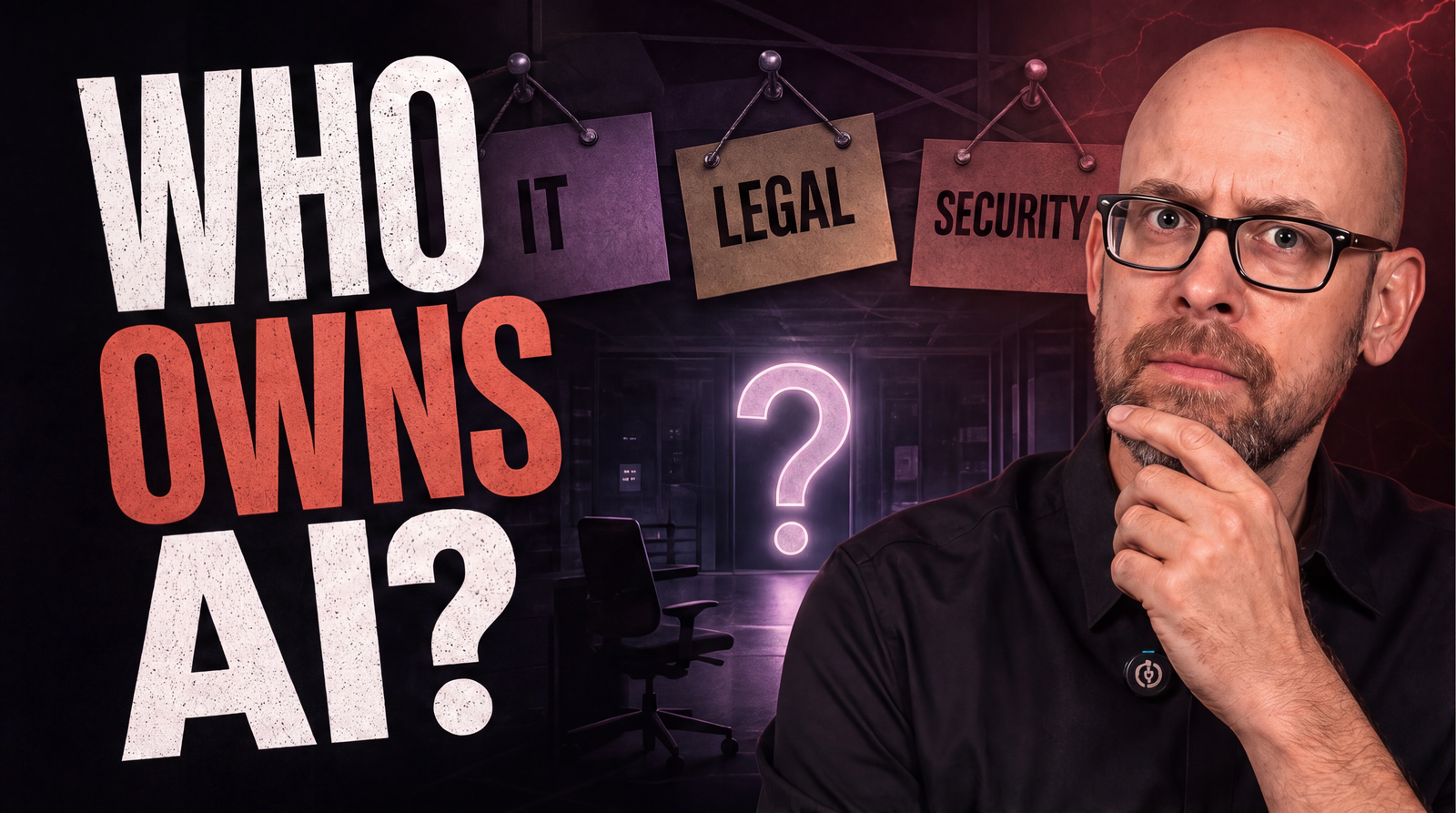
Here’s what AI governance actually looks like in most companies right now: legal owns the contract language and vendor risk. IT owns which tools are technically approved and how they’re provisioned. Security owns whether the tool can access sensitive data. Individual business units are quietly using tools nobody approved at all, because the approval process is slow and their deadline isn’t.
Each of those groups is doing their job. None of them is doing the job of AI governance, because that job doesn’t exist as a defined role in most organizations. It exists as a set of adjacent responsibilities, loosely coordinated, usually only when something goes wrong.
Why This Is Different From Other Governance Gaps
Companies have dealt with ownership gaps before. Data governance took years to mature in a lot of organizations too. But AI governance has a specific problem that makes the gap more dangerous: the pace of adoption is outrunning the pace of policy by a wide margin.
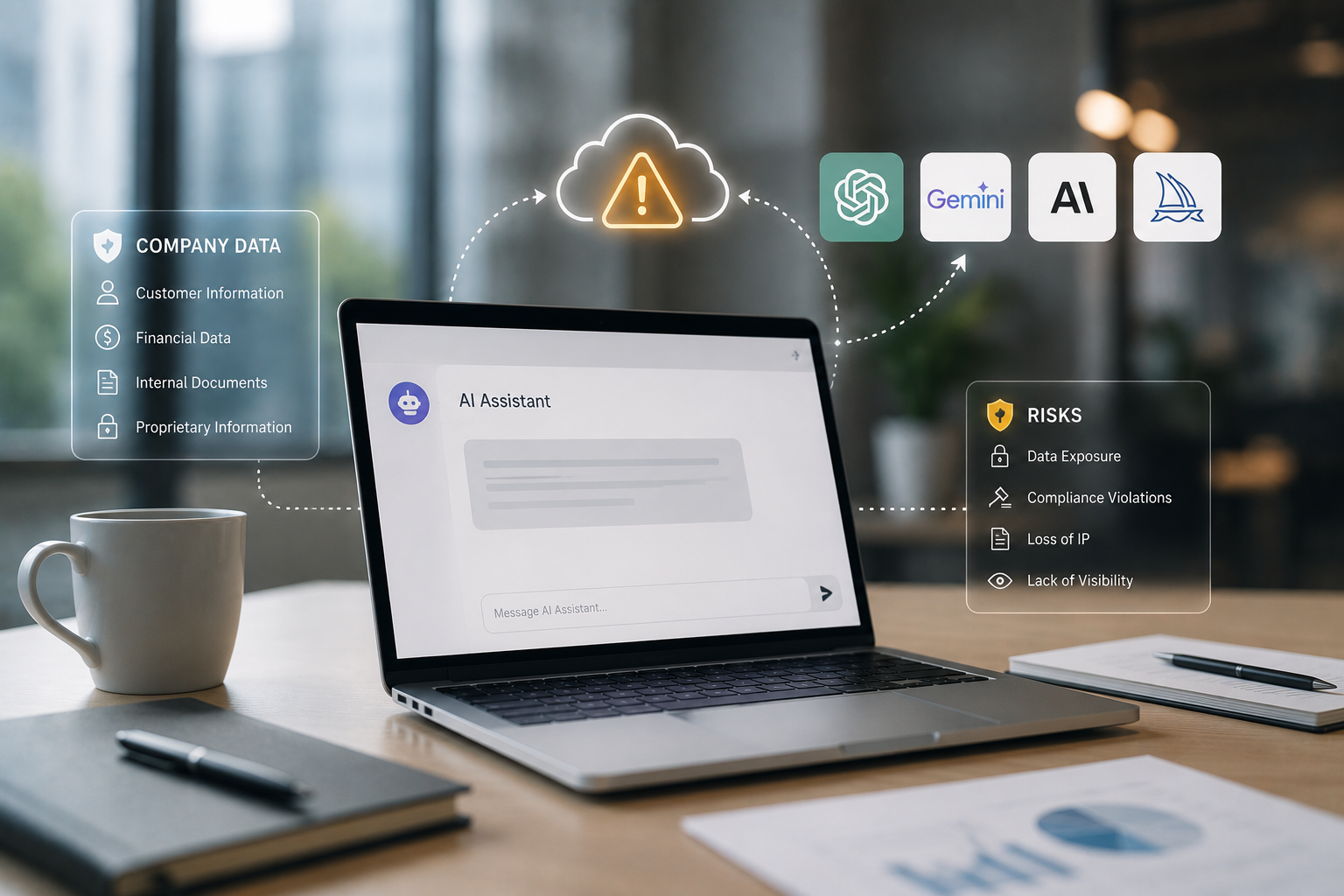
Employees don’t wait for a governance framework before pasting a document into a chatbot to summarize it. They don’t check an approved tools list before using an AI assistant to draft a client email. The convenience is immediate, and the policy usually isn’t. That mismatch means the gap isn’t sitting quietly waiting to be discovered in an audit. It’s actively being exploited by well-meaning employees who have no idea they’re doing anything risky.
What This Actually Looks Like in Practice
I’ve watched this play out in the same shape across different companies. A well-meaning employee pastes a chunk of a contract into a public AI tool to get a faster summary. Nobody told them not to, because there was no clear policy that reached them, and the tool was free and fast. Legal finds out three months later, not because of a control that caught it, but because someone mentioned it casually in a meeting.
That’s not a security failure in the traditional sense. Nothing was hacked. But sensitive data left the organization’s control anyway, because governance was distributed across four teams and owned, in practice, by none of them.
What Actually Fixes This
Governance gaps close the same way access gaps close: with explicit ownership, not shared responsibility.
Name an owner, even if it’s a committee with a chair. A committee without a named accountable lead behaves exactly like no committee at all when a fast decision is needed.
Write the policy for the employee who won’t read the policy. A thirty page AI governance document that nobody reads protects nobody. A one page decision tree that tells someone what’s approved, what needs review, and what’s off limits, actually gets used.
Build a fast lane for approval requests. If getting a new AI tool approved takes six weeks, employees will use it unapproved in week one. Governance that can’t move at the speed of adoption will always lose to convenience.
Treat this as a living document, not a policy you publish once. The tools and the risks are changing every few months right now. A governance framework written a year ago is probably already out of date.
My Take
If I had to guess where the next serious AI-related incident in most companies comes from, I wouldn’t bet on a sophisticated attack. I’d bet on an employee who had no idea they were doing anything wrong, using a tool nobody explicitly told them not to use, because the organization never decided, clearly and in one place, who was responsible for making that call.
Governance gaps rarely announce themselves. They just sit there until something forces the question. If you can’t quickly name the person or team accountable for AI governance decisions at your company right now, that’s not a minor gap. That’s the whole problem.
Enjoyed this article?
Subscribe to Professor Simon's weekly newsletter for practical insights, career guidance, and leadership lessons delivered every Friday.
A confirmation email will be sent. If you don't receive it, please check your spam or junk folder.
No spam. Unsubscribe anytime.
Prefer to Listen?
Listen to Professor Simon’s IT & Cybersecurity Podcast for practical conversations about cybersecurity careers, certifications, security leadership, and real-world lessons from the field.
Listen on Spotify