AI and the Future of Cybersecurity Work: What’s Actually Changing
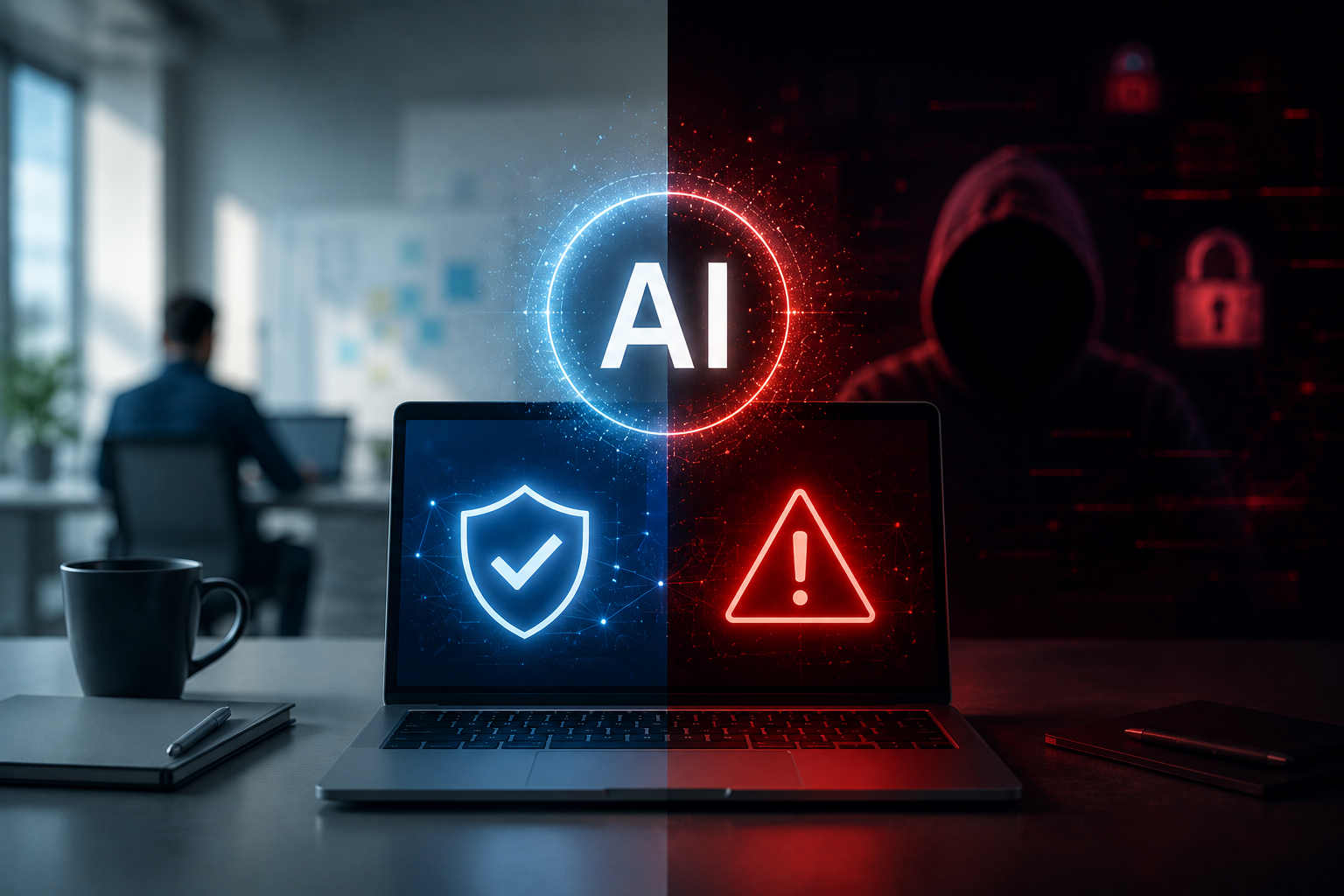
Every few months, a new headline claims artificial intelligence is about to replace cybersecurity professionals: automated defenses that never sleep, AI analysts that triage alerts instantly, tools that promise to close the talent gap overnight. Then a different set of headlines claims the opposite, that AI has armed attackers with capabilities defenders can’t keep up with. Both narratives get part of the picture right and miss the more useful one: AI isn’t eliminating cybersecurity work, it’s reshaping what that work actually requires, on both sides of the fight.
This piece pulls together what’s genuinely changing: how attackers are using AI right now, where AI-powered defense tools fall short, the new risk categories generative AI itself has introduced, and what all of this means for anyone building or maintaining a cybersecurity career.
Is AI Actually Replacing Cybersecurity Jobs?
Start with the question everyone asks first, because the honest answer is more reassuring than the headlines suggest, just not for the reason most people expect.
The cybersecurity workforce gap hasn’t closed; if anything, demand for skilled professionals continues to outpace supply. What’s changing isn’t whether organizations need people. It’s what those people spend their time doing. Enterprise adoption of AI agents and automation platforms is accelerating quickly, with forecasts suggesting a large share of enterprise applications will incorporate task-specific AI agents within the next year or two. Yet only a small fraction of organizations have actually built the governance and oversight structures to manage those agents responsibly. That gap, between deploying AI and knowing how to run it safely, is itself becoming a major source of new cybersecurity work.
AI is genuinely good at specific, bounded tasks: sorting through thousands of low-priority alerts, flagging anomalies in network traffic, summarizing incident timelines. It is not good at the things that make senior security professionals valuable: reading ambiguous context, making judgment calls with incomplete information, understanding how a specific business actually operates, or explaining a risk decision to a skeptical executive. The most sophisticated attacks still require human judgment to counter, because sophisticated attackers are, themselves, adapting faster than any static detection model can be retrained.
The practical result: entry-level work that was purely repetitive, first-pass alert triage, basic log review, is increasingly assisted or automated. Career paths built entirely around that kind of repetitive work will need to evolve. Career paths built around judgment, communication, and the ability to work alongside AI tools rather than compete with them are, if anything, becoming more valuable, not less.
What this means practically: the skills worth building now aren’t “how do I avoid AI” but “how do I use AI tools well enough that I can focus my time on the parts of the job AI genuinely can’t do.” That includes staying current on how AI-assisted tools work well enough to evaluate their output critically rather than trusting it blindly, a skill covered in more depth below.
How Attackers Are Actually Using AI
The defensive side gets most of the headlines, but the offensive use of AI is where the practical changes are most visible day to day. Security teams have tracked a substantial rise in overall attack volume, thousands of attacks per organization per week in some measurements, up meaningfully year over year, much of it attributable to AI tools that have changed how attacks get designed, deployed, and scaled.
A few concrete shifts worth understanding:
Attacks are more personalized, faster to produce. Large language models let attackers generate convincing phishing content, tailored to a specific target’s role, company, and communication style, in a fraction of the time manual crafting used to take. The traditional advice to “watch for spelling mistakes and awkward phrasing” is far less reliable than it used to be, because AI-generated phishing content often reads as fluently as legitimate correspondence.
Reconnaissance is automated too. Where an attacker once spent hours manually researching a target company’s org chart, vendors, and recent news, AI tools now compress that research into minutes, making targeted (spear-phishing-style) attacks cheaper to run at scale, a capability historically reserved for the most resourced attackers.
Scale has increased without a proportional increase in attacker skill. Tools that automate reconnaissance, content generation, and even basic exploit development lower the skill floor required to run an effective campaign, which is a meaningful part of why overall attack volume has climbed.
For defenders, the practical takeaway isn’t panic, it’s updated instincts. Verification habits (confirming unusual requests through a second channel, treating urgency as a signal to slow down rather than speed up) matter more than ever, precisely because the traditional tells (bad grammar, generic greetings, obviously fake sender addresses) are far less reliable than they used to be.
Where AI Falls Short as a Defensive Tool
Security vendors have leaned hard into AI marketing: automated threat detection, instant response, protection that promises to outpace human analysts. Some of that is real. A meaningful amount of it oversells what these tools can currently do, and understanding the gap matters both for security buying decisions and for anyone building a career around these tools.
AI-powered detection tools introduce their own attack surface. A detection model can be probed, tested, and in some cases manipulated by attackers who study how it responds, a technique sometimes called adversarial input crafting. A tool that’s good at catching yesterday’s attack patterns isn’t automatically good at catching a pattern designed specifically to evade it.
False positives and false negatives are still a real cost. AI models trained on historical attack data can miss genuinely novel techniques (because nothing in the training data resembled them) while also generating enough false positives to cause alert fatigue in the humans reviewing them, which, ironically, recreates the exact problem AI adoption was meant to solve.
“AI-powered” doesn’t mean “autonomous” in any responsible deployment. The organizations getting real value from AI security tools are the ones treating AI output as a strong first-pass filter that a human still reviews for consequential decisions, not a replacement for that review. Vendors that market their tools as fully autonomous should be treated with the same skepticism as any bold claim without a track record.
None of this means AI security tools aren’t worth using; they clearly are, for the tasks they’re actually good at. It means the “AI will handle it” mindset is the wrong frame. The right frame is “AI handles the volume, humans handle the judgment,” and building a career means becoming genuinely good at the second half of that sentence.
The New Risk Category: Securing AI Itself
Beyond how AI is used to attack or defend, a distinct and newer risk category has emerged: the security risks created simply by using generative AI tools in ordinary work, regardless of who’s attacking whom.
Hallucination and data leakage
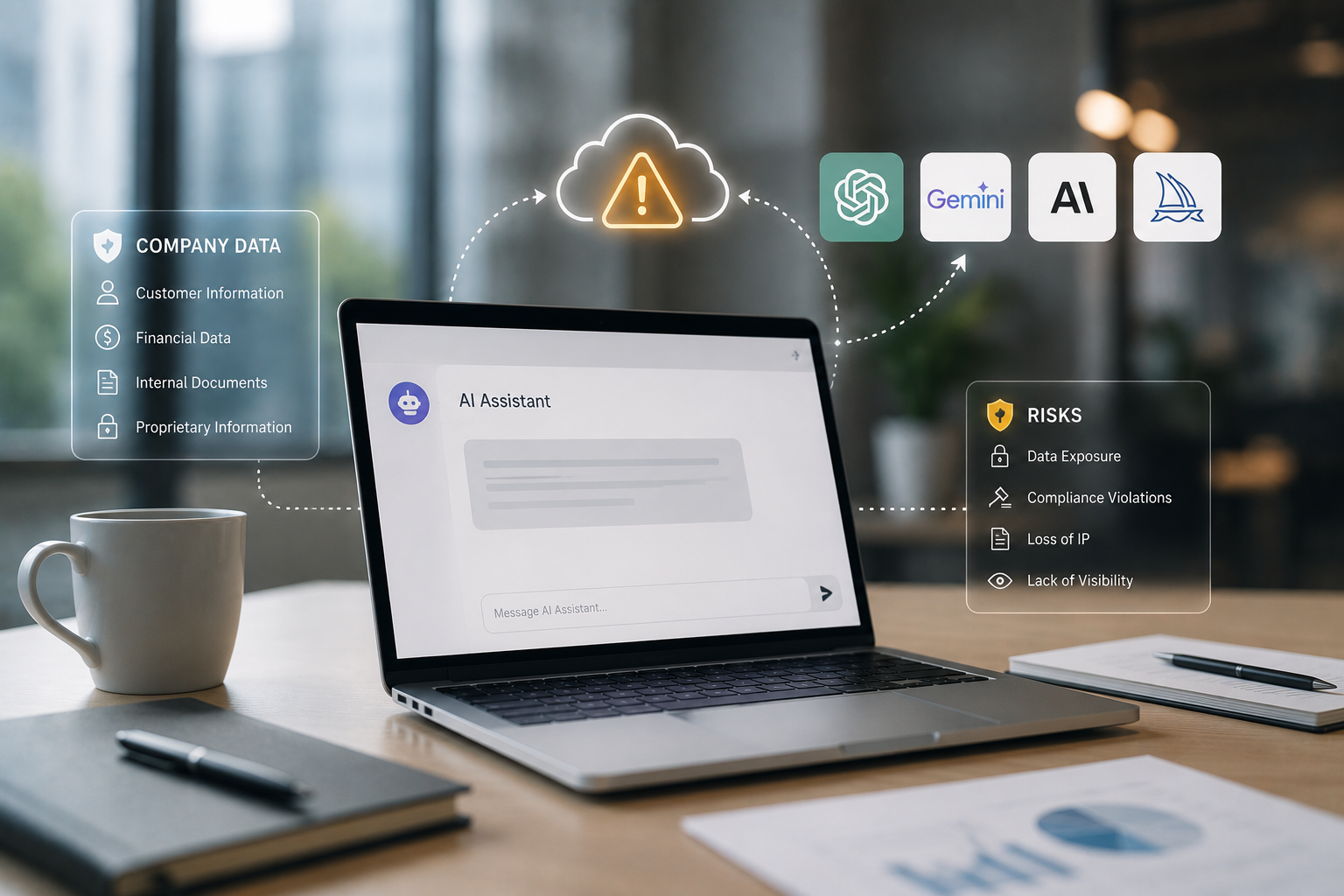
Generative AI tools can produce confident, fluent, entirely incorrect information, a failure mode usually called hallucination. When that output feeds into a business decision, a piece of code, or a customer-facing communication without review, the error propagates. This risk compounds when the same tools are handling sensitive input: survey data consistently shows a large share of executives and IT professionals are concerned about data exposure through AI tools, yet usage keeps climbing regardless, because the productivity benefit is real and immediate while the risk feels abstract until it isn’t.
This applies whether you’re an IT professional evaluating a new tool for your team or an everyday user relying on a chatbot for research, writing, or decision support. The underlying risk is the same: verify before you trust, and never treat AI output as a substitute for checking the actual source.
Automated decision-making and where human oversight still matters
A related but distinct issue: many organizations don’t have a clear internal understanding of where AI is making an actual decision versus where it’s merely offering a recommendation a human is supposed to review. A customer service system that routes urgent complaints, a pricing algorithm adjusting rates automatically, an inventory system reordering stock: each of these sits somewhere on a spectrum from “fully automated” to “human-reviewed,” and the distinction matters enormously for accountability when something goes wrong.
The organizations handling this well draw an explicit line: which categories of decisions can be fully automated (low-stakes, easily reversible, well-understood patterns) and which require a human in the loop before anything executes (high-stakes, hard to reverse, or affecting a person’s access, finances, or safety). Without that explicit line, “the AI did it” becomes an answer nobody can actually stand behind.
Non-human identities: the access risk almost nobody is watching
A newer and less-discussed risk sits underneath all of this: as organizations deploy more AI agents, service accounts, and automated integrations, each of those gets its own credentials and permissions, a non-human identity with real access to real systems. Unlike a human employee, a non-human identity doesn’t go through onboarding training, doesn’t get an annual access review by default, and can accumulate excessive permissions quietly over time as it gets connected to more systems.
This is a large enough topic that it deserves its own deep dive; see our full breakdown of non-human identity risk for a complete treatment. The short version for this piece: every new AI tool or agent your organization adopts is also a new identity with access to manage, and that access needs the same ongoing scrutiny a human account would get.
Reputation risk: the newest category
The furthest-reaching AI risk for many organizations isn’t technical at all, it’s reputational, and it can materialize before anyone in IT or security even knows an unauthorized tool is in use. Public-facing AI-generated content that turns out to be inaccurate, offensive, or embarrassingly generic; customer interactions handled by a chatbot that mishandles a sensitive situation; internal communications drafted by AI that misrepresent company policy: these incidents tend to surface publicly and quickly, well before a technical postmortem can catch up.
The defense here isn’t purely technical either. It’s the same governance discipline that applies everywhere else in this piece: know which AI tools are touching customer-facing or public communications, require human review before anything goes out under the company’s name, and treat “the AI wrote it” as no defense at all once something has already been published.
What This Means for Your Career Going Forward
Pulling all of this together, a few practical conclusions hold up regardless of how the AI landscape continues to shift:
Build judgment, not just tool familiarity. Knowing how to use an AI security tool is table stakes. Knowing when to trust its output, when to override it, and how to explain that decision to a non-technical stakeholder is the differentiator that keeps a career resilient as tools change underneath it.
Stay current on both sides of the fight. Understanding how attackers are using AI is no longer optional context. It’s directly relevant to how you evaluate the effectiveness of any defensive tool your organization is considering.
Get comfortable with AI governance, even if it’s not your title. The organizations struggling most right now aren’t the ones without AI tools. They’re the ones without a clear answer for who owns AI risk, who reviews AI-assisted decisions, and who’s accountable when something goes wrong. Professionals who can speak fluently to that gap, regardless of their specific role, are positioning themselves for the roles this shift is actually creating.
Treat “AI will replace this job” claims with the same skepticism you’d apply to any other unverified security claim. The evidence so far points toward transformation, not elimination, but only for professionals willing to transform their own skill set alongside it.
AI is changing what a cybersecurity career looks like day to day. It is not making the career unnecessary. The professionals who treat that distinction seriously, building the judgment AI can’t replicate while staying fluent in the tools that are reshaping the field, are the ones who’ll find the next several years full of opportunity rather than threat.
Enjoyed this article?
Subscribe to Professor Simon's weekly newsletter for practical insights, career guidance, and leadership lessons delivered every Friday.
A confirmation email will be sent. If you don't receive it, please check your spam or junk folder.
No spam. Unsubscribe anytime.
Prefer to Listen?
Listen to Professor Simon’s IT & Cybersecurity Podcast for practical conversations about cybersecurity careers, certifications, security leadership, and real-world lessons from the field.
Listen on Spotify