Why Small Businesses Are Bigger Cyber Targets Than Fortune 500 Companies
Why Small Businesses Are Bigger Cyber Targets Than Fortune 500 Companies
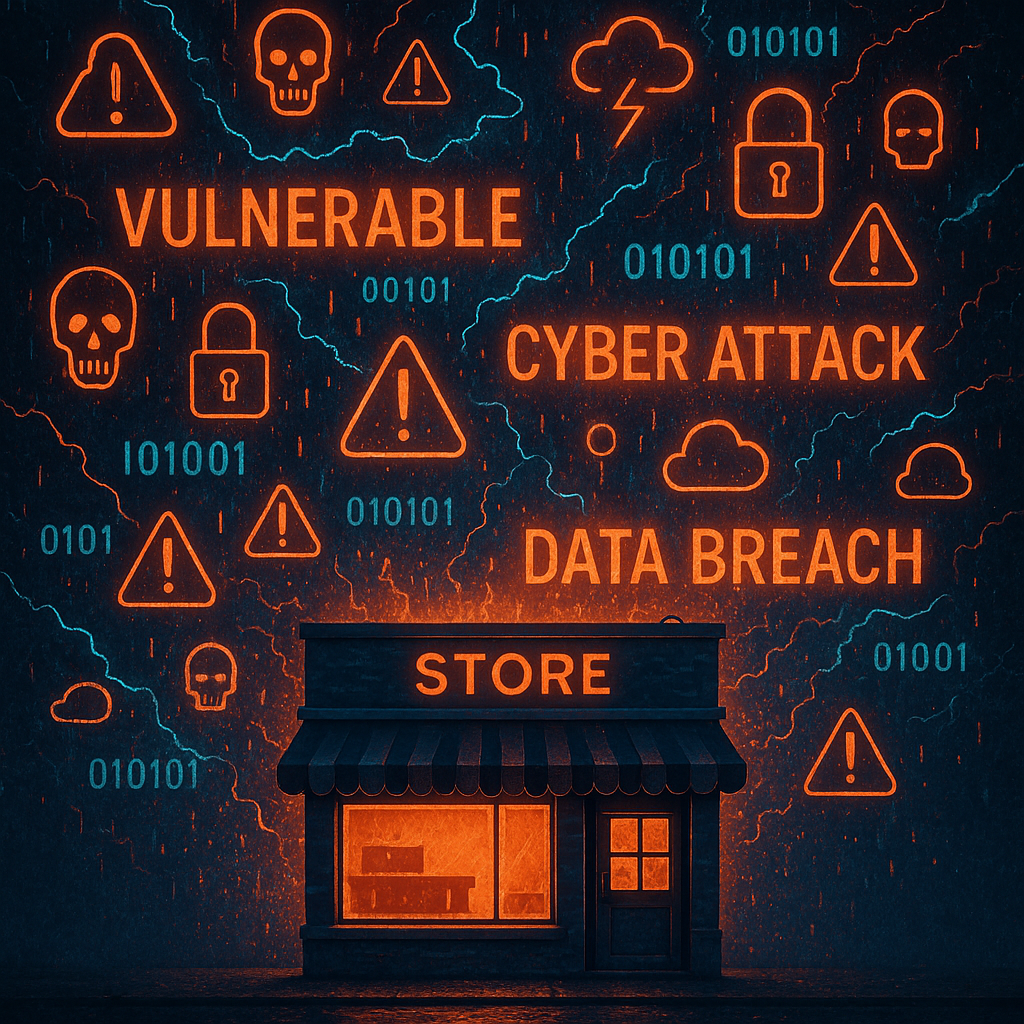
Small business owners routinely assume they fly under the radar of cybercriminals. The logic seems sound: with limited revenue, modest customer bases, and none of the brand recognition of major corporations, why would attackers bother? This assumption is not just wrong—it’s dangerous. Small businesses face disproportionately high targeting rates precisely because they combine valuable assets with weaker defenses and faster payoff potential than heavily fortified enterprises.
The data tells a clear story. Small businesses are three times more likely to be targeted by cybercriminals than larger companies, and employees at small businesses experience 350% more social engineering attacks than their enterprise counterparts. Rather than seeking prestige targets, attackers optimize for return on investment. A small business with weak controls, urgent cash-flow sensitivity, and valuable data represents a better opportunity than a Fortune 500 company with dedicated security teams, threat intelligence platforms, and millions invested in layered defenses.
Understanding why small businesses attract disproportionate attention requires examining attacker economics, the nature of small business vulnerabilities, and the strategic value these organizations provide beyond their own operations.
The Economics of Cybercrime
Cybercriminals operate like any business: they seek maximum return for minimum effort. This economic reality drives targeting decisions far more than organizational size or prestige.
Lower Barriers to Entry
Small businesses typically deploy fewer defensive layers than enterprises. A Fortune 500 company might require attackers to bypass endpoint detection and response systems, bypass network segmentation, evade security operations center monitoring, and defeat multi-factor authentication on privileged accounts. A small business might have basic antivirus, a standard firewall, and password-only authentication on critical systems.
This disparity means the same phishing email that bounces off enterprise defenses can grant full access to a small business environment within hours. The skill level, time investment, and tooling required drops dramatically. When AI-powered tools can now generate convincing phishing emails and automated scanners can identify vulnerable systems, the barrier to attacking small businesses has never been lower.
Faster Time to Monetization
Small businesses often have faster decision cycles and more concentrated authority structures. When ransomware locks critical systems, a small business owner might have authorization to pay a ransom within hours. Enterprise incident response involves legal review, insurance coordination, executive committees, and board notifications—processes that can take days or weeks.
This speed matters to attackers. Faster payments mean quicker turnover, reduced exposure to law enforcement, and more attacks completed per unit of time. A criminal group that successfully compromises and ransoms five small businesses in a week generates more predictable income than targeting one enterprise that might never pay.
Resource Constraints Create Persistent Vulnerabilities
Small businesses face structural challenges that enterprises can resource their way around. A Fortune 500 company can hire dedicated security staff, fund continuous monitoring, and maintain redundant systems. Small businesses often rely on a single IT generalist, struggle to keep systems patched, and defer security investments when budgets tighten.
These resource gaps create persistent vulnerabilities. Unpatched systems remain exploitable for months. Phishing training never happens. Backup testing gets skipped. Monitoring gaps mean attackers can operate undetected for extended periods. Attackers know these patterns and exploit them systematically.
What Makes Small Businesses Valuable Targets
Beyond ease of access, small businesses offer specific value propositions that make them attractive targets independent of size.
Financial Access and Payment Systems
Every business that processes payments, manages payroll, or maintains banking relationships has direct financial access worth exploiting. Point-of-sale systems, accounting software credentials, and banking portal access can enable direct theft or fraudulent transfers. Business email compromise attacks targeting small businesses routinely succeed because accounts payable staff lack training to detect sophisticated invoice fraud.
Small businesses also handle cash flow differently than enterprises. Missing a week of revenue might threaten survival, creating tremendous pressure to pay ransoms or meet extortion demands. Attackers recognize this leverage and exploit it ruthlessly.
Customer and Client Data
Professional services firms—law offices, accounting practices, insurance agencies, healthcare providers—handle sensitive client information despite limited security resources. This data has resale value on criminal marketplaces and creates extortion opportunities through threatened disclosure.
Retail businesses maintain customer payment information, purchase histories, and contact details. Even a small customer database represents money on criminal forums where stolen credentials, email lists, and payment card data trade actively.
Supply Chain and Trust Relationships
Perhaps the most strategically valuable attribute of small businesses is their position in larger ecosystems. A small manufacturing supplier might have network access to a Fortune 500 customer’s procurement systems. A small IT services provider might manage cloud environments for multiple clients. An HVAC contractor might have remote access to building management systems in large corporate facilities.
Attackers increasingly target small businesses not for their own assets but as stepping stones to larger organizations. The 2013 Target breach, which exposed 40 million payment cards, began with compromised credentials from an HVAC vendor. This pattern repeats constantly because large organizations cannot fully control the security posture of every vendor, contractor, and partner in their ecosystem.
The trust relationships small businesses maintain create opportunities for business email compromise and social engineering. An email from a known accounting firm or legal advisor carries inherent credibility. Attackers who compromise these trusted intermediaries can exploit existing relationships to defraud multiple organizations.
Common Vulnerabilities in Small Business Environments
Specific technical and organizational weaknesses appear consistently in small business compromises.
Authentication Weaknesses
Password-only authentication remains common in small business environments despite widespread availability of multi-factor authentication. When employees reuse passwords across business and personal accounts, a breach at an unrelated service can expose business credentials. Attackers routinely test credential lists from consumer breaches against business email and cloud services, knowing that password reuse will grant access to a percentage of targets.
Shared accounts compound this problem. When multiple employees use the same login for critical systems, accountability disappears and password changes become coordination challenges that often get deferred indefinitely.
Unpatched Systems and Software
Small businesses frequently run outdated operating systems, unpatched applications, and unsupported software. Resource constraints, fear of breaking working systems, and lack of change management processes all contribute. Attackers maintain databases of known vulnerabilities and automated tools that scan for exploitable systems. An unpatched server exposed to the internet can be compromised within hours of a vulnerability becoming public.
This extends beyond servers to workstations, networking equipment, and specialized business applications that may not receive regular updates. Each unpatched system represents a potential entry point.
Inadequate Backup and Recovery
Many small businesses maintain backups but fail at crucial implementation details. Backups connected to the network become encryption targets during ransomware attacks. Untested backups fail during actual recovery attempts due to incomplete data capture, corruption, or configuration errors. Backup schedules that run weekly rather than daily can lose days of critical business data.
The gap between having backups and having functional recovery capability is where many small businesses discover they’re unprepared during an actual incident.
Limited Monitoring and Detection
Without security monitoring tools or dedicated staff watching for anomalies, small businesses often discover breaches weeks or months after initial compromise. This dwell time allows attackers to establish persistence, steal credentials, locate valuable data, and prepare for maximum impact before revealing their presence through ransomware deployment or data theft disclosure.
The absence of baseline activity monitoring means unusual access patterns, data exfiltration, and lateral movement go unnoticed until damage is severe.
Human Factors and Social Engineering
Technology vulnerabilities matter, but human factors drive the majority of successful small business compromises.
Phishing and Credential Theft
Email phishing remains the most common attack vector because it works. Employees who lack security awareness training struggle to identify sophisticated phishing attempts, especially when attackers use stolen company information, spoofed domains, or compromised legitimate accounts to add credibility.
AI-powered tools now generate personalized phishing content at scale, adapting messages to specific industries, roles, and contexts. The volume and quality of phishing attempts continues to increase while small business defenses often consist of basic spam filtering alone.
Authority Exploitation and Urgency
Social engineering attacks frequently exploit organizational hierarchy and urgency. An email appearing to come from a company owner demanding immediate payment, an IT support call requesting credentials to resolve a fabricated emergency, or an invoice modification request from a “vendor” all leverage psychological pressure to bypass normal verification procedures.
Small organizations where everyone knows each other can be particularly vulnerable because trust operates informally. The absence of structured verification processes for financial transactions or credential sharing creates gaps that social engineering exploits.
Insider Threats and Negligence
Not all compromises come from external attackers. Employees with legitimate access who leave credentials exposed, misconfigure cloud storage, or fall for phishing create unintentional insider threats. Departing employees who retain access, contractors with excessive permissions, and former IT providers who never had access removed represent ongoing risks.
The informality of small business IT management means access reviews rarely happen, privileged access remains unnecessarily broad, and the principle of least privilege goes unenforced.
Practical Defense Strategies for Resource-Constrained Environments
Understanding why small businesses are targeted matters only if it drives better defensive practices. Effective protection doesn’t require enterprise budgets, but it does require deliberate focus on high-impact controls.
Identity and Access Protection
Implementing multi-factor authentication on all business-critical systems—email, cloud services, financial platforms, remote access—blocks the majority of credential-based attacks. Password managers eliminate password reuse and enable strong unique credentials without creating employee burden.
Regular access reviews ensure former employees and contractors lose access promptly and that current employees hold only the permissions their roles require. These practices cost more in discipline than dollars but dramatically reduce attack surface.
Patch Management and System Hygiene
Establishing a patching cadence for all systems—workstations, servers, network equipment, and business applications—closes known vulnerabilities before attackers exploit them. Automated patch management tools can reduce the manual effort involved.
Maintaining an inventory of all systems, software, and services enables systematic updates and identifies forgotten or shadow IT systems that might otherwise go unpatched indefinitely.
Backup and Recovery Testing
Implementing the 3-2-1 backup rule—three copies of data, on two different media types, with one copy offline or offsite—protects against both ransomware encryption and physical failures. Regular restoration testing verifies that backups actually work when needed.
Offline or immutable backups that attackers cannot encrypt or delete represent the single most important ransomware defense. Even if every business system is compromised, known-good backups enable recovery without paying ransoms.
Email Security and Phishing Protection
Email filtering that blocks known malicious senders, attachments, and links reduces the volume of phishing that reaches employee inboxes. Security awareness training that teaches employees to identify phishing indicators, verify unexpected requests, and report suspicious messages transforms users from vulnerabilities into sensors.
Regular phishing simulations—brief, non-punitive tests that reinforce training—help measure awareness and identify employees who need additional support.
Incident Response Planning
A written incident response plan that identifies who makes decisions, how to isolate compromised systems, when to contact law enforcement, and how to communicate with customers enables faster, more effective response when incidents occur. Planning during calm periods produces better outcomes than improvising during crisis.
This plan should include contact information for incident response services, cyber insurance carriers, legal counsel, and relevant regulatory bodies depending on industry requirements.
Managed Security Services as Force Multipliers
Small businesses that cannot hire dedicated security staff can leverage managed security service providers for monitoring, vulnerability management, and incident response capabilities. This outsourced approach provides professional security operations at a fraction of the cost of building in-house teams.
Selecting appropriate managed services requires understanding which risks matter most for the specific business and ensuring service level agreements address actual needs rather than marketing promises.
Moving Beyond the “Too Small to Target” Mindset
The persistent belief that small businesses are too insignificant to attack creates a false sense of security that attackers depend on. Size doesn’t determine targeting—it’s the combination of accessible value and weak defenses that drives attacker interest.
Fortune 500 companies attract attention for prestige and the potential scale of breaches, but they also deploy proportionate defenses. Small businesses offering easier access to useful data, financial systems, or larger ecosystem footholds often represent better targets from an attacker’s economic perspective.
Protection doesn’t require matching enterprise security budgets. It requires implementing fundamental controls consistently, training employees to recognize common attacks, maintaining functional backup and recovery capabilities, and taking the threat seriously enough to plan and practice response procedures.
The businesses that suffer devastating breaches aren’t necessarily those with the smallest budgets—they’re those that treated security as optional until a compromise forced recognition that their data, their relationships, and their operational continuity have value worth protecting. Recognition that every business is a potential target is the first step toward building resilient defenses appropriate to actual risk.
Enjoyed this article?
Subscribe to Professor Simon's weekly newsletter for practical insights, career guidance, and leadership lessons delivered every Friday.
A confirmation email will be sent. If you don't receive it, please check your spam or junk folder.
No spam. Unsubscribe anytime.
Prefer to Listen?
Listen to Professor Simon’s IT & Cybersecurity Podcast for practical conversations about cybersecurity careers, certifications, security leadership, and real-world lessons from the field.
Listen on Spotify