Why Passing an Audit Doesn’t Mean You’re Secure
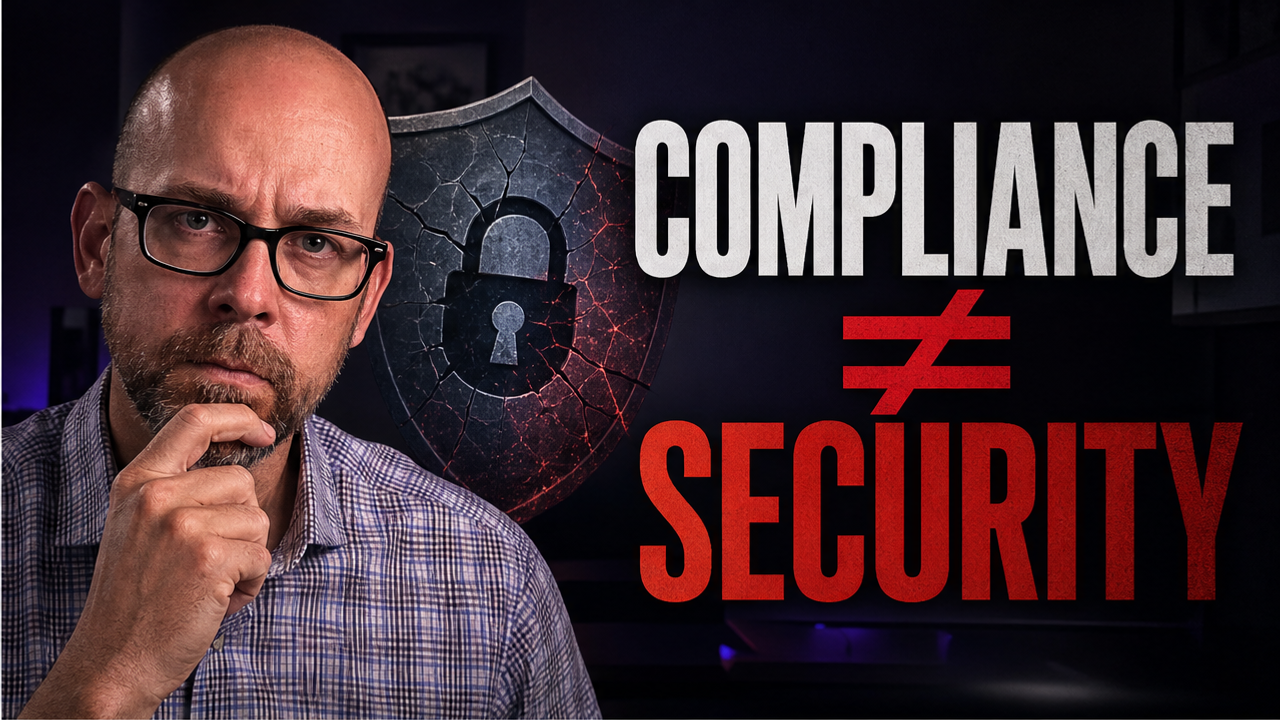
Your organization just passed its SOC 2 audit. Leadership is celebrating. Customers are reassured. The report sits on your desk with a clean opinion.
And you know you still have significant security problems the audit never touched.
This creates an uncomfortable position for security managers. You understand the value of what compliance provides. External validation matters. Frameworks establish important baselines. Customers and partners need assurance that you take security seriously.
But you also know that passing an audit and being secure are not the same thing.
The challenge is not that compliance audits are worthless. They serve important purposes and provide real value. The challenge is that they measure different things than operational security effectiveness. An organization can satisfy audit requirements through point-in-time evidence, accepted risks, and documented processes that exist inconsistently in practice.
Real security requires continuous attention to threats, controls that work in operation rather than on paper, and organizational habits that extend beyond what auditors can observe.
Compliance gives you a framework and external validation. Security is what happens between audits when nobody is checking your evidence.
Prefer to read the full breakdown? Keep scrolling. Prefer to watch? Full video above.
What Audits Actually Measure
Understanding the gap between compliance and security starts with understanding what audits actually evaluate.
When an auditor examines your security program, they are assessing whether you meet specific requirements defined by a framework. They review documentation, examine samples of transactions or activities, interview personnel, and observe certain processes. They produce evidence that particular controls existed and operated during a defined period.
This is fundamentally different from assessing whether your organization effectively reduces risk in daily operations.
An auditor might review your access control processes by examining 25 terminated user accounts from a population of 200. They verify that access was removed within the required timeframe according to your documented procedures. If those 25 cases were handled correctly, the control passes. The audit report reflects that your access termination process meets requirements.
But the auditor did not examine the other 175 cases. They did not observe how the process works on a typical Tuesday when the IT team is understaffed. They did not measure whether managers actually review the access requests they approve or just click through them to clear their queue.
The audit captured evidence that your control can work. It did not determine how consistently it works or how well it addresses actual risk in your environment.
This is not a flaw in the audit process. Auditors cannot observe daily operations for months. They cannot examine every transaction. They work within defined scope, use statistical sampling, and evaluate evidence that can be objectively verified. These are necessary practical limitations that make audits feasible.
The problem emerges when organizations treat audit results as proof of comprehensive security rather than as confirmation that specific controls met specific requirements at a specific time.
The Gap Between Paper and Practice
Many compliance requirements can be satisfied through documentation rather than operational effectiveness. This creates space for controls that exist on paper but provide limited security value in practice.
Consider the quarterly access review process that many frameworks require. Your organization has a documented procedure. Reviews are scheduled. Managers receive lists of access rights for their team members. The reviews are completed and documented. Evidence is collected. The control passes the audit.
But what actually happens during these reviews?
In many organizations, these reviews become mechanical exercises. Managers receive spreadsheets listing access they do not fully understand. They lack context about what systems do or why someone might need particular permissions. They approve everything because they trust their team members and do not want to accidentally break something. The review happens, but no meaningful evaluation occurs.
The control exists. The documentation proves it operated. The audit requirement is satisfied. But the security value is minimal because the process became performative rather than substantive.
This pattern repeats across different types of controls. Policies get written but not followed. Training gets completed but not retained. Procedures get documented but not consistently applied. Each control can produce evidence sufficient to pass an audit while operating ineffectively in daily practice.
Auditors cannot easily detect this gap. They can verify that the review occurred and was documented. They cannot measure whether the reviewer thoughtfully evaluated each access right or spent three minutes clicking “approve all” to clear a task from their list.
Point-in-Time Evidence in a Continuous Environment
Audits capture snapshots of your security posture during a defined period. Your security environment changes continuously.
An audit might review access controls in April using evidence from January through March. By the time the report is issued in June, your organization has onboarded 50 new employees, launched two new applications, integrated an acquisition, and experienced staff turnover that changed who has access to what systems. The audit captured a moment in time. Operational reality has moved on.
This timing gap matters because organizations often treat audit reports as current proof of security even months after issuance. Customers receive a SOC 2 report from eight months ago and take it as evidence of current security posture. Leadership presents last year’s ISO certification as demonstration that security is handled. Nobody accounts for everything that changed since the audit period ended.
Some changes are obvious and significant. You launched a new product. You migrated to a different cloud provider. You reorganized your engineering team. These are visible events that leadership might recognize as affecting security.
Other changes are gradual and invisible. Employees leave and their access lingers. New systems get deployed without going through the formal change process. Shortcuts emerge as teams work around controls that slow them down. Configuration drift accumulates as systems diverge from their documented baseline state.
The audit evaluated what existed then. It tells you nothing about what exists now.
When Risk Acceptance Becomes Risk Avoidance
Most compliance frameworks allow organizations to formally accept risks they choose not to remediate. This is appropriate and necessary. Not every risk requires immediate mitigation. Some risks have acceptable likelihood and impact. Others might be too expensive to address relative to the benefit. Business judgment has a legitimate role in risk management.
But risk acceptance can become a compliance strategy rather than a risk management decision.
When a control deficiency is identified during audit preparation, organizations face a choice. They can remediate the issue, which requires time and resources. Or they can formally accept the risk, which requires documentation and management approval but allows them to pass the audit without fixing the problem.
The path of least resistance often leads toward acceptance. The risk gets documented. Management signs off. The auditor notes that the risk was formally accepted according to the organization’s risk management process. The audit proceeds without exception. The issue remains unaddressed.
This becomes problematic when accepted risks accumulate over time and are rarely revisited. The original reasoning for acceptance might no longer apply. The threat environment might have changed. Compensating controls might have been discontinued. The business context that made the risk acceptable might be different.
But accepted risks tend to become invisible. They exist in a risk register that gets reviewed annually in a meeting where nobody has time to reconsider dozens of previously accepted items. The list grows longer each year. Nobody goes back to confirm that accepted risks still make sense.
Organizations end up with extensive documentation of risks they chose not to address, which satisfies compliance requirements while leaving significant security gaps unresolved.
Scope, Sampling, and What Gets Missed
Every audit defines boundaries. Certain systems are in scope. Others are not. Specific processes are examined. Others fall outside the audit’s focus. Samples are selected from populations. The unsampled majority is not reviewed.
These limitations are necessary and appropriate. Audits cannot examine everything. Scope must be defined. Sampling is a valid methodology when applied correctly. Auditors work within practical constraints of time and budget.
But these limitations mean that passing an audit does not guarantee comprehensive security across your organization.
A SOC 2 audit might cover your production environment and core business systems while excluding development environments, internal tools, or recently acquired systems that have not yet been integrated. Those excluded systems might represent significant risk. The audit does not evaluate them. The report does not address their security posture. They exist outside the boundaries that were assessed.
Similarly, sampling means that only a portion of activities are reviewed. If an auditor samples 25 cases from 200 and finds no issues, the control passes. But problems might exist in the unsampled 175 cases. The audit provides confidence based on the sample, not certainty about the entire population.
Organizations sometimes take advantage of these limitations by focusing security efforts narrowly on what they know will be audited. In-scope systems get attention and resources. Out-of-scope systems are neglected. Activities likely to be sampled are handled carefully. Others receive less attention. This creates islands of compliance surrounded by unexamined security gaps.
Building Security That Uses Compliance
Understanding the gap between compliance and security does not mean dismissing compliance as useless. It means using compliance frameworks as tools within a broader security program rather than treating them as the destination.
Start by treating compliance as a foundation, not as completion. Frameworks establish important baseline practices. They provide structure for organizations building security programs. They create accountability and external validation. But they represent starting points, not comprehensive solutions.
Build your security program around your actual risk environment, your specific threats, your business context, and your technology stack. Use compliance requirements to ensure you cover fundamental practices. Then extend beyond those requirements to address risks that matter for your particular situation.
Monitor the gap between documented controls and operational reality. Regular examination of whether processes that exist on paper are followed consistently in practice reveals where compliance and security diverge. Ask people doing the work, not just those managing it. Observe how controls actually operate on a typical day, not how they are supposed to operate according to documentation.
Review accepted risks on a regular schedule. Confirm that the original reasoning still applies. Verify that compensating controls remain effective. Reassess whether risks should still be accepted given changes in the threat environment or business context. Do not let accepted risks become forgotten risks.
Distinguish between audit preparation and security improvement when planning work. Both activities have value, but they are different and may require different approaches. Be clear about whether you are addressing risk or satisfying an audit requirement. This clarity helps allocate resources appropriately and prevents security work from becoming purely compliance-driven.
Use compliance requirements as prompts to examine broader security questions. When implementing a control for compliance purposes, ask what else in that area deserves attention even if the framework does not require it. Compliance requirements can reveal important security domains, but they should not define the boundaries of your security thinking.
What Compliance Does Well
Compliance frameworks provide genuine value that should not be dismissed or minimized.
They establish baseline security practices based on collective industry experience. Organizations building security programs benefit from structured requirements that address fundamental controls. Following a framework prevents common oversights and ensures attention to important security domains.
They create external accountability. Leadership takes security more seriously when an external auditor will evaluate the program. Customers and partners gain assurance from recognized certifications. Compliance requirements give security teams leverage to prioritize work and secure resources.
They provide consistent standards across different organizations. When a customer asks about your security practices, a SOC 2 report or ISO certification communicates your approach in a format they understand and can compare to other vendors. This standardization has value for building business relationships and making procurement decisions.
The discipline of audit preparation often surfaces security issues that might otherwise remain hidden. Preparing documentation forces examination of whether controls actually exist and operate as intended. Evidence collection reveals gaps. The audit process itself can drive security improvements even beyond what auditors specifically evaluate.
These benefits are real and important. Compliance work is not wasted effort. But these benefits do not extend to proving that your security program effectively reduces risk in daily operations between audits.
Treat compliance as part of your security program rather than a substitute for it. Use frameworks to establish foundations, create accountability, and demonstrate commitment. Then build operational security practices that address your actual risk environment, work consistently when nobody is collecting evidence, and continue functioning effectively in the months between external validation.
Your compliance certificate demonstrates that you met specific requirements at a specific time. Your security posture depends on what you do every day when the auditors are not there.
Tagged:
Enjoyed this article?
Subscribe to Professor Simon's weekly newsletter for practical insights, career guidance, and leadership lessons delivered every Friday.
A confirmation email will be sent. If you don't receive it, please check your spam or junk folder.
No spam. Unsubscribe anytime.
Prefer to Listen?
Listen to Professor Simon’s IT & Cybersecurity Podcast for practical conversations about cybersecurity careers, certifications, security leadership, and real-world lessons from the field.
Listen on Spotify