Which CompTIA Certification Is Right for You?
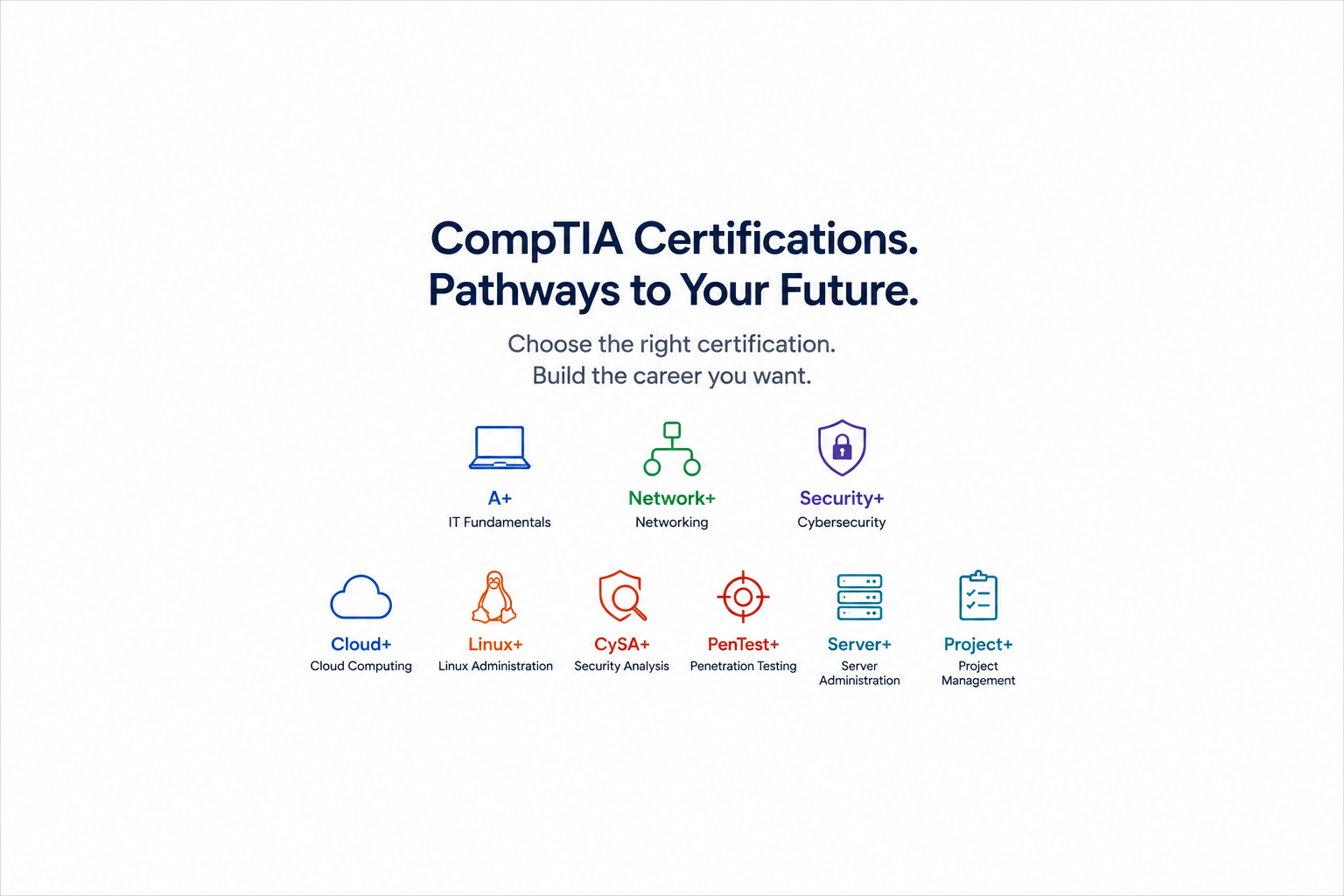
Starting a career in IT, or specializing further within it, can feel overwhelming given how many certification options exist. CompTIA alone offers a wide range of credentials spanning entry-level foundations, networking, security, cloud, Linux, project management, and more. Each one validates a different, specific set of skills, and choosing the right one for your actual goals matters more than collecting as many as possible.
This guide covers the CompTIA certifications worth knowing about, organized from the foundational entry points through the more specialized paths, so you can match a specific credential to where you actually want your career to go.
The Foundational Three
CompTIA A+ is the most widely recognized entry-level IT certification, covering hardware, networking basics, mobile devices, operating systems, and fundamental troubleshooting. It’s the standard starting point for IT support, help desk, and computer technician roles, and it establishes the baseline technical literacy that most other IT and security certifications build on.
CompTIA Network+ goes deeper into networking specifically: network technologies, protocols, security fundamentals, and network management practices. It suits anyone aiming toward network administration, network engineering, or IT support roles with a networking focus, and it’s a natural next step after A+ for people whose interest leans toward infrastructure.
CompTIA Security+ focuses on cybersecurity fundamentals: network security, cryptography, access control, and risk management. It’s the most commonly requested entry-level certification in cybersecurity job postings specifically, and it’s the natural next step for anyone whose interest lies in security rather than general IT or networking.
Most people entering IT or cybersecurity benefit from starting with one or more of these three, chosen based on which specific direction actually interests them, rather than pursuing all three simultaneously without a clear sense of which path they’re building toward.
Complementary Foundational Options Beyond CompTIA
A couple of non-CompTIA credentials frequently come up alongside the foundational three and are worth knowing about even though they’re not part of the CompTIA family.
Microsoft Technology Associate (MTA) style credentials lay a foundation specifically for the Microsoft technology ecosystem, with tracks covering software development, database administration, and infrastructure. This suits anyone planning a career built around Microsoft-centric environments specifically.
ITIL Foundation focuses on IT service management rather than technical skills directly, covering the widely used ITIL framework for managing IT services within an organization. This suits professionals interested in IT operations, service delivery, or process-oriented IT roles rather than hands-on technical work.
Specialized CompTIA Certifications Worth Knowing About
Once you’ve built a foundation, or if you already know which specialization you’re targeting, several more focused CompTIA certifications validate deeper, specific expertise.
CompTIA Cloud+ targets IT professionals implementing and managing cloud infrastructure, covering cloud architecture, security, deployment, operations, and automation. With cloud adoption continuing to grow across organizations of every size, this certification suits system administrators, network administrators, and cloud engineers looking to formally validate cloud-specific expertise.
CompTIA Linux+ validates the ability to manage Linux-based systems effectively, covering system architecture, scripting, user administration, and system security. This suits system administrators, network administrators, and technical support specialists who regularly work with Linux environments, increasingly common given how widely Linux runs in servers, networking infrastructure, and embedded systems.
CompTIA CySA+ (Cybersecurity Analyst) is built for professionals focused on identifying and responding to security threats, covering threat management, vulnerability management, security architecture, and incident response. This is a natural next step after Security+ for people specifically interested in security operations and analysis work, demonstrating the ability to apply analytical thinking to an organization’s actual security posture rather than just foundational security concepts.
CompTIA PenTest+ targets professionals involved in penetration testing and vulnerability assessment specifically, validating hands-on proficiency testing and exploiting systems using established methodologies and tools. This suits security analysts and engineers looking to formally demonstrate offensive security skills, planning assessments, identifying vulnerabilities, and communicating findings clearly.
CompTIA Server+ validates knowledge of server hardware and software administration: server architecture, storage systems, networking, security protocols, and disaster recovery. This suits system administrators, network administrators, and IT technicians whose work centers on server infrastructure specifically.
CompTIA Project+ shifts focus away from pure technical skills toward IT project management: initiation, planning, execution, monitoring, and closing out projects successfully. This suits IT project managers, team leads, and business analysts who want to formally validate project management capability within a technical context.
Choosing Based on Your Actual Direction, Not Popularity
The right certification path depends on being honest about where your specific interest and career goals actually point, rather than defaulting to whichever certification appears most frequently in generic “best IT certifications” lists.
If your interest is general IT support and troubleshooting, A+ remains the standard starting point. If networking infrastructure specifically interests you, Network+ builds directly on that foundation. If security is your target, Security+ is the accepted baseline, with CySA+ or PenTest+ as natural next steps depending on whether your interest leans toward analysis and response or offensive testing. If cloud infrastructure or Linux administration specifically interests you, Cloud+ or Linux+ validate that specialization directly. If your strengths lean more toward organization and process than hands-on technical work, Project+ or ITIL Foundation may fit better than another purely technical credential.
Certifications work best as validation of a direction you’re already building toward through study and practical experience, not as a substitute for that direction. Choosing a specialized certification because it sounds impressive, without genuine interest in the underlying work, tends to produce weaker outcomes than choosing based on an honest assessment of what you actually want to spend your career doing.
Enjoyed this article?
Subscribe to Professor Simon's weekly newsletter for practical insights, career guidance, and leadership lessons delivered every Friday.
A confirmation email will be sent. If you don't receive it, please check your spam or junk folder.
No spam. Unsubscribe anytime.
Prefer to Listen?
Listen to Professor Simon’s IT & Cybersecurity Podcast for practical conversations about cybersecurity careers, certifications, security leadership, and real-world lessons from the field.
Listen on Spotify