Remote Work Security: Protecting Company Data When Everyone’s Working From Anywhere
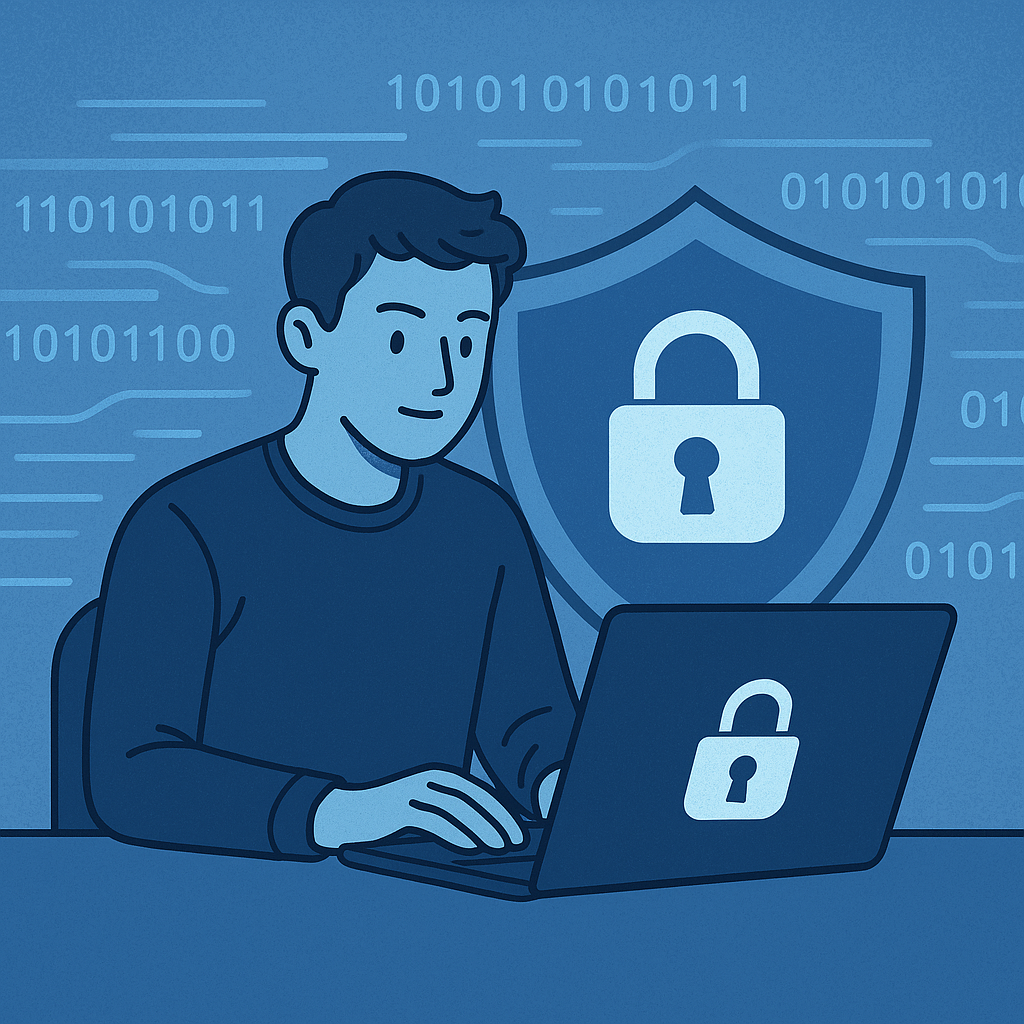
Remote Work Security: Protecting Company Data When Everyone’s Working From Anywhere
The rapid shift to remote work has permanently altered how organizations approach security. What began as an emergency response to the pandemic has evolved into a standard operating model, with 81% of organizations planning to adopt new security frameworks by 2026. The traditional security perimeter has dissolved, replaced by a distributed workforce accessing systems from home networks, coffee shops, and coworking spaces. This fundamental change requires a complete rethinking of how we protect company data.
The old model assumed that anyone inside the corporate network could be trusted, while threats came exclusively from outside. That assumption no longer holds. When employees work from anywhere using personal and corporate devices across dozens of networks, the very concept of “inside” and “outside” becomes meaningless. Modern remote work security requires a different approach—one that verifies every access request regardless of where it originates.
Understanding the Remote Work Security Challenge
Remote work introduced vulnerabilities that traditional security approaches weren’t designed to handle. Corporate networks once served as secure containers where IT teams could monitor and control access. Employees connected through company-provided equipment on company-managed networks, creating predictable security boundaries.
That controlled environment disappeared almost overnight. Workers now access sensitive systems through home WiFi networks shared with smart TVs, gaming consoles, and compromised IoT devices. They use personal laptops that may lack basic security updates or run outdated antivirus software. VPN connections that once provided secure tunnels now represent single points of failure—compromise one set of credentials, and attackers gain broad access to internal resources.
The Colonial Pipeline ransomware attack demonstrated this vulnerability. Attackers exploited an unused VPN account with excessive privileges, gaining access that allowed them to move laterally through systems and deploy ransomware. The breach succeeded not because of sophisticated hacking, but because security controls assumed that anyone authenticated through the VPN could be trusted.
The fundamental problem is this: remote work expanded the attack surface exponentially while reducing visibility and control. Organizations need security models designed for this distributed reality.
Why Traditional Security Fails Remote Teams
Perimeter-based security relied on the castle-and-moat approach. Build high walls around your network, control who enters through the gate, and trust everyone inside. This model made sense when employees worked from office buildings connected to managed networks.
Remote work demolished the walls. There is no single perimeter to defend when workers access systems from thousands of locations. VPNs attempt to recreate the perimeter by tunneling traffic through encrypted connections, but they inherit the same fundamental flaw: once authenticated, users gain broad access to internal resources.
Consider a typical scenario. An employee’s home computer becomes infected with malware through a phishing email. If that computer connects to the corporate VPN, the malware potentially gains access to internal systems. Traditional security might detect suspicious traffic eventually, but by then the malware has already moved laterally, escalating privileges and exfiltrating data.
The perimeter model also creates friction for legitimate users. Connecting through VPNs slows performance, particularly when accessing cloud applications that require traffic to route through corporate data centers before reaching the internet. This frustration leads employees to find workarounds—using personal devices or bypassing security controls entirely to get work done efficiently.
Organizations need security that protects distributed workers without assuming trust based on network location or initial authentication.
Core Principles for Securing Remote Work
Effective remote work security builds on three foundational principles that address the distributed nature of modern work environments.
Verify explicitly
Never grant access based on location or network connection alone. Every access request requires verification using multiple factors—user identity, device health, location context, and the sensitivity of the requested resource. This verification happens continuously, not just at login.
A remote employee requesting access to customer data should authenticate with strong credentials, connect from a device meeting security requirements, and demonstrate a legitimate business need. The system verifies these conditions in real-time, adjusting access based on risk signals.
This differs fundamentally from VPN authentication, which verifies identity once and grants broad access. Explicit verification treats every request as potentially untrusted, checking conditions each time the user attempts to access a resource.
Least privilege access
Grant users the minimum permissions required to complete specific tasks, nothing more. A developer building customer-facing applications doesn’t need access to payroll systems. A support representative helping customers doesn’t require administrative privileges on internal servers.
Least privilege becomes particularly critical in remote environments where compromised credentials or devices can provide attackers with initial access. Limiting permissions reduces the potential damage. If an attacker compromises a support representative’s account, least privilege prevents them from accessing sensitive financial data or administrative systems.
This principle extends to time-based access as well. Privileged access for system maintenance should be granted just-in-time for specific tasks and automatically revoked when complete. This “just enough, just in time” approach minimizes the window of opportunity for attackers.
Assume breach mentality
Design security controls assuming that attackers have already gained initial access somewhere in your environment. This mindset shifts focus from prevention alone to detection, containment, and response.
Organizations embracing this principle implement micro-segmentation, dividing their environment into smaller zones with independent security controls. If attackers compromise one segment, they cannot freely move to others. Continuous monitoring detects anomalous behavior—unusual access patterns, unexpected data transfers, or privilege escalation attempts.
The assume breach approach recognizes that perfect prevention is impossible, especially with distributed remote workers. Instead, it prioritizes resilience and rapid response when breaches occur.
Practical Steps for Protecting Remote Work
Implementing these principles doesn’t require massive infrastructure overhauls. Organizations can improve remote work security incrementally through focused initiatives.
Enforce device compliance requirements
Establish minimum security standards for devices accessing company resources. These requirements typically include:
- Operating systems updated with current security patches
- Enabled screen locks with secure passwords or biometrics
- Active and updated antivirus or endpoint protection
- Encryption enabled for local data storage
- No jailbreaking or rooting that bypasses security controls
Systems automatically check device compliance before granting access. Non-compliant devices receive limited access or are quarantined entirely until security requirements are met. This protects the organization without requiring full device management for personal equipment.
For employees using personal devices, device compliance creates a clear boundary. The organization verifies security posture without controlling the entire device. Employees maintain privacy while the company ensures adequate protection.
Implement risk-based authentication
Move beyond simple username and password authentication to systems that evaluate risk signals and adjust requirements accordingly. Low-risk access from a known device and typical location might require only standard credentials. High-risk scenarios—unusual location, new device, or access to sensitive data—trigger additional verification steps.
Risk-based authentication reduces friction for legitimate users while increasing barriers for attackers. An employee accessing email from their regular home network logs in seamlessly. The same employee attempting to access customer financial records from a new location triggers multi-factor authentication and additional verification.
This approach recognizes that not all access requests carry equal risk. Security controls should adapt based on context rather than applying uniform requirements regardless of circumstances.
Segment access to applications and data
Eliminate broad network access in favor of application-specific permissions. Remote workers shouldn’t connect to an entire corporate network—they should receive access to specific applications and data necessary for their roles.
Modern secure access approaches create micro-perimeters around individual applications. An employee accesses the CRM system directly without routing through a VPN that grants access to unrelated systems. This architectural change prevents lateral movement by attackers who compromise credentials.
Segmentation also improves performance for remote workers. Cloud application access doesn’t require backhauling traffic through corporate data centers, reducing latency and improving user experience.
Monitor and log access patterns
Implement comprehensive logging of access attempts, data transfers, and privileged actions. Remote work reduces physical visibility into user behavior, making logs essential for detecting compromised accounts or insider threats.
Effective monitoring looks for anomalies rather than simply recording events. Systems should flag unusual patterns: access from unexpected locations, large data downloads outside business hours, or attempts to access resources unrelated to the user’s role.
These logs become critical during incident response. When a breach occurs, detailed access records help security teams understand the scope of compromise, identify affected systems, and contain the threat before attackers achieve their objectives.
Addressing Common Misconceptions
Several misunderstandings complicate remote work security discussions. Clarifying these points helps organizations make better decisions.
Strong passwords alone don’t provide adequate protection
Many people believe that creating complex passwords or using password managers solves authentication security. While strong passwords matter, they don’t protect against phishing, credential stuffing with breached passwords from other sites, or keyloggers on compromised devices.
Remote work security requires multi-factor authentication as a baseline. Something the user knows (password) combined with something they have (authentication app or security key) or something they are (biometrics) dramatically reduces successful account compromises. The Verizon Data Breach Investigations Report consistently shows that compromised credentials enable the majority of breaches—multi-factor authentication blocks these attacks.
VPNs aren’t sufficient for remote security
Organizations often believe that requiring VPN connections solves remote work security. While VPNs encrypt traffic between the employee’s device and corporate network, they create an all-or-nothing access model. Once authenticated, users typically gain broad access to internal systems.
This approach worked reasonably well when remote work was occasional and users primarily accessed on-premises applications. Modern work involves constant remote access to both cloud applications and internal systems. VPN architectures become bottlenecks and fail to provide granular access controls necessary for effective security.
Security should enhance rather than impede productivity
Remote workers sometimes view security measures as obstacles preventing efficient work. Poorly implemented security controls do create friction—slow VPN connections, excessive authentication prompts, or restricted access to necessary tools.
Well-designed remote security actually improves productivity by providing seamless access to appropriate resources while blocking threats. Risk-based authentication reduces unnecessary prompts for low-risk activities. Direct application access improves performance compared to VPN backhauling. Automated device compliance checks happen transparently without user intervention when systems meet requirements.
The goal is security that protects without creating barriers for legitimate work.
Building Security Skills for Remote Environments
Professionals entering IT or cybersecurity careers should develop competencies aligned with remote work security realities.
Understanding identity and access management becomes foundational. Modern security centers on verifying digital identities and managing permissions appropriately. Learn how authentication systems work, how to implement least privilege access, and how to evaluate access requests based on risk signals.
Familiarity with cloud security principles matters increasingly as organizations move from on-premises infrastructure to cloud services. Understand shared responsibility models, cloud-native security controls, and how to secure distributed applications accessed by remote workers.
Endpoint security skills—protecting the laptops, phones, and tablets that remote workers use—are essential. Learn about endpoint detection and response systems, device compliance enforcement, and how to investigate compromised devices without physical access.
Security monitoring and incident response capabilities become more valuable as remote work reduces visibility into user behavior. Develop skills in log analysis, threat detection, and investigating security incidents in distributed environments.
Perhaps most importantly, cultivate the mindset shift these principles represent. Security is no longer about building walls but about continuous verification, appropriate access, and resilience when breaches occur.
Moving Forward With Remote Work Security
The shift to remote work isn’t temporary, and organizations can’t rely on security models designed for office-based work. The principles discussed here—explicit verification, least privilege access, and assume breach mentality—provide a framework for protecting data in distributed environments.
Start with small improvements rather than attempting complete transformations. Implement device compliance checks for remote access. Add multi-factor authentication for sensitive applications. Segment access to limit lateral movement. Each incremental change reduces risk while building toward more comprehensive security.
For professionals beginning cybersecurity careers, understanding these concepts provides immediate practical value. Organizations need people who can implement and manage security controls designed for modern work patterns. The shift from perimeter defense to identity-centric security creates opportunities for those who develop relevant skills and understand the underlying principles.
Remote work security represents the future of enterprise protection. Master these fundamentals, and you’ll be prepared for the security challenges organizations face today and in coming years.
Enjoyed this article?
Subscribe to Professor Simon's weekly newsletter for practical insights, career guidance, and leadership lessons delivered every Friday.
A confirmation email will be sent. If you don't receive it, please check your spam or junk folder.
No spam. Unsubscribe anytime.
Prefer to Listen?
Listen to Professor Simon’s IT & Cybersecurity Podcast for practical conversations about cybersecurity careers, certifications, security leadership, and real-world lessons from the field.
Listen on Spotify