Building Security Culture: Why People Aren’t the Weak Link
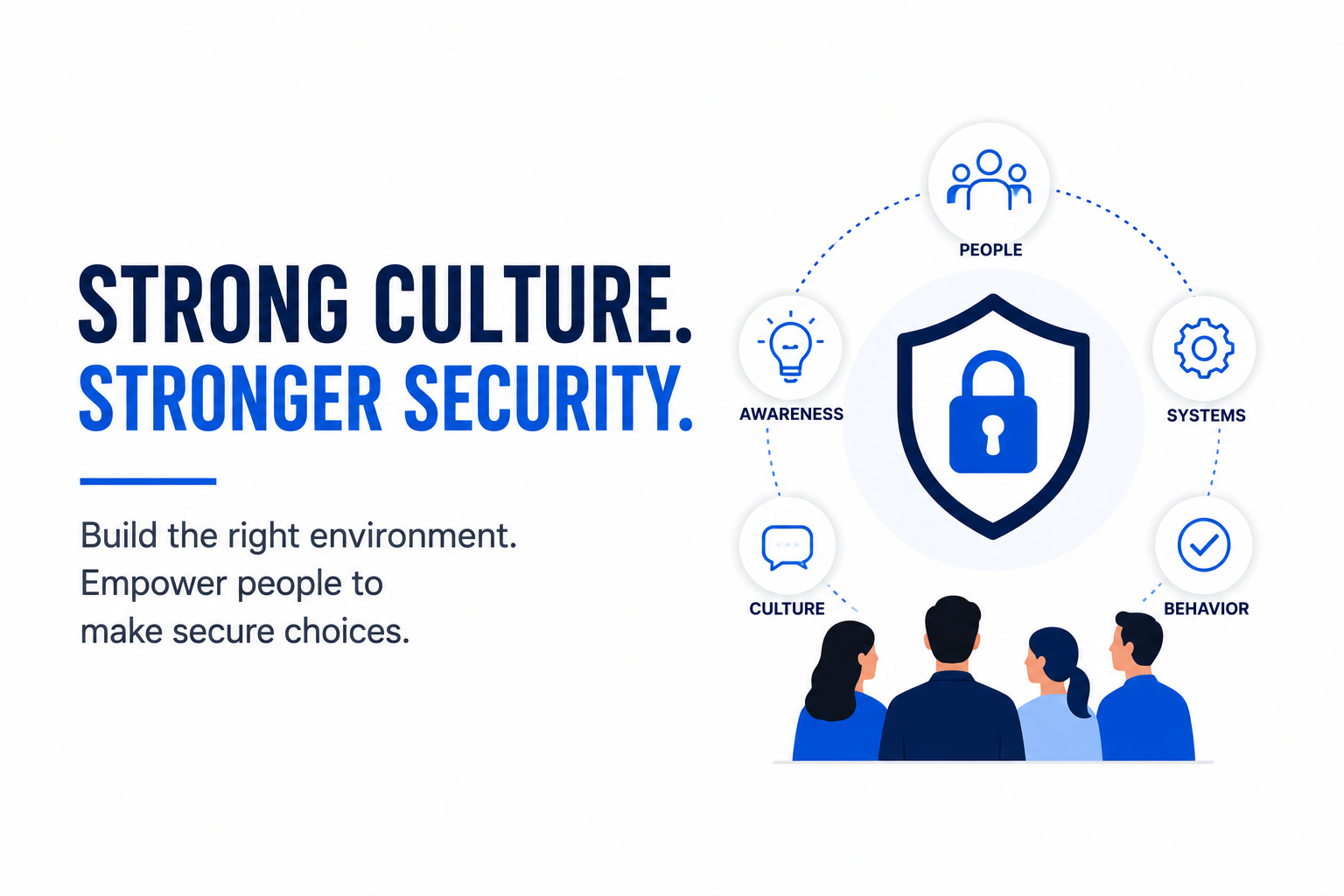
“People are the weakest link” has become a tired cliché in cybersecurity. Security teams repeat it at conferences, executives mention it in board meetings, and training programs hammer it home to employees. The phrase carries a certain surface logic: humans click phishing links, humans reuse passwords, humans bypass security controls that feel inconvenient. But this narrative misses something critical: when organizations experience repeated security incidents involving employee behavior, the more accurate diagnosis usually isn’t that the people are the problem. It’s that the culture and systems around them were never actually designed to make good security behavior the easy default choice.
This distinction matters enormously for how organizations approach security awareness, and it’s the throughline connecting everything in this guide: how security culture actually gets built, why traditional awareness training underperforms its promise, and how security teams earn the credibility to make any of it stick.
Why “People Are the Weakest Link” Is the Wrong Diagnosis
Security culture has become the defining factor separating organizations that recover quickly from incidents from those stuck in recurring breach cycles. Yet many organizations, even ones investing heavily in security tools and compliance programs, overlook the human element almost entirely, treating it as a training problem to check off rather than a cultural and design problem to solve.
Human error genuinely does factor into a large majority of successful attacks. That statistic gets used constantly to justify more training, more phishing simulations, more compliance modules. What it actually reveals is different: organizations aren’t building environments where secure behavior is the natural, low-friction choice. When an employee clicks a phishing link, bypasses a security control, or reuses a password, that’s rarely a failure of individual character or intelligence. It’s usually a predictable outcome of systems, incentives, and culture that made insecure behavior easier or more rewarded than secure behavior in that specific moment.
Reframing the problem this way changes where organizations should focus their effort: not on blaming or endlessly retraining individuals, but on redesigning the environment those individuals operate in.
Why Traditional Security Awareness Training Underperforms
Organizations invest heavily in security awareness training, yet breach rates tied to human behavior haven’t meaningfully declined industry-wide. The disconnect is stark and consistent: employees complete compliance modules, click through training videos, pass phishing simulation tests, and then fall victim to strikingly similar attacks in their actual day-to-day work.
This gap exists because most security awareness training treats knowledge transfer as the goal, teach people the rules, test that they remember the rules, consider the job done, when behavior change actually requires something closer to habit formation. Knowing that phishing emails exist and being able to instinctively pause before clicking a suspicious link under real time pressure, mid-workday, are different skills entirely. Training that only builds the first doesn’t reliably produce the second.
Effective security awareness work treats training as one input into a larger system, not the entire strategy. It pairs knowledge transfer with realistic practice (simulations that mirror actual attack patterns, not obviously fake test emails), with feedback that’s immediate and specific rather than a generic annual completion certificate, and with organizational incentives that don’t quietly punish the secure choice by making it slower or more cumbersome than the insecure one.
What Actually Changes Employee Behavior
Building a security culture that genuinely changes behavior, rather than just generating completed training records, rests on a few consistent principles.
Make the secure choice the easy choice. When following secure practice requires more effort, more steps, or more friction than the insecure alternative, a meaningful share of employees will choose the path of least resistance, not out of carelessness, but because that’s how humans generally behave under time pressure. Removing friction from secure behavior (single sign-on instead of remembering another password, one-click reporting for suspicious emails) does more to change outcomes than another round of training ever will.
Replace blame with curiosity when incidents happen. Organizations that punish employees for falling for phishing tests or making security mistakes create a culture where people hide near-misses and mistakes rather than reporting them. That silence is far more dangerous than the original mistake, because it removes the organization’s ability to learn from real, specific incidents. Cultures that respond to mistakes with genuine curiosity (“what made this message convincing? what would have helped you catch it?”) build psychological safety that produces better reporting, and better reporting produces better organizational learning.
Give feedback that’s timely and specific, not generic and delayed. An annual training completion badge teaches almost nothing. A specific, immediate note after someone reports (or falls for) a realistic phishing simulation, explaining exactly what made it convincing and what to watch for next time, actually builds the pattern recognition that changes future behavior.
Recognize and reinforce good security behavior visibly. Most security programs are built entirely around catching and correcting bad behavior. Programs that also visibly recognize good behavior, someone reporting a suspicious email, someone catching a process gap, someone asking a smart security question, reinforce the behavior you actually want more effectively than punishment alone ever does.
You Can’t Build Culture Alone
Every new cybersecurity professional learns the same hard lesson within their first year: no amount of individual enthusiasm, technical skill, or late nights spent writing procedures will single-handedly change an entire organization’s security culture. Culture change requires organizational leverage that no individual security practitioner holds on their own, regardless of how good their ideas are.
This means security culture work depends on building genuine allies outside the security team itself: managers who reinforce secure behavior in their own teams, executives who visibly model good security practices rather than requesting exceptions to policy, and champions embedded in business units who can translate security guidance into their team’s specific context more credibly than a security team member parachuting in from outside ever could.
Building those alliances takes patience and requires treating other departments as partners with legitimate operational pressures, not obstacles to be overridden. Security professionals who approach other teams exclusively through the lens of compliance and enforcement rarely build the trust needed to actually shift behavior at scale.
From Department of No to Strategic Partner
Security teams carry a persistent reputation problem. In too many organizations, security operates as the department that says no, the roadblock between business units and their goals, the bottleneck in procurement, the barrier to innovation. This perception creates a destructive cycle: business units learn to route around security review rather than engage with it, which produces exactly the unmanaged risk security was trying to prevent in the first place, which then reinforces leadership’s instinct to add more rigid controls, which increases the friction that drove teams to route around security to begin with.
Breaking this cycle requires a genuine shift in how security teams engage, not a rebranding exercise, but an actual change in approach. Security teams that consistently show up early in a project (helping shape a solution from the start) rather than only at the end (blocking a solution that’s already built) get treated as partners rather than gatekeepers. Teams that offer alternatives alongside objections (“that approach creates this specific risk, here’s a lower-risk way to accomplish the same goal”) build a reputation for problem-solving rather than obstruction. Teams that can clearly connect a security requirement to a business outcome the other department already cares about (protecting customer trust, avoiding a specific regulatory penalty, maintaining uptime) get buy-in that a purely technical justification never produces.
This reputation shift, from enforcement function to strategic partner, is itself a form of culture building. An organization where business units genuinely want security involved early, because involvement has consistently produced better outcomes rather than just more friction, has effectively solved the “people are the weakest link” problem at its root. The behavior changes because the relationship and the incentives changed, not because anyone memorized another training module.
The Bottom Line
Building genuine security culture isn’t a training initiative with a defined end date. It’s an ongoing practice of removing friction from secure behavior, replacing blame with curiosity when things go wrong, building real alliances across the organization, and earning the credibility that turns security from a department people avoid into one they actively want involved. Organizations that get this right don’t have fewer human mistakes because their people are smarter or better trained in the abstract. They have fewer costly mistakes because the entire environment, not just the individual, was actually designed with security in mind.
Enjoyed this article?
Subscribe to Professor Simon's weekly newsletter for practical insights, career guidance, and leadership lessons delivered every Friday.
A confirmation email will be sent. If you don't receive it, please check your spam or junk folder.
No spam. Unsubscribe anytime.
Prefer to Listen?
Listen to Professor Simon’s IT & Cybersecurity Podcast for practical conversations about cybersecurity careers, certifications, security leadership, and real-world lessons from the field.
Listen on Spotify